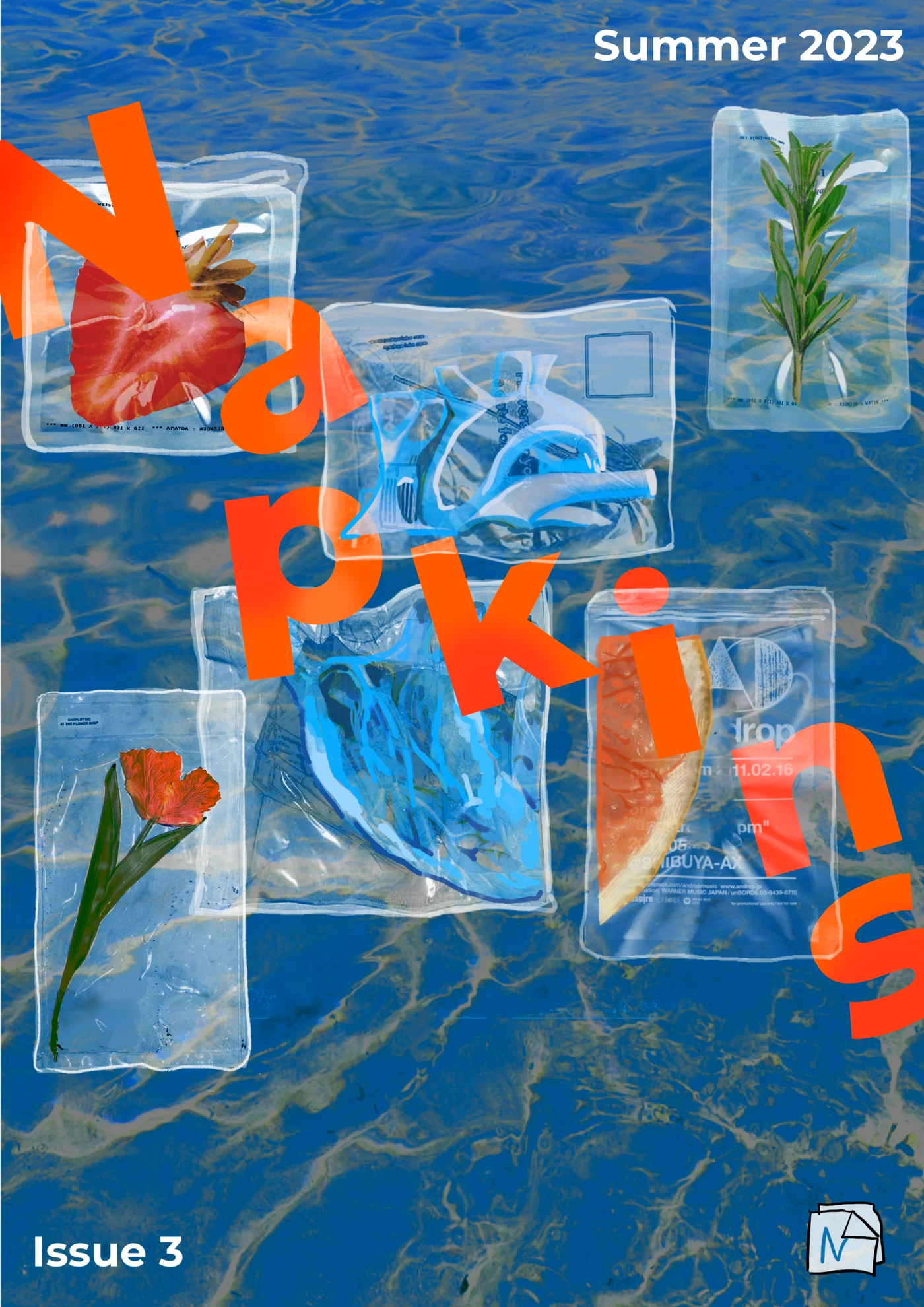
Introduction
Foreword
Dearest readers,
We’ve been boiling, grilling, and harvesting ingredients from all over the world for the past three months and it’s finally started to smell good. So buckle up for a scrumptious summer feast!
Since releasing the last issue in December 2022, we went on a tumultuous journey questioning our identity as Napkins [and maybe we’ll always be questioning 🍓(that's camp)]. For some #context, we organized a really delicious interactive art exhibition called Fractal in Taipei last November. That put us through a phase where we felt Napkins would be better off focusing on events.
In retrospect, our decision, which we were dead convinced was not a phase, was probably a result of the stress (trauma) cumulated from organizing Fractal and having to push out a magazine immediately after the back-breaking work.
But as you can deduce/induce/abduct by now, we missed having the magazine. They were right when they said your first would be unforgettable. The magazine was our first, serious baby.
Except that we thought it was an adult at first, and put all the pressures of an adult on that issue. We even expected it to be financially independent. Seeing it for what it was—a tender, curious, and confused as hell child—has helped us realize that we need to walk at its pace and listen to it. And same went for our approach to working with our contributors.
Everything you read in this issue is, as always, a dance between the editors and the contributors. What set it apart from previous issues was that we now have a much more diverse team of editors—different niches, different backgrounds, different editorial styles to accompany the diverse different talent of our contributors.
It is always difficult to foresee how each issue would end up looking. We agreed on setting a theme that was general enough to encourage running imagination but narrow enough for the galloping to not go astray. What you will see from this summer spread then is a collage of different people’s summer experiences and musings made under the summer weather.
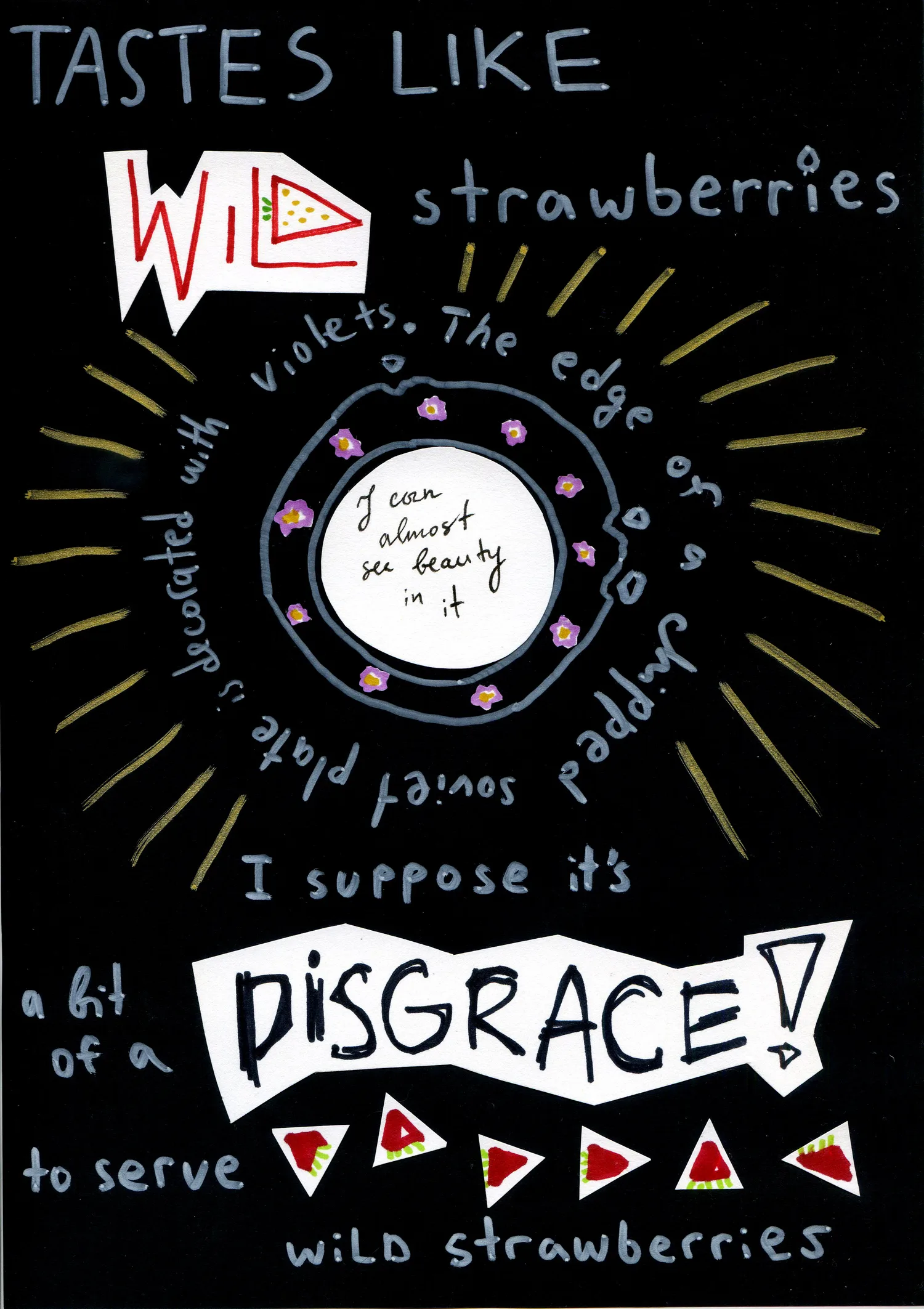
There are warm memories from childhood seasoned with fresh sea salt, wild strawberries on controversial plates, sandwiches crumpled in pockets, empanadas from hot bus rides, and much, much more…
Welcome to the Napkins Summer of 2023. Enjoy your meal and leave space for dessert!
Смачного and 趁热吃,
Dasha & Zhi Zhi x
P.S. Find the Dessert on the website.
We’ve been boiling, grilling, and harvesting ingredients from all over the world for the past three months and it’s finally started to smell good. So buckle up for a scrumptious summer feast!
Since releasing the last issue in December 2022, we went on a tumultuous journey questioning our identity as Napkins [and maybe we’ll always be questioning 🍓(that's camp)]. For some #context, we organized a really delicious interactive art exhibition called Fractal in Taipei last November. That put us through a phase where we felt Napkins would be better off focusing on events.
In retrospect, our decision, which we were dead convinced was not a phase, was probably a result of the stress (trauma) cumulated from organizing Fractal and having to push out a magazine immediately after the back-breaking work.
But as you can deduce/induce/abduct by now, we missed having the magazine. They were right when they said your first would be unforgettable. The magazine was our first, serious baby.
Except that we thought it was an adult at first, and put all the pressures of an adult on that issue. We even expected it to be financially independent. Seeing it for what it was—a tender, curious, and confused as hell child—has helped us realize that we need to walk at its pace and listen to it. And same went for our approach to working with our contributors.
Everything you read in this issue is, as always, a dance between the editors and the contributors. What set it apart from previous issues was that we now have a much more diverse team of editors—different niches, different backgrounds, different editorial styles to accompany the diverse different talent of our contributors.
It is always difficult to foresee how each issue would end up looking. We agreed on setting a theme that was general enough to encourage running imagination but narrow enough for the galloping to not go astray. What you will see from this summer spread then is a collage of different people’s summer experiences and musings made under the summer weather.
There are warm memories from childhood seasoned with fresh sea salt, wild strawberries on controversial plates, sandwiches crumpled in pockets, empanadas from hot bus rides, and much, much more…
Welcome to the Napkins Summer of 2023. Enjoy your meal and leave space for dessert!
Смачного and 趁热吃,
Dasha & Zhi Zhi x
P.S. Find the Dessert on the website.
Poetry
hot things drive us crazy
romances, heat waves, the sun
beating on bare backs, kick pushin down hills
the oil popping out the pan
the tip of the blunt when it shortens
& shortens
& shortens
like being 14 &
finding a lover
badder than the others
to enter a new year with
like being 16 &
curious of life
& love beyond
an era of “sweethearts”
like being 6 again
running on concrete not splashed
by Tia Silvia’s pool
scurrying to the deep end
pretending to be grown
like being 24
burning your fingertips on the comal
while making your 5th struggle snack of the day
while the fridge keeps the air inside it cool
like being 28
living in the product of global warming
California fire season won’t allow the ac to run
unless… I invite the smoke
like being 25
& adoring the baddie, who consistently
is inconsistent
with her affection & attention
but you hold on, hopin
that whatever she’s coping with will pass
& she’ll see that you’re here to last
until 29 finally teaches you
to let go of the fire
like my ‘92 corolla, box, bucket
with a broken ac, and 92 degree
dry heat, in traffic, for 3 hours
& Santana can’t soothe you…
like being 10 again
basketball & wheels
secret skateparks
wondering what’s ready at home
good memories are rays of sun massaging skin
while sugar from popsicles or sodas
do something to the mind
sometimes
even the bad memories, that burn
like these hellish summers
full of work & worry & love games lost
can feel like sunshine…
summers didn’t use to feel like that
beating on bare backs, kick pushin down hills
the oil popping out the pan
the tip of the blunt when it shortens
& shortens
& shortens
like being 14 &
finding a lover
badder than the others
to enter a new year with
like being 16 &
curious of life
& love beyond
an era of “sweethearts”
like being 6 again
running on concrete not splashed
by Tia Silvia’s pool
scurrying to the deep end
pretending to be grown
like being 24
burning your fingertips on the comal
while making your 5th struggle snack of the day
while the fridge keeps the air inside it cool
like being 28
living in the product of global warming
California fire season won’t allow the ac to run
unless… I invite the smoke
like being 25
& adoring the baddie, who consistently
is inconsistent
with her affection & attention
but you hold on, hopin
that whatever she’s coping with will pass
& she’ll see that you’re here to last
until 29 finally teaches you
to let go of the fire
like my ‘92 corolla, box, bucket
with a broken ac, and 92 degree
dry heat, in traffic, for 3 hours
& Santana can’t soothe you…
like being 10 again
basketball & wheels
secret skateparks
wondering what’s ready at home
good memories are rays of sun massaging skin
while sugar from popsicles or sodas
do something to the mind
sometimes
even the bad memories, that burn
like these hellish summers
full of work & worry & love games lost
can feel like sunshine…
summers didn’t use to feel like that
Nonfiction
Appreciation of the Tradition - Jagae
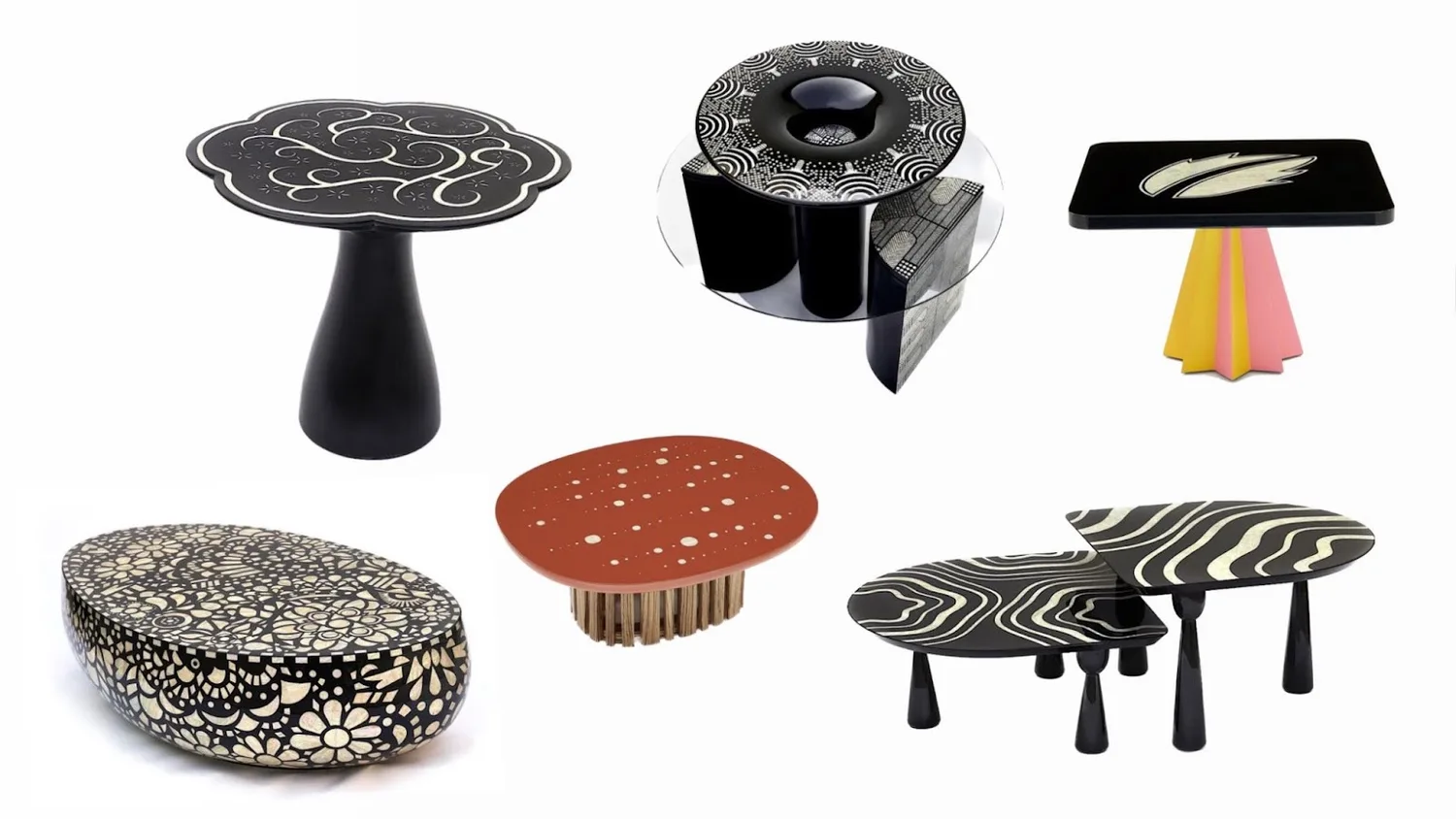
JAGAE: Jagae, also known as mother-of-pearl, is a pure Korean word that refers to the shell of clams, abalones, and mollusks.
In a world of ever-changing trends and modernity, certain things hold a significance that transcends their practicality. For me, that special item is a beautiful, useless box I took from my grandfather's room when I was just six years old. The black box, adorned with glowing rainbow curves, looked enchanting as it displayed different shades of color when I moved it around under various lights. It transported me to the beach, making me feel like I was discovering clam shells of different colors and shapes.
Despite sitting empty and covered in a layer of dust for the past fifteen years, I cannot bring myself to throw it away.
This box represents the reality of tradition, crafted from a material known as Jaegae. This material has now become a beautiful relic of the past. It has lost its original purpose and is no longer in use. The debate between tradition and modernity has been an interesting issue for me. And my summer internship helped me to seriously think about how we can create harmony between the past and present so that we can preserve a tradition that is out of use.
Over the past two months, I have been actively engaged in a project called the "Mother of Pearl (Jagae) Project". The project's mission is to preserve traditional material while infusing it with modern designs, ultimately making it relevant on a global scale. Jagae, derived from the shell of clams, undergoes a long and intricate production process, which in the past made it a material of great value accessible only to the royals in the past.
Since the 16th century, Jagae has been known for its trickiness, with only trained masters being able to craft it. Jagae is cut into a specific shape so that it can be attached onto the wooden frames that are already coated with lacquer. The surface is repeatedly coated with lacquer until it is firmly secured. Even for the project I participated in, the process of applying Jagae to the table itself took at least two weeks for one table. The whole process of designing the tables, creating wooden frames, putting Jagae onto the frame, and shipping took more than six months.
However, the pride associated with Jagae has dwindled in the 21st century. Once cherished for its warm connection to grandparents and traditional heritage, Jagae now feels out of place in modern interior designs. The Jagae closets and tables are tossed aside like forgotten relics. Furthermore, the market is flooded with cheap imitations of Jagae, further diminishing its authenticity. Thus, our primary objective was to elevate awareness surrounding Jagae and restore its rightful place of pride.
Collaborating with six modern designers from Italy and Korea, our gallery set out to interpret and design Jagae tables in their unique styles. These designs were eventually exhibited at the prestigious Trinalle Museum in Milano, Italy, drawing visitors from all walks of life to witness the beauty and creativity inherent in these tables.
Among the six pieces, my favorite piece is a rounded oval-shaped table with a flower design made of Jagae. It has a low height but works perfectly as a tea table, and I can imagine it fitting seamlessly into various modern designs, alongside black and silver folding chairs. The Jagae flowers bloom with colors that create a rainbow reflection on the floor from the sunlight. I was always excited at the thought of placing this piece in different locations, such as the lobby of a 5-star hotel, traditional Korean houses, a minimalistic black and white apartment living room, or even in the garden. I truly enjoyed participating in this project to brainstorm on how this outdated material can be beautifully presented in so many locations in various formats in the modern world.
Before doing this project, I had never thought of why Jagae products like the box from my grandfather were devalued in society. But I guess, it was too easy to obtain in the present times, which diminished the legacy from the past. The abundance of Jagae led to a decline in its perceived worth. Currently, Korea preserves tradition as it is by showcasing it in museums and explaining its value through textbook photographs. However, if we let this situation persist, Jagae would fade away as a fame of the past.
Of course, the origin should be preserved, but we need a revolutionary way of keeping the tradition alive. For this, we have to preserve tradition through culture and revive it with new life. Our gallery has chosen the latter, planning a follow-up project that designs and sells new, practical products catered to the needs of young people. Jagae is no longer an old, traditional, and outdated material. Jagae is a fancy, modern, and trendy material.
The Mother of Pearl (Jagae) Project is not just about preserving the original; it's about honoring our heritage, finding new ways to appreciate the past, and integrating it into the fabric of our contemporary lives. Through art, we aim to bridge the gap between tradition and modernity. By combining the beauty of tradition with the ingenuity of modern design, we strive to keep the flame of Jagae burning brightly for generations to come.
The journey of the Mother of Pearl (Jagae) Project has been a testament to the power of art in preserving tradition and breathing new life into the past. With passion and creativity, we seek to forge a path where tradition and modernity can coexist harmoniously, bridging the gap between what was and what is yet to be. As we continue to navigate the ever-changing landscape of the 21st century, let us remember that the legacy of our ancestors is a treasure worth cherishing, and through art, we can keep it alive for a brighter future.
Collage
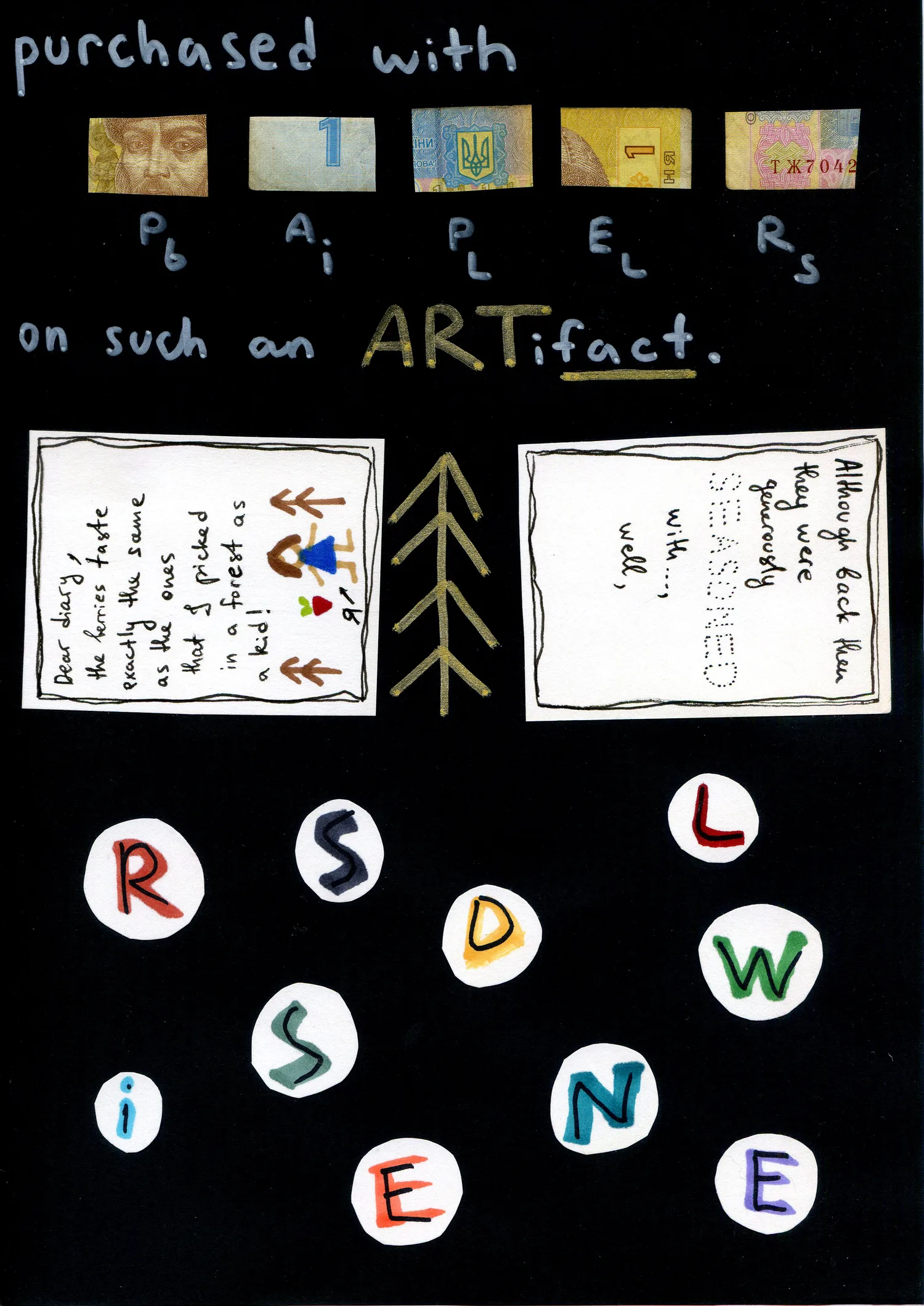
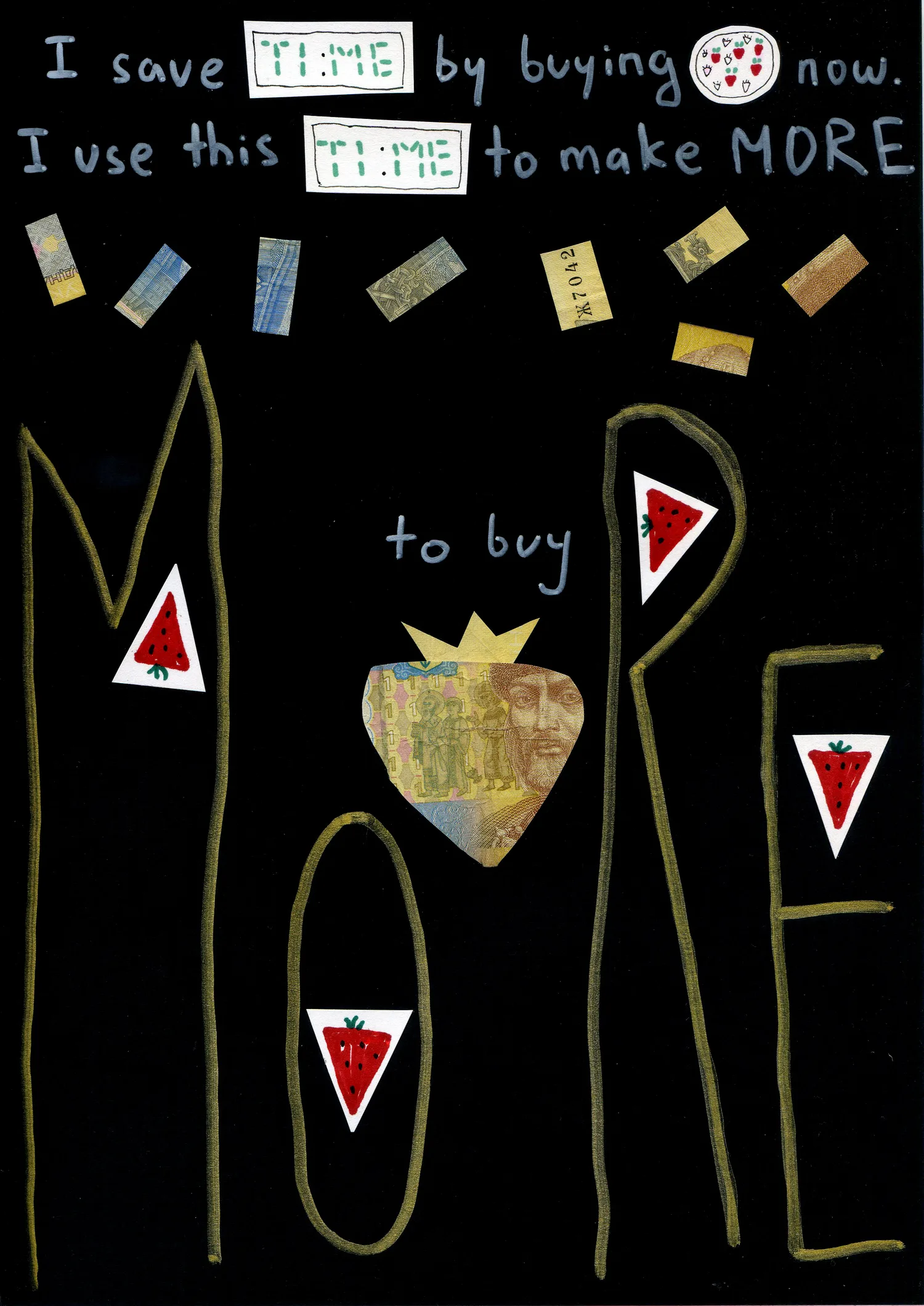
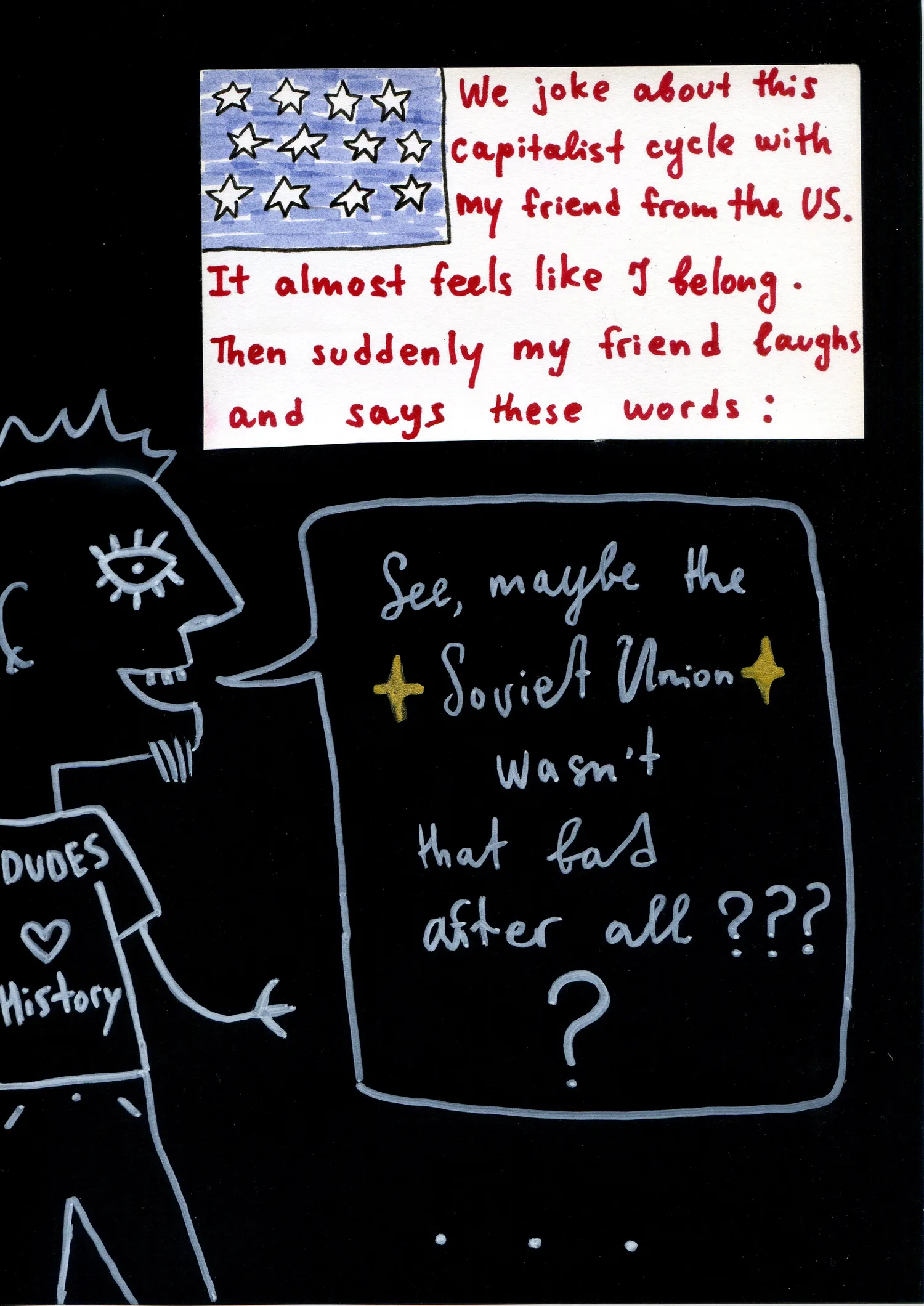
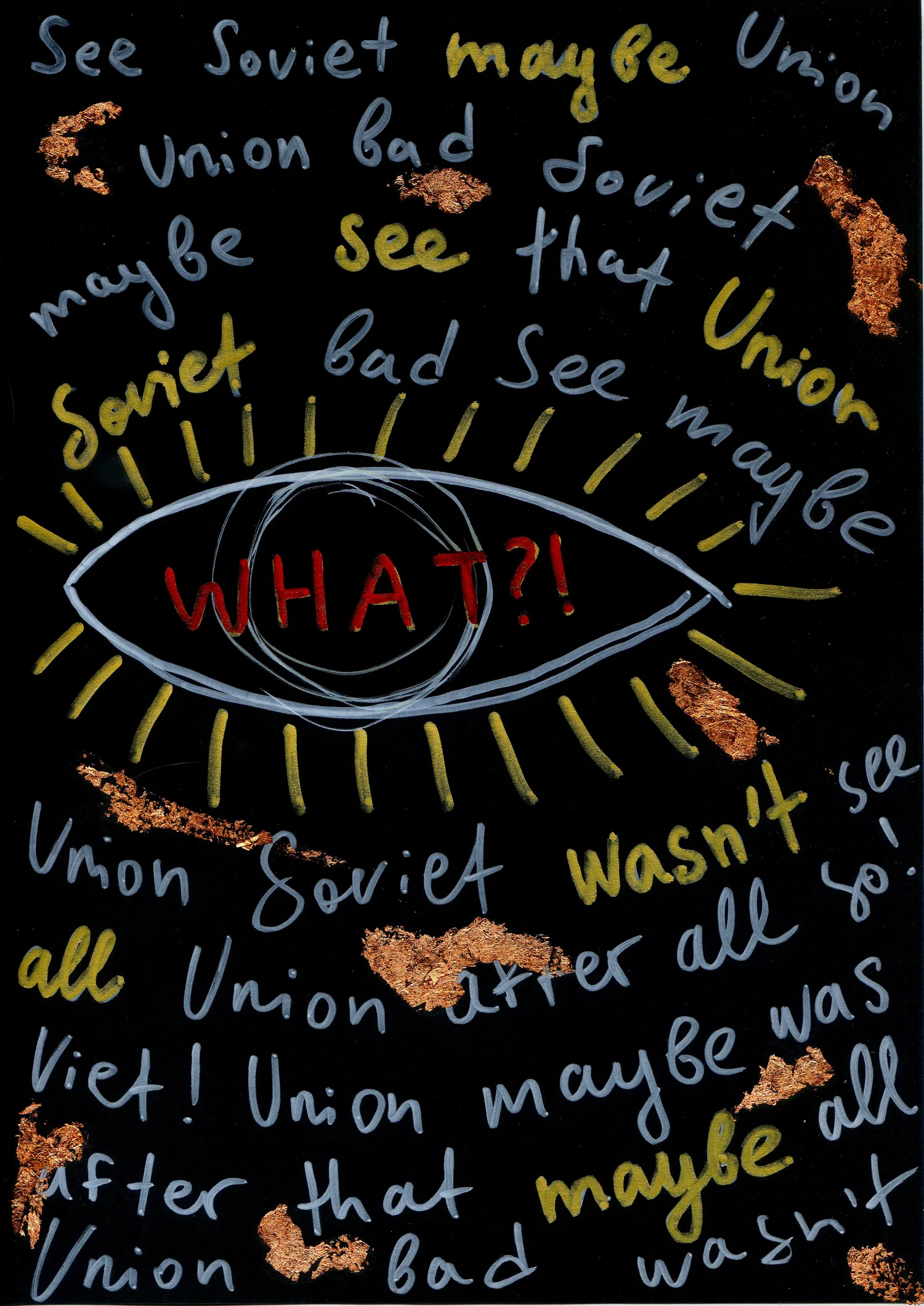
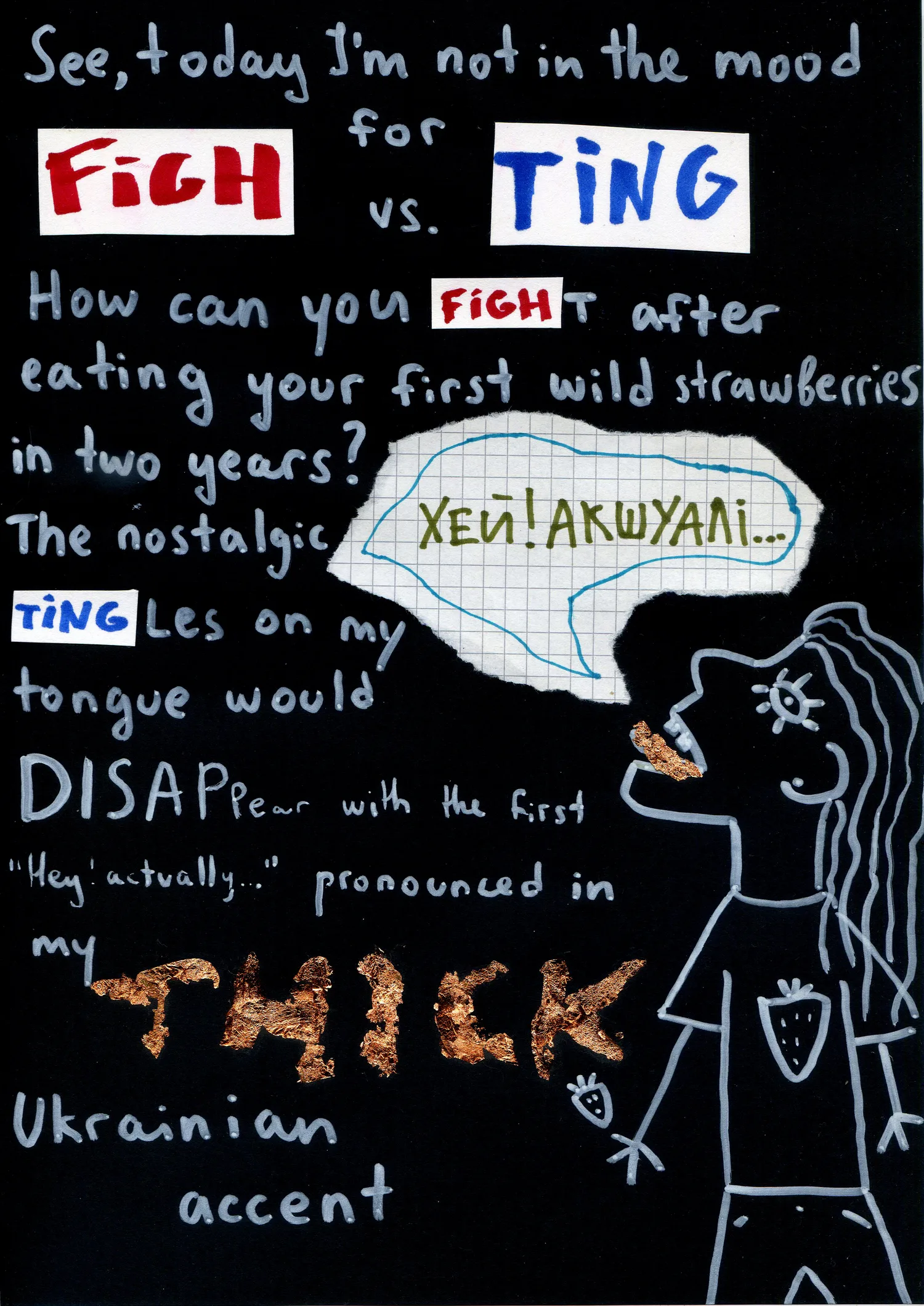
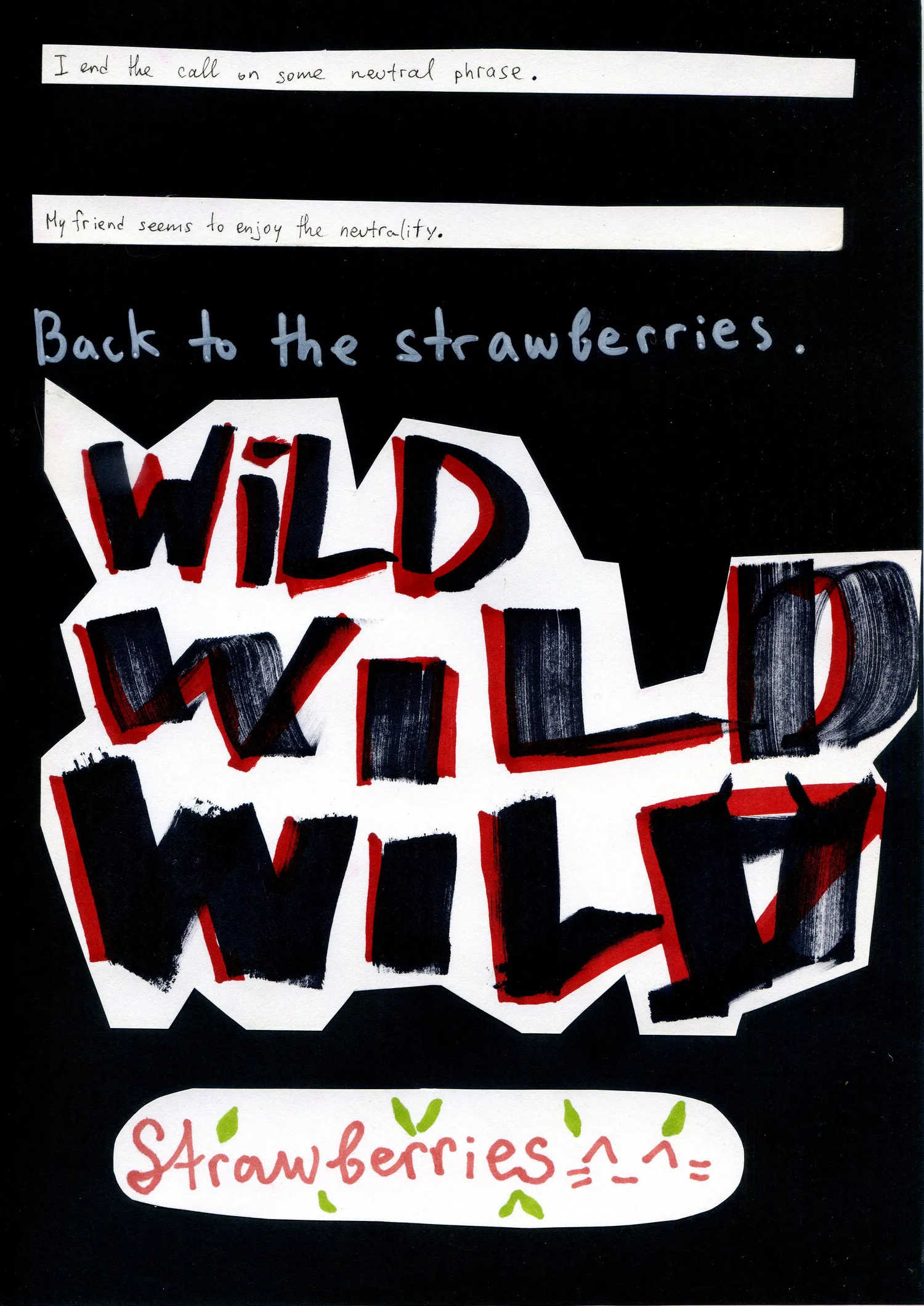
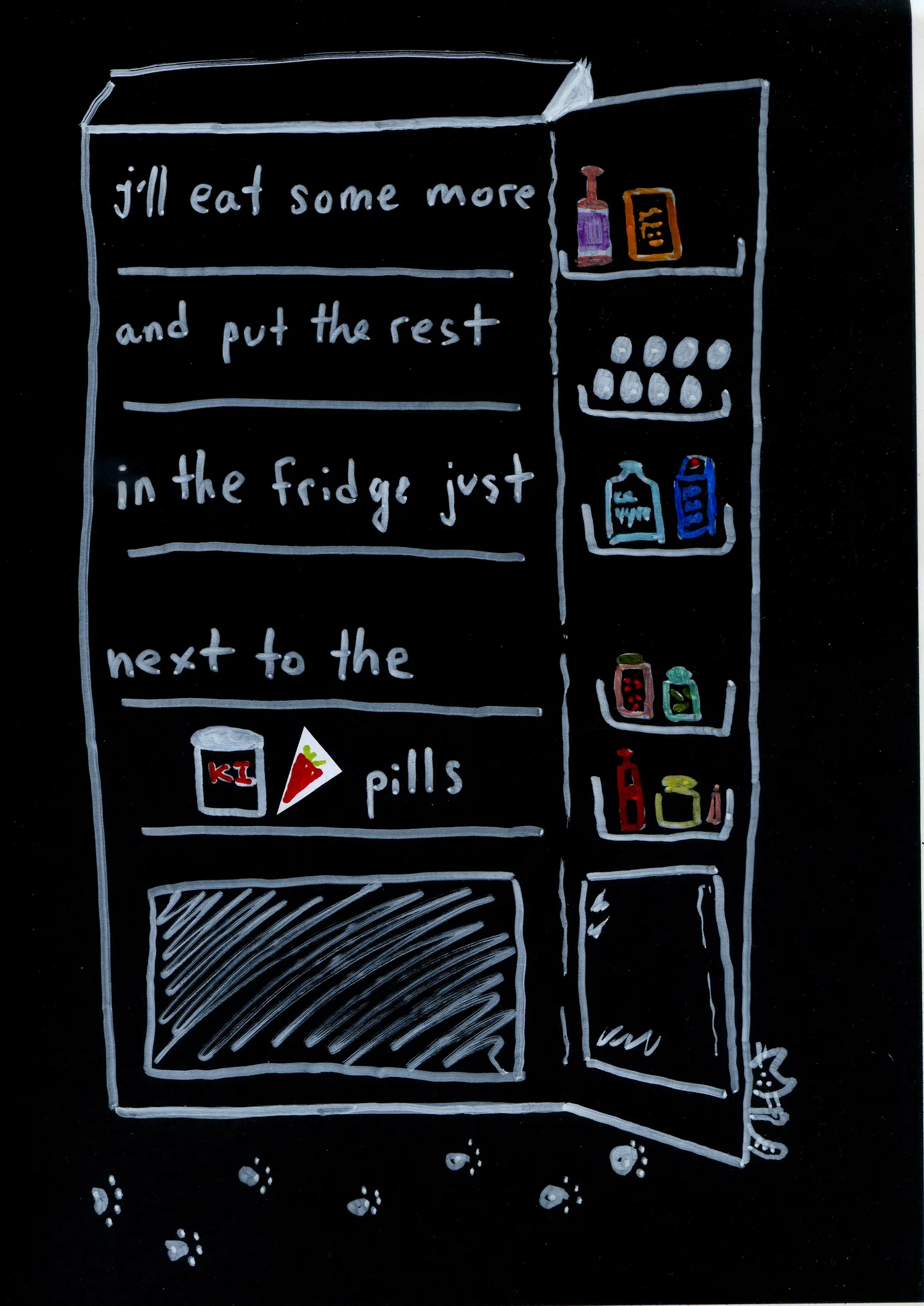
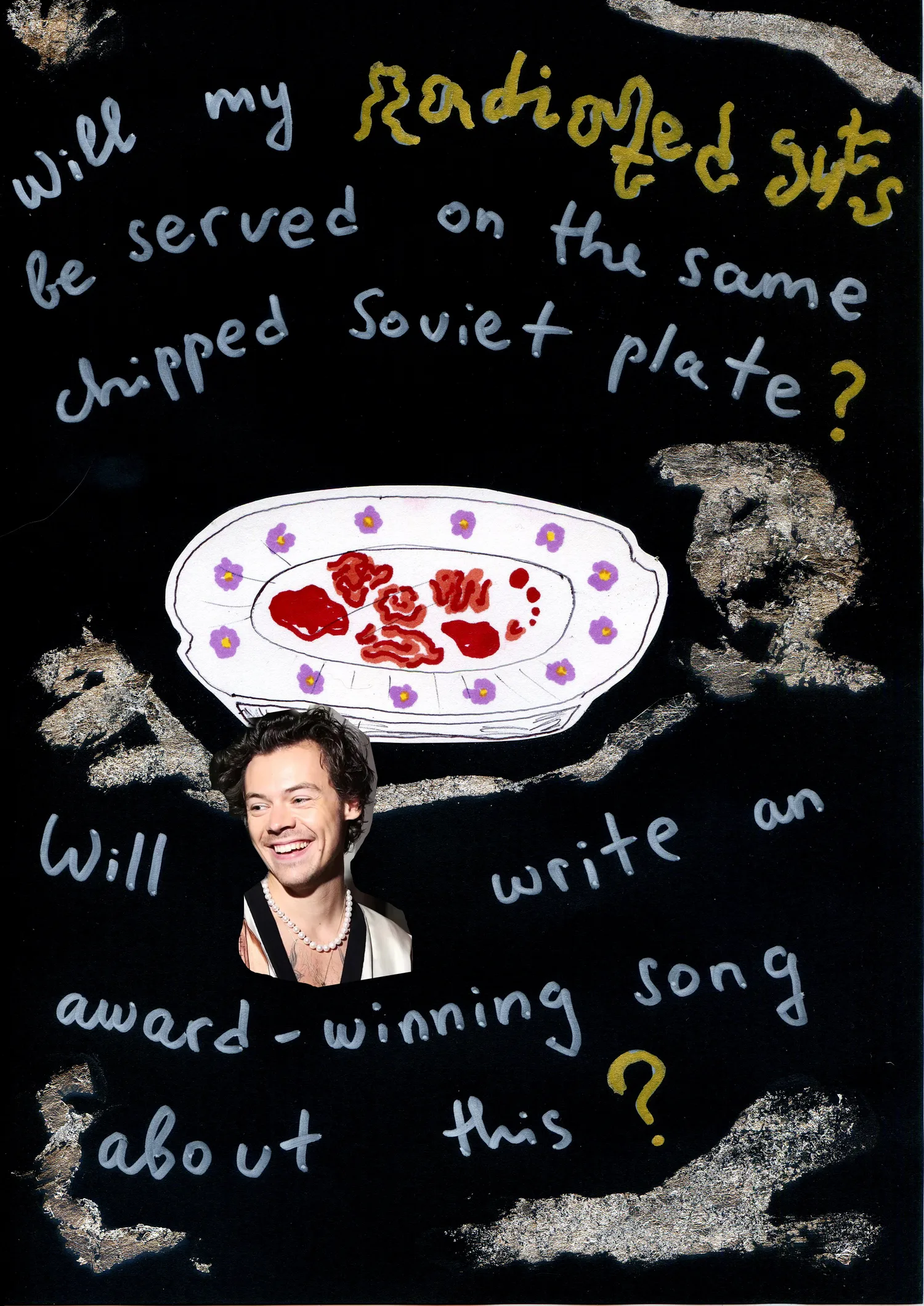
Tastes Like Wild Strawberries
Poetry
“parade marches down”
parades march down
the street the lawsuit the death rally
who will not make it out alive this time?
in pockets they have the adjudications
of folded away surnames and orders
the pockets smell like sandwiches originated in their wives’ kitchen
yes, they also have wives
and kitchens
and gastrointestinal tracts
and used up vitamin D storage like all of us mortals
we all originated from dirt and hints of love
nevertheless some turn back to dirt despite the amount of love they carry
or take away
the street the lawsuit the death rally
who will not make it out alive this time?
in pockets they have the adjudications
of folded away surnames and orders
the pockets smell like sandwiches originated in their wives’ kitchen
yes, they also have wives
and kitchens
and gastrointestinal tracts
and used up vitamin D storage like all of us mortals
we all originated from dirt and hints of love
nevertheless some turn back to dirt despite the amount of love they carry
or take away
Poetry
criminal / “should i feel like a criminal in this car”
should i feel like a criminal in this car
with this sunlight trapped in my hair
i didn't deserve to be given a chance for happiness, not in the present times
biting down these concerns and chewing them into molecules,
yet they still proceed to overpopulate my body instead of disintegrating in it
i am not a foreigner in my house,
in my hometown,
i'm more than a foreigner but less than a part
of the setting where i was planted and nurtured
seeking to lose the smack in the air and the language i consume,
but it's produced autonomously in my unconscious territories
put together into the labeled bottles with unreadable instructions,
vibrantly flaming side effects and 'regretfully undiscovered reverse agent'
carts of them are exported into my
vision
sight
emotional palette
sharpness spectrum of my vocabulary
old passwords aren't compatible,
density of the pixels in the 3D model we call life is exponentiating like a
cancer tumor
hate culture
political ideology —
no collaborative efforts are enough in their hypocrisy
i'm not a hypocrite but am a criminal
for locking my eyelashes
for not sacrificing a sacrifice not worth it
for running down the field and neither falling underground nor being blown up
for the mismatched probabilities
with this sunlight trapped in my hair
i didn't deserve to be given a chance for happiness, not in the present times
biting down these concerns and chewing them into molecules,
yet they still proceed to overpopulate my body instead of disintegrating in it
i am not a foreigner in my house,
in my hometown,
i'm more than a foreigner but less than a part
of the setting where i was planted and nurtured
seeking to lose the smack in the air and the language i consume,
but it's produced autonomously in my unconscious territories
put together into the labeled bottles with unreadable instructions,
vibrantly flaming side effects and 'regretfully undiscovered reverse agent'
carts of them are exported into my
vision
sight
emotional palette
sharpness spectrum of my vocabulary
old passwords aren't compatible,
density of the pixels in the 3D model we call life is exponentiating like a
cancer tumor
hate culture
political ideology —
no collaborative efforts are enough in their hypocrisy
i'm not a hypocrite but am a criminal
for locking my eyelashes
for not sacrificing a sacrifice not worth it
for running down the field and neither falling underground nor being blown up
for the mismatched probabilities
Poetry
8:03
8:03 - the eyes’ first peak into the day
more like into the ceiling and the limbs of rays of waking sun
they dance over that ceiling more like sway gently but does it matter
down-up-down-up cuts the knife
bread pieces fall with thuds
they miss the plate but does it matter
round-and-round move fingers holding stainless steel tea spoon
mixing lactose-free milk into the coffee
it smells like morning even for those still sleeping but does it matter
28$ was the grocery shopping
the cart almost made train sounds
shoes got stepped on
and the coins jingled some even fell down over the tiles but does it matter
in-and-up was the key turned in ignition
the steering wheel was way too warm all windows were rolled down
the dialogues annoyed passers-by but does it matter
13 strawberries were squished along the ride
1 t-shirt got a stain
it wasn’t old or not a favorite
but peace was made so does it really matter
4 pairs of legs ran down the path and out of shadow
1 lagged behind and no one waited
as clothes and heat got lost in sand and quiet surface of the water body trembled
it shivered and got mad at someone agitating sleep but does it matter
plink-plink the lake drops tore their hands
tried holding on as they roll down into the abyss of soil
departing the squeezed out towel in the hands of a soaking wet swimmer
whose skin now carries a bit of cheap cloth dye but does it matter
side-to-side swayed the rusty boat
engulfed in blue and green so firmly it barely felt it
yet it felt the jealousy of those who move the water and themselves in it
the youth was painfully dazzling and it doesn’t matter
when everything is lost in laughs and talks and questions
and pats on the shoulders and accidentally touching glances
in the backseat of another passing week
more like into the ceiling and the limbs of rays of waking sun
they dance over that ceiling more like sway gently but does it matter
down-up-down-up cuts the knife
bread pieces fall with thuds
they miss the plate but does it matter
round-and-round move fingers holding stainless steel tea spoon
mixing lactose-free milk into the coffee
it smells like morning even for those still sleeping but does it matter
28$ was the grocery shopping
the cart almost made train sounds
shoes got stepped on
and the coins jingled some even fell down over the tiles but does it matter
in-and-up was the key turned in ignition
the steering wheel was way too warm all windows were rolled down
the dialogues annoyed passers-by but does it matter
13 strawberries were squished along the ride
1 t-shirt got a stain
it wasn’t old or not a favorite
but peace was made so does it really matter
4 pairs of legs ran down the path and out of shadow
1 lagged behind and no one waited
as clothes and heat got lost in sand and quiet surface of the water body trembled
it shivered and got mad at someone agitating sleep but does it matter
plink-plink the lake drops tore their hands
tried holding on as they roll down into the abyss of soil
departing the squeezed out towel in the hands of a soaking wet swimmer
whose skin now carries a bit of cheap cloth dye but does it matter
side-to-side swayed the rusty boat
engulfed in blue and green so firmly it barely felt it
yet it felt the jealousy of those who move the water and themselves in it
the youth was painfully dazzling and it doesn’t matter
when everything is lost in laughs and talks and questions
and pats on the shoulders and accidentally touching glances
in the backseat of another passing week
Illustration
(Un)comfort Zone
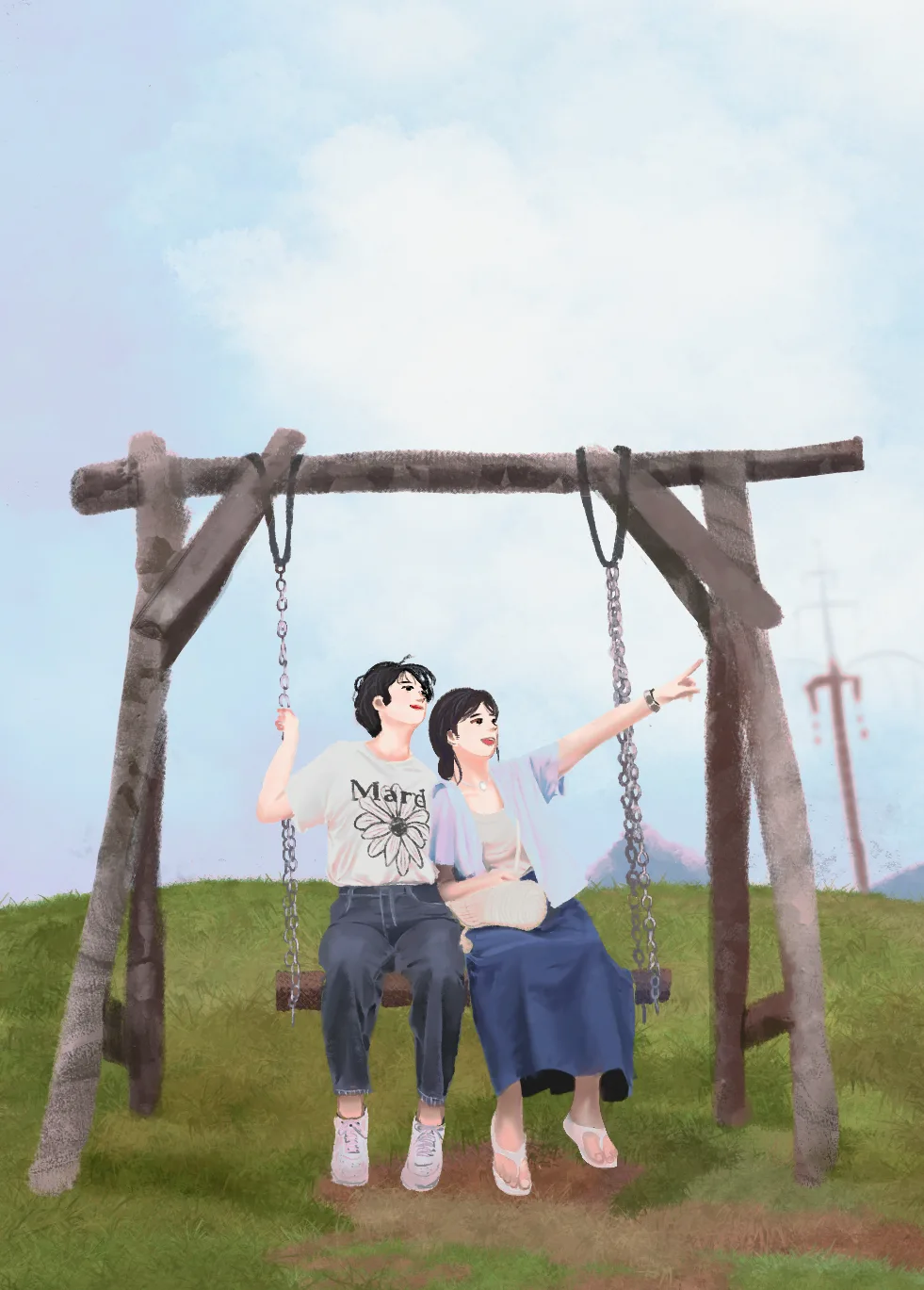
Description:
During this summer break, I encountered numerous challenges that pushed me beyond my comfort zone. This illustration depicts one of these experiences: traveling abroad with my friend without the assistance of our parents. Surprisingly, our trip to Vietnam was far more enjoyable than I had expected!
Poetry
Riding Along
There’s nothing quite like
riding a bus where
Spanish licks from tongues
First, there’s the seat
fully reclined
stuck in this position
inviting…
(forcing?)
me to sit back
and melt into the ride
Second, there’s the window
three-quarters open
frozen in position
afternoon air whipping playfully on
freckles,
soaking in the sweetness of movement
Third, there’s the vendor with
shouldered boxes
selling dulces, empanadas
water, umbrellas
with a baritone call
his salesman’s song swimming laps on his lips
Fourth, there’s the sudden break to a halt
confused, a pause (¿why?)
a stop in an empty field
unto which half the bus
descends
or a prolonged pause because of:
a protest.
highway construction.
toll booth takeover.
sheep crossing.
flat tire?
Before any answers arrive we’re
off again.
and the afternoon light’s flirtation
warms my questions
away.
Fifth, there’s the music, sometimes
Bachata
In Santo Domingo
Mariachi
In Monterrey
Jackie Chan film, maxed volume
In Bogotá.
Otherwise, music still, but just –
The sound
Of rubber meeting road
Mixed with
A buzzing of intimacies
Whispers between colleagues just off their shift
Mom and son nesting, cooing
Two teenagers newly in love
Blurry hands feeling skin, skin, skin
The bus ablaze
Abuzz
With so many intimacies
Every time
I board that bus
I’m reminded
Of what a deep gift it is
To be riding
Along.
riding a bus where
Spanish licks from tongues
First, there’s the seat
fully reclined
stuck in this position
inviting…
(forcing?)
me to sit back
and melt into the ride
Second, there’s the window
three-quarters open
frozen in position
afternoon air whipping playfully on
freckles,
soaking in the sweetness of movement
Third, there’s the vendor with
shouldered boxes
selling dulces, empanadas
water, umbrellas
with a baritone call
his salesman’s song swimming laps on his lips
Fourth, there’s the sudden break to a halt
confused, a pause (¿why?)
a stop in an empty field
unto which half the bus
descends
or a prolonged pause because of:
a protest.
highway construction.
toll booth takeover.
sheep crossing.
flat tire?
Before any answers arrive we’re
off again.
and the afternoon light’s flirtation
warms my questions
away.
Fifth, there’s the music, sometimes
Bachata
In Santo Domingo
Mariachi
In Monterrey
Jackie Chan film, maxed volume
In Bogotá.
Otherwise, music still, but just –
The sound
Of rubber meeting road
Mixed with
A buzzing of intimacies
Whispers between colleagues just off their shift
Mom and son nesting, cooing
Two teenagers newly in love
Blurry hands feeling skin, skin, skin
The bus ablaze
Abuzz
With so many intimacies
Every time
I board that bus
I’m reminded
Of what a deep gift it is
To be riding
Along.
Poetry
belong (verb): to form part of
how did we forget
that we
belong?
belong to the howls
and whirls, and chirps. To the wailing
orchestra
orchestral drips and paddlings
of the puddles; of the downpour
even thunder. especially thunder.
thundering, destroying, shaking, unmaking
we belong to that too
and it to us
us - an us that has lost our way
an us ripped from
the fabric to which we belong
belong (verb)
how did we forget
that we
belong?
that we
belong?
belong to the howls
and whirls, and chirps. To the wailing
orchestra
orchestral drips and paddlings
of the puddles; of the downpour
even thunder. especially thunder.
thundering, destroying, shaking, unmaking
we belong to that too
and it to us
us - an us that has lost our way
an us ripped from
the fabric to which we belong
belong (verb)
how did we forget
that we
belong?
Poetry
Sights and Sounds of the City
This poem is accompanied by by audio.
Click here to listen as you read.
Aristocratic skyscrapers extend across the urban landscape,
Its murky steel precisely ordered against the street’s dingy stone.
Our predictability rendered life almost perfect in its simplicity,
And I couldn’t imagine anything different until that first pop of colour.
The sirens squeal for everyone, but are you near enough to hear?
And how near is near enough to note that you were there
Yet removed enough so that you remain to share?
Can unbloodied and unbroken be unfair?
Its brilliance was overwhelming, which left it so much more intriguing that
That single tinge revealed an entire world ever present yet unnoticed.
Suddenly, everything I saw radiated stripes, spots, and checkers;
And I quickly found evidence of the wicked patterns between them.
My own misery musters my immediate motivation,
As I canvas my cadaver for cuts, carves, and legions.
I find my friend and their friend, eventually eyeing the press’s presence.
As we await the assistance of an ambulance drawing from the distance.
We might all bleed vermillion, but that neglects
Whether we were pricked, stabbed, or shot.
It ignores the skin that swells, the heart that stops,
And the community that suffers that loss.
Hours away, another rescue readies its wagon.
Cruising crowdless, they skip a person unheard and unnoticed,
Helping not who needs it most but who howls the loudest.
And I, with my wounds, am thankful to be thunderous.
Existence was easier before I envisioned
The endless opportunities that I’ve been afforded
By proxy of my privilege, my power and position.
Before I discerned the darkness that dominates
And the unrelenting glow of the rainbow it erases.
The screams become overwhelming, exhausting and quite numbing;
Must we tune in and turn towards the tons of torment still spreading?
Or can I simply lament my own, looking for safety within my home?
Perhaps you plug your ears, close your eyes,
Trying not to comprehend it.
Life’s easier expecting that our world is normally right,
That we are normally right.
But that neglects the truth set in front of you.
Click here to listen as you read.
Aristocratic skyscrapers extend across the urban landscape,
Its murky steel precisely ordered against the street’s dingy stone.
Our predictability rendered life almost perfect in its simplicity,
And I couldn’t imagine anything different until that first pop of colour.
The sirens squeal for everyone, but are you near enough to hear?
And how near is near enough to note that you were there
Yet removed enough so that you remain to share?
Can unbloodied and unbroken be unfair?
Its brilliance was overwhelming, which left it so much more intriguing that
That single tinge revealed an entire world ever present yet unnoticed.
Suddenly, everything I saw radiated stripes, spots, and checkers;
And I quickly found evidence of the wicked patterns between them.
My own misery musters my immediate motivation,
As I canvas my cadaver for cuts, carves, and legions.
I find my friend and their friend, eventually eyeing the press’s presence.
As we await the assistance of an ambulance drawing from the distance.
We might all bleed vermillion, but that neglects
Whether we were pricked, stabbed, or shot.
It ignores the skin that swells, the heart that stops,
And the community that suffers that loss.
Hours away, another rescue readies its wagon.
Cruising crowdless, they skip a person unheard and unnoticed,
Helping not who needs it most but who howls the loudest.
And I, with my wounds, am thankful to be thunderous.
Existence was easier before I envisioned
The endless opportunities that I’ve been afforded
By proxy of my privilege, my power and position.
Before I discerned the darkness that dominates
And the unrelenting glow of the rainbow it erases.
The screams become overwhelming, exhausting and quite numbing;
Must we tune in and turn towards the tons of torment still spreading?
Or can I simply lament my own, looking for safety within my home?
Perhaps you plug your ears, close your eyes,
Trying not to comprehend it.
Life’s easier expecting that our world is normally right,
That we are normally right.
But that neglects the truth set in front of you.
Collage
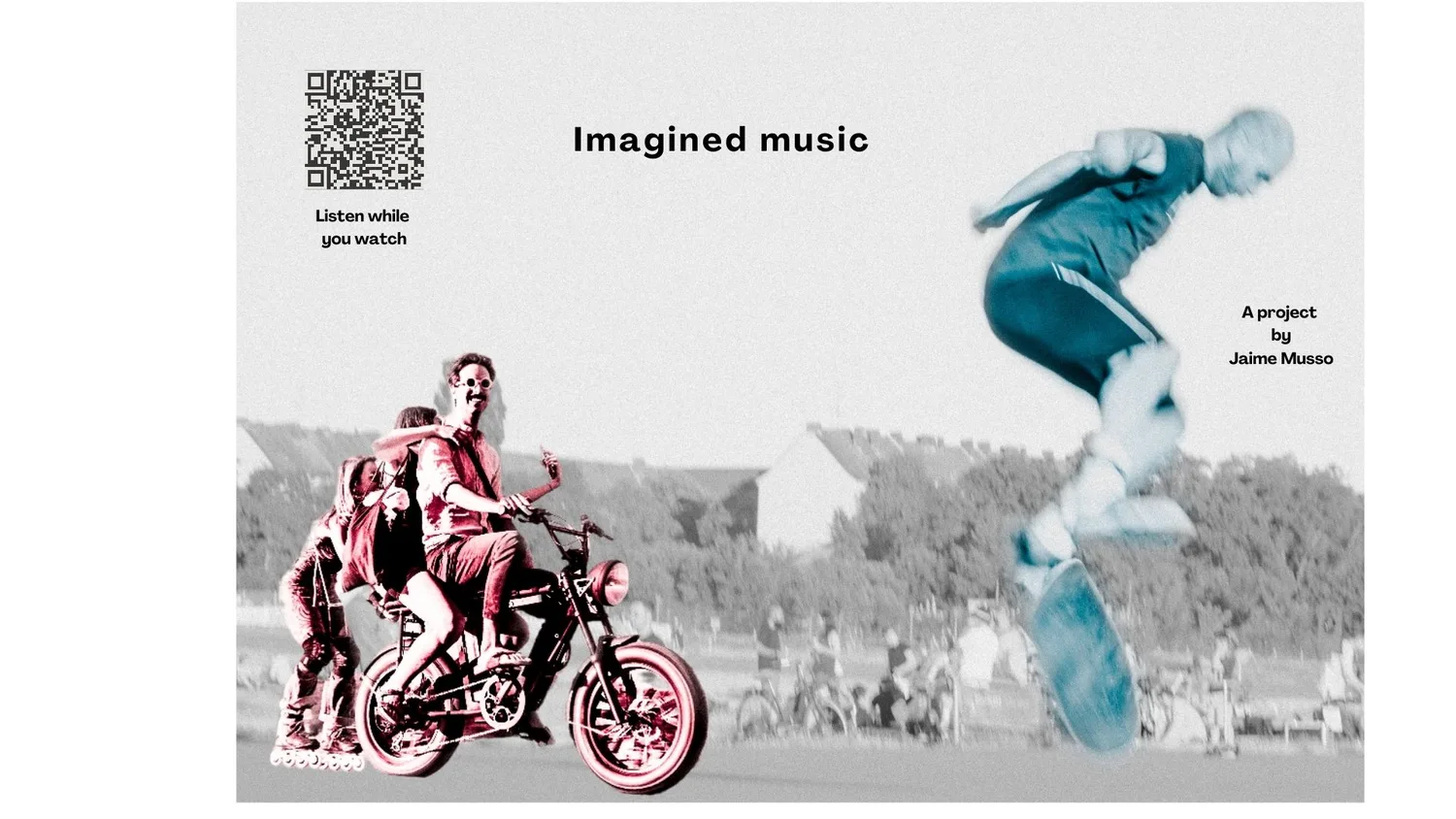
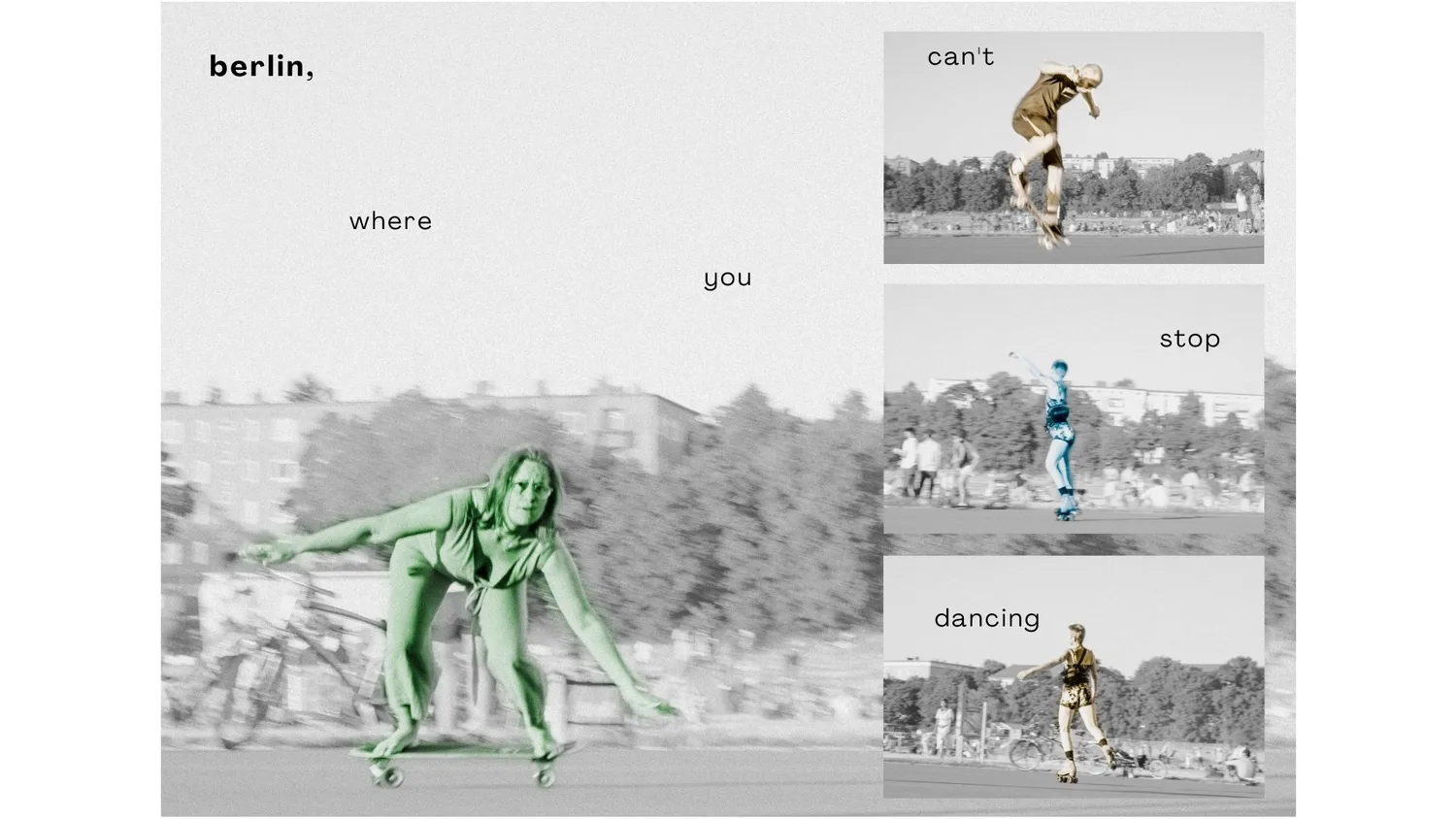
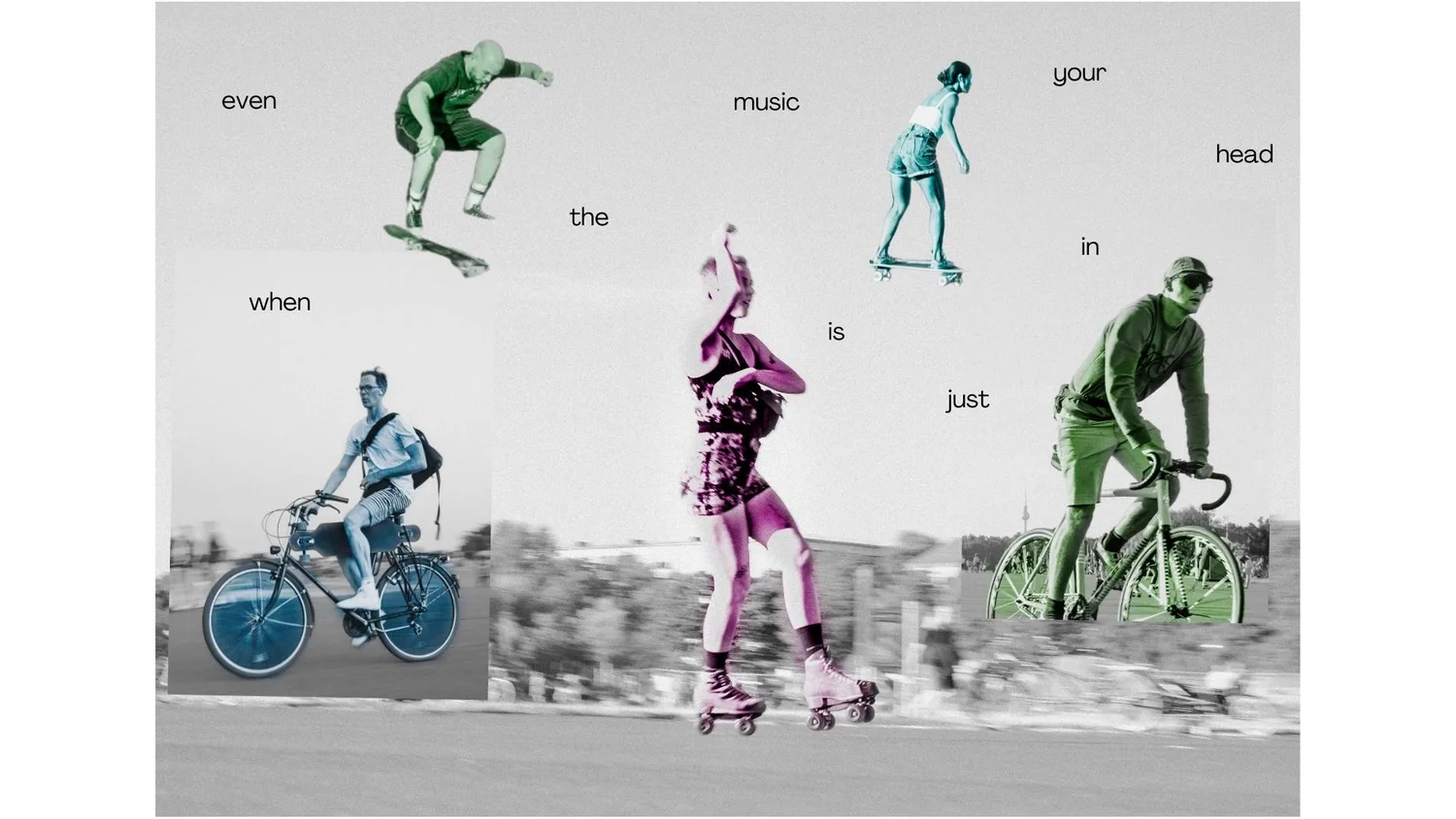
Imagined Music
Animation
The Continuity of Summer
Poetry
Rose
Glimpse upon the emerald spire
The thorny road of thy desire.
What is the toll? The soul
That yearns ever so?
There lies the budding heart,
Her silent walls slightly part.
Pray not peer nor peel behind
the layers which hide the mind.
Do the scarlet scales not rot
with the gaze of those who sought
the dream that has long snared
their desires to be paired?
The thorny road of thy desire.
What is the toll? The soul
That yearns ever so?
There lies the budding heart,
Her silent walls slightly part.
Pray not peer nor peel behind
the layers which hide the mind.
Do the scarlet scales not rot
with the gaze of those who sought
the dream that has long snared
their desires to be paired?
Poetry
Your Farewell
I had not realized that you had died.
Because your voice still rings out
and I still see your lovely pout,
something that I've since been denied.
I wonder how your journey was,
past the River Styx1 filled with dreams
and all those cracks in the seams.
Did you find, amidst the chaos, a cause?
I cannot bear the thought
that your soul, adrift upon our requiem,
would be anywhere but in Elysium2,
the Paradiso3 that I long sought.
I hope you have not yet
drank from the River Lethe4.
And, I ask, would you prithee
not forsake the life we had?
I know I will soon join you,
for your passing was a half-death,
a state so torturous, every breath
scattered like the morning dew.
This, I beg of you, my dove.
Please await my eternal slumber.
I shall set the world asunder,
a final elegy to end our love.
1 The first of the five rivers of the Greek Underworld, one that all souls must cross.
2 The resting place of heroes and the virtuous in Greek mythology.
3 Paradise according to Dante’s Divine Comedy.
4 The second river of the Greek Underworld, where anyone who touches it loses their memory of their mortal life.
Because your voice still rings out
and I still see your lovely pout,
something that I've since been denied.
I wonder how your journey was,
past the River Styx1 filled with dreams
and all those cracks in the seams.
Did you find, amidst the chaos, a cause?
I cannot bear the thought
that your soul, adrift upon our requiem,
would be anywhere but in Elysium2,
the Paradiso3 that I long sought.
I hope you have not yet
drank from the River Lethe4.
And, I ask, would you prithee
not forsake the life we had?
I know I will soon join you,
for your passing was a half-death,
a state so torturous, every breath
scattered like the morning dew.
This, I beg of you, my dove.
Please await my eternal slumber.
I shall set the world asunder,
a final elegy to end our love.
1 The first of the five rivers of the Greek Underworld, one that all souls must cross.
2 The resting place of heroes and the virtuous in Greek mythology.
3 Paradise according to Dante’s Divine Comedy.
4 The second river of the Greek Underworld, where anyone who touches it loses their memory of their mortal life.
Poetry
Abandoned
Yet once again you left me there,
in a world I couldn't hear
any signs of true regrets.
I was just buried secrets,
a text you don't expect.
Try to name one aspect
with which I would be so missed.
Even those I had kissed
so tenderly and truly,
has replaced cruelly
my role in their turning lives.
Do I blame their dives
into a new sea of thought?
I can't, though I have sought
and thought this the last time
I would leave on a dime.
Fate's Wheel repeats itself.
I too, start to lose myself
For my want to be alone.
For my need to so own
a place where I can just be.
Still they constantly tell me,
always tender: “There are more
the future has in store.
How could I ever think so?
When no matter how slow
I try to hold back the time
of all those things sublime,
I have lost and I will lose
all that wilts like a rose?
in a world I couldn't hear
any signs of true regrets.
I was just buried secrets,
a text you don't expect.
Try to name one aspect
with which I would be so missed.
Even those I had kissed
so tenderly and truly,
has replaced cruelly
my role in their turning lives.
Do I blame their dives
into a new sea of thought?
I can't, though I have sought
and thought this the last time
I would leave on a dime.
Fate's Wheel repeats itself.
I too, start to lose myself
For my want to be alone.
For my need to so own
a place where I can just be.
Still they constantly tell me,
always tender: “There are more
the future has in store.
How could I ever think so?
When no matter how slow
I try to hold back the time
of all those things sublime,
I have lost and I will lose
all that wilts like a rose?
Poetry
You and Her
To say that I don't love her,
would be a lie so blatant,
that the heavens would tremble with fury.
Yet I cannot forget you.
To say that I didn't love you,
would be a sin so great,
that the depths of hell would rise in rage.
Yet I cannot leave her.
To say that I won't love her,
would be a thought so wrong,
that the poets would roll over in their graves.
Yet I cannot dismiss you.
To say that I couldn't love you,
would be a life so blank,
that the spirits would leave in disgust.
Yet I cannot hate her.
would be a lie so blatant,
that the heavens would tremble with fury.
Yet I cannot forget you.
To say that I didn't love you,
would be a sin so great,
that the depths of hell would rise in rage.
Yet I cannot leave her.
To say that I won't love her,
would be a thought so wrong,
that the poets would roll over in their graves.
Yet I cannot dismiss you.
To say that I couldn't love you,
would be a life so blank,
that the spirits would leave in disgust.
Yet I cannot hate her.
Poetry
Wolf
That thing is not the girl I loved
My love has long since left
A shapeshifter, a skinwalker
Your skin, worn like a pelt
Stinks of blood, and pain, and death
It laughs in your voice; it smiles with your face
But the eyes were obsidian slates
Like a film, left on far too long
Its features distorted and warped
still playing those movies starring us
"Let me in", you whispered and begged
"Out here is cold, and inside is home.
Trust me, love, oh trust me now"
Your words snuck beneath my hands
and crept and rooted in my mind.
It is not the girl I loved
It is no longer the girl I loved
But your face, your laugh, your body
Are you not the girl I loved?
I opened the door, for the girl I loved.
My love has long since left
A shapeshifter, a skinwalker
Your skin, worn like a pelt
Stinks of blood, and pain, and death
It laughs in your voice; it smiles with your face
But the eyes were obsidian slates
Like a film, left on far too long
Its features distorted and warped
still playing those movies starring us
"Let me in", you whispered and begged
"Out here is cold, and inside is home.
Trust me, love, oh trust me now"
Your words snuck beneath my hands
and crept and rooted in my mind.
It is not the girl I loved
It is no longer the girl I loved
But your face, your laugh, your body
Are you not the girl I loved?
I opened the door, for the girl I loved.
Poetry
Everyday Goodbyes
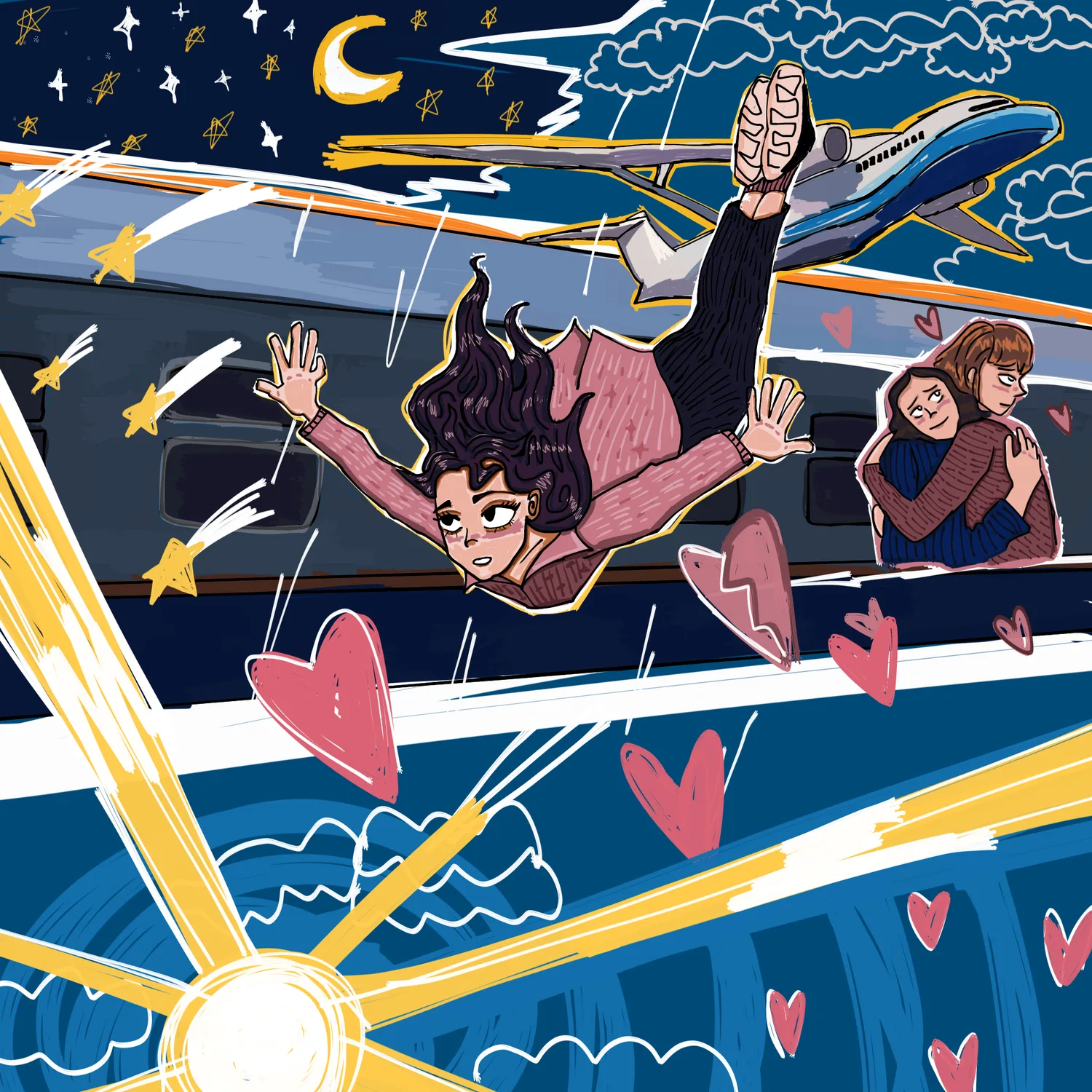
Illustration by Kamilla Serikbay
Whoever I kiss,
Whenever I bleed,
Teach me that comfort is not my answer.
Wherever I go,
However I breathe,
Show me that liberty lies in expansion.
As I slip
Through the cities
Through the chaos,
Through the trains,
I ease
Into the unknown,
Into the nothing,
That follows a dream.
The days repeat,
And nights come quickly.
I focus on the present,
And I reminisce the past.
For more lessons to be taught,
For less of my pain to be left —
I plead for today to stay,
Letting go of my yesterday.
Nonfiction
class of 2023
Rugged sweaters—gray and blue—chipping logos, stray papers, smudged charcoal clashing with red ink; linoleum floors and fluorescent lights, the strong, sweet smell of stress and expectation and competition, strong in the hallways, but stronger still in classrooms, behind wooden desks and doors blacked out with shades. Sweet like envy, sweet like poison, overwhelming but addicting all the same; it drives the machines in circles, promises of fulfillment leading them up stairwells and into closed-stall bathrooms, parking lots and laboratories.
Hands meant for play molded to thumbing through textbooks, cramped around a mechanical pencil; red-rimmed eyes bloodied by expectation, brains hard-wired to chase grades, not dreams, promised later happiness in exchange for present boredom. Intellectual minds dulled by repetition after repetition, structure after structure—killer of creativity. But in a world where success is measured by conformity, there is no room for individuality.
Every ninety minutes the machines come to life, pouring into the halls, floors paved by those who came before them—generations after generations framed on the second-floor walls, smiling faces, successful products worthy of praise. Soon, they will be just that: a memory, a faint ghost hovering, spirits lingering, tied by the unfulfilling weight of regret.
4 years and it’s not enough but too much all at once, 1,600 souls machines in the pursuit of happiness; forever searching for the right thing in all the wrong places.
Hands meant for play molded to thumbing through textbooks, cramped around a mechanical pencil; red-rimmed eyes bloodied by expectation, brains hard-wired to chase grades, not dreams, promised later happiness in exchange for present boredom. Intellectual minds dulled by repetition after repetition, structure after structure—killer of creativity. But in a world where success is measured by conformity, there is no room for individuality.
Every ninety minutes the machines come to life, pouring into the halls, floors paved by those who came before them—generations after generations framed on the second-floor walls, smiling faces, successful products worthy of praise. Soon, they will be just that: a memory, a faint ghost hovering, spirits lingering, tied by the unfulfilling weight of regret.
4 years and it’s not enough but too much all at once, 1,600 souls machines in the pursuit of happiness; forever searching for the right thing in all the wrong places.
Nonfiction
class of 2027
Rugged sweaters—gray and blue—chipping logos, stray papers, smudged charcoal clashing with red ink; linoleum floors and fluorescent lights, the strong, sweet smell of stress and expectation and competition, strong in the hallways, but stronger still in classrooms, behind wooden desks and doors blacked out with shades. Sweet like envy, sweet like poison, overwhelming but addicting all the same; it drives the machines in circles, promises of fulfillment leading them up stairwells and into closed-stall bathrooms, parking lots and laboratories.
Hands meant for play molded to thumbing through textbooks, cramped around a mechanical pencil; red-rimmed eyes bloodied by expectation, brains hard-wired to chase grades, not dreams, promised later happiness in exchange for present boredom. Intellectual minds dulled by repetition after repetition, structure after structure—killer of creativity. But in a world where success is measured by conformity, there is no room for individuality.
Every ninety minutes the machines come to life, pouring into the halls, floors paved by those who came before them—generations after generations framed on the second-floor walls, smiling faces, successful products worthy of praise. Soon, they will be just that: a memory, a faint ghost hovering, spirits lingering, tied by the unfulfilling weight of regret.
4 years and it’s not enough but too much all at once, 1,600 souls machines in the pursuit of happiness; forever searching for the right thing in all the wrong places.
Hands meant for play molded to thumbing through textbooks, cramped around a mechanical pencil; red-rimmed eyes bloodied by expectation, brains hard-wired to chase grades, not dreams, promised later happiness in exchange for present boredom. Intellectual minds dulled by repetition after repetition, structure after structure—killer of creativity. But in a world where success is measured by conformity, there is no room for individuality.
Every ninety minutes the machines come to life, pouring into the halls, floors paved by those who came before them—generations after generations framed on the second-floor walls, smiling faces, successful products worthy of praise. Soon, they will be just that: a memory, a faint ghost hovering, spirits lingering, tied by the unfulfilling weight of regret.
4 years and it’s not enough but too much all at once, 1,600 souls machines in the pursuit of happiness; forever searching for the right thing in all the wrong places.
Poetry
Farewell, Summer
To: Fall
From: Summer (Ease)
Subject: Change Underway
You whisper
In my dream
That it will all be fine
I‘ll build a new house
Of stones yet to find
And will call it my new home
I see outstretched hands
A hundred smiles, it seems
See how you’ll make me grow
I see myself brave and bold
From: Summer (Ease)
Subject: Change Underway
You whisper
In my dream
That it will all be fine
But how can I trust
When I awake?
When I awake?
I‘ll build a new house
Of stones yet to find
And will call it my new home
But who promises me
That I won’t be
Across the globe
Alone?
I close my eyesThat I won’t be
Across the globe
Alone?
I see outstretched hands
A hundred smiles, it seems
But when I open my lids
I am afraid to be told
My desires were merely
A dream
I gaze at youI am afraid to be told
My desires were merely
A dream
See how you’ll make me grow
I see myself brave and bold
But then I doubt
That I will be able
So far from home
To gain foothold
That I will be able
So far from home
To gain foothold
Is there a right
Is there a found
And a final destination
No signpost
Infinite paths
I‘ll fall and fail
I know
Change paths
Change me, change us
Untie and tie
My ropes
And if I fail,
So what, I’ll grow
- Constant reformation-
So you wake me andIs there a found
And a final destination
No signpost
Infinite paths
I‘ll fall and fail
I know
Change paths
Change me, change us
Untie and tie
My ropes
And if I fail,
So what, I’ll grow
- Constant reformation-
You say
In my face
In all clarity
Let yourself fall
And I trust
That it won’t be perfect
But it will come with time.Nonfiction
Sustainability
“You know that whales sing to their loved ones?”
“No, they just make noises because they want to f*ck.”
“Really? And how is that different from human love serenades?”
“No, they just make noises because they want to f*ck.”
“Really? And how is that different from human love serenades?”
Why do we give the privilege of feelings only to the human race?
Why do we think we are the only ones entitled to love?
Is it because we would have to accept
the fact
that we kill sensible beings for the market?
Is it because we would have to accept
the burden
of the consciousness of the villain?
“Hmm, yes, but humans were made to eat meat.”
“Yes, we were, we need it.
It’s people’s livelihood, it’s people’s culture,
but we are acting like a dominant vulture.
We’re waiting so we can take more.”
“Yes, we were, we need it.
It’s people’s livelihood, it’s people’s culture,
but we are acting like a dominant vulture.
We’re waiting so we can take more.”
Actually no,
vultures wait until an animal dies,
humans kill for leisure,
or maybe for pleasure,
and we schedule our kills.
We are nothing alike.
We wish we could be.
So we villainize animals
that we kill for free.
that we kill for free.
But wait, veganism is not the road to take,
it doesn’t see the obvious.
It doesn’t see how the access inequality
defines the availability
of choice in diet.
Some don’t choose what they eat,
whether it’s tofu or meat.
We cannot choose for others,
as diet is culture
and culture is scarce
in this globalized world;
so let’s not steal it
from those who preserve
what they’ve been taught
even if it includes
some meat.
Veganism acts as if meat was just a substance,
but it isn’t, it’s more than that
for many on this planet.
Yet I agree,
the problem is how we consume,
How we live and interact with nature,
Eating meat doesn’t have to mean
Torturing stock without a blink
Of an eye.
We can show humanity
In killing
When it’s for necessity
and not profit.
Still, praising vegans as saviors,
is one of many flaws of the West,
the rhetorics are almost religious,
dismissing the rest,
That has never been a solution
to any problem,
it only creates a division
among us:
humans.
I wish I would know,
what would be the solution,
rather than criticizing the present
but I don’t.
It seems to be a cycle.
I just know that
systemic changes happen slowly,
and time is a currency
we don’t own much of
and that has no exchange rate for money.
So I guess we are just broke(n).
Nonfiction
Being and Becoming
The conflict between the being and the non-being of things, of the eternal change and permanence of beings. Of the complementary duality between ephemerality and longevity: Heraclitus and Parmenides.
Embraced in this eternal being and becoming is what motivates me to live. I thought for a long time that putting down roots would be the same as being and living—form to justify my reality. As an ancient tree with nests, vines and different species of birds feeding on its fruit creates a stable ecosystem, I thought that was how life should be: going to college, finding a job, having a partner, having kids, dying. That was the formula of living sold to and bought by me for a long time. Happiness would come from dedication and faithfulness to routine and rites. However, looking closely at this ecosystem, we see that the birds are not the same.
The branches die and fall. The leaves change. The roots decay. The tree is in constant modification. Its immutability is a macroscopic and chronological illusion. One must get closer to see that happiness is not built from recipes and steps already defined. It is a daily choice.
It takes time to realize that everything transforms, even in small steps.
Leaving my family and meeting people from different backgrounds and perspectives made me see that there is so much similarity between so many different peoples and beliefs—just like branches in a big tree. And like a bird, I fled my home and tried to nest in other trees. Many welcomed me— – many did not. They changed and so did I. I met other birds looking out for the greatest metamorphosis. Just like me, they did not know it was already inside of them. Mustard seeds ready to germinate.
In a society driven by instant consumerism where everything is disposable, we find ourselves trapped in this volatile lifestyle. Never taking roots. Always flying. Never stopping and enjoying the raindrops that glisten on the ground. But always moving, getting wet and dry and wet again.
Loneliness lies there. In that gap between the ephemeral being and the eternal becoming of self.
For the first time, I made my solo trip. In Bangkok, I created nests. Local and foreign friends welcomed me with a warmth that I thought belonged to the restlessness. Working in a hostel teaches you about the transience of encounters. Some went unnoticed if they left too soon—others, like me, took a while. Became rooted. Some already had well-established roots. In them, I created nests, and when I flew, they were empty.
What is life if not the embrace of what will exist and what has already existed? I read from a fellow countrywoman that living is more than accepting the lack, it is wanting it not to go away. Empty nests are necessary for a living tree. They indicate there was life, and always will be. Although, each branch is an endless possibility – the drunkard's walk.
Then I flew to Costa Rica.
The certainty that I would fly again did not stop me from making my home with people and letting them live with me. Fear is important, but if not handled well, it becomes a great enemy. It paralyzes rooting and prevents first-throw momentum. It stagnates. Fear is part of life, and the stagnation it generates must be temporary, otherwise there is no life. Its liveliness is created from its being and becoming. Here is a sacred continuum. The Brazilian romanticist, Adelia Prado, used to say that what seems static, waits; and what seems dead, fertilizes. Just like stagnation and death, fear can still be a valuable pathway to something greater.
Accepting and embarking on this paradoxical motion is a constant learning process. EARTH University— – where I engaged with different differences. Coming from Brazil, it was a great joy for me to meet the diversity of people and peoples that I had always heard about but had never spoken to. People that have always been around me unnoticed: Peruvians, Paraguayans, Ecuadorians, Bolivians, Caribbeans, Kenyans, Rwandans. Open-veins bodies. Everyone was there. Not idealized, their presences were acts of resistance. Not transient, not static. Constant. They taught me a lot about their lives. And I listened.
I also found a Brazilian community that welcomed me like a returning son. I could not understand this feeling of home away from home. In my life, its concept has changed. Sometimes I wanted it to be like a foundation stone, other times, like a holy dance.
After all, everything passes—and they did. However, I have learned that some things stay. Pieces of my heart remained. I planted them. Roots and nests.
I flew and I did not look back—or perhaps, I did, but my friends did not notice. They were receiving new birds and I was creating new nests.
Embraced in this eternal being and becoming is what motivates me to live. I thought for a long time that putting down roots would be the same as being and living—form to justify my reality. As an ancient tree with nests, vines and different species of birds feeding on its fruit creates a stable ecosystem, I thought that was how life should be: going to college, finding a job, having a partner, having kids, dying. That was the formula of living sold to and bought by me for a long time. Happiness would come from dedication and faithfulness to routine and rites. However, looking closely at this ecosystem, we see that the birds are not the same.
The branches die and fall. The leaves change. The roots decay. The tree is in constant modification. Its immutability is a macroscopic and chronological illusion. One must get closer to see that happiness is not built from recipes and steps already defined. It is a daily choice.
It takes time to realize that everything transforms, even in small steps.
Leaving my family and meeting people from different backgrounds and perspectives made me see that there is so much similarity between so many different peoples and beliefs—just like branches in a big tree. And like a bird, I fled my home and tried to nest in other trees. Many welcomed me— – many did not. They changed and so did I. I met other birds looking out for the greatest metamorphosis. Just like me, they did not know it was already inside of them. Mustard seeds ready to germinate.
In a society driven by instant consumerism where everything is disposable, we find ourselves trapped in this volatile lifestyle. Never taking roots. Always flying. Never stopping and enjoying the raindrops that glisten on the ground. But always moving, getting wet and dry and wet again.
Loneliness lies there. In that gap between the ephemeral being and the eternal becoming of self.
For the first time, I made my solo trip. In Bangkok, I created nests. Local and foreign friends welcomed me with a warmth that I thought belonged to the restlessness. Working in a hostel teaches you about the transience of encounters. Some went unnoticed if they left too soon—others, like me, took a while. Became rooted. Some already had well-established roots. In them, I created nests, and when I flew, they were empty.
What is life if not the embrace of what will exist and what has already existed? I read from a fellow countrywoman that living is more than accepting the lack, it is wanting it not to go away. Empty nests are necessary for a living tree. They indicate there was life, and always will be. Although, each branch is an endless possibility – the drunkard's walk.
Then I flew to Costa Rica.
The certainty that I would fly again did not stop me from making my home with people and letting them live with me. Fear is important, but if not handled well, it becomes a great enemy. It paralyzes rooting and prevents first-throw momentum. It stagnates. Fear is part of life, and the stagnation it generates must be temporary, otherwise there is no life. Its liveliness is created from its being and becoming. Here is a sacred continuum. The Brazilian romanticist, Adelia Prado, used to say that what seems static, waits; and what seems dead, fertilizes. Just like stagnation and death, fear can still be a valuable pathway to something greater.
Accepting and embarking on this paradoxical motion is a constant learning process. EARTH University— – where I engaged with different differences. Coming from Brazil, it was a great joy for me to meet the diversity of people and peoples that I had always heard about but had never spoken to. People that have always been around me unnoticed: Peruvians, Paraguayans, Ecuadorians, Bolivians, Caribbeans, Kenyans, Rwandans. Open-veins bodies. Everyone was there. Not idealized, their presences were acts of resistance. Not transient, not static. Constant. They taught me a lot about their lives. And I listened.
I also found a Brazilian community that welcomed me like a returning son. I could not understand this feeling of home away from home. In my life, its concept has changed. Sometimes I wanted it to be like a foundation stone, other times, like a holy dance.
After all, everything passes—and they did. However, I have learned that some things stay. Pieces of my heart remained. I planted them. Roots and nests.
I flew and I did not look back—or perhaps, I did, but my friends did not notice. They were receiving new birds and I was creating new nests.