Introduction
Foreword
Nonfiction
The Sun Will Rise
April 26, 2024, Berlin
I am scared. Tomorrow, I am embarking on a twelve-hour train ride from Berlin to Paris, back to the city I used to call home ten years ago. Does the city have the potential to become home again? Or would I now feel like a stranger in the place that once brought me a sense of home?
I grew up between cultures. Being from everywhere is like being from nowhere. I never belonged somewhere the way some people appear to be connected to their hometowns. I spent most of my childhood in Paris, but even as a child, I was aware that I was seen as an outsider – from how often my name was changed by autocorrect or how people commented on my “good Parisian accent” that is now gone.
In Tokyo, my friends complimented my clothes saying they looked foreign despite all my wardrobe being acquired in Japan. My parents, who taught me Japanese, think that my native language skills are questionable; I don’t trust myself to write essays in Japanese anymore.
Moving to Berlin with Minerva was my first time in Europe since I left after finishing elementary school. The distance between me and my childhood home was the closest in ten years, but strangely, I did not have the urge to hop on a flight on the first weekend, the first break, or the next…
After some time, I had to realize: I was scared. I was scared of facing how bad my French had become, scared of not being able to find familiarity in Paris anymore. And most of all, scared of not having the liberty to imagine what Paris has become in my head. I avoided looking up my neighborhood on Google street view for the past ten years to preserve the imaginary freedom that only ignorance allows for.
Seeing the reality of what Paris has become would come at the cost of letting go of everything it could have been in my mind. I did not want to leave the safety of my imagination and be faced with the reality of what Paris had become – the same as not wanting to wake up from a dream even when I knew that I was dreaming.
But I decided to take a leap of faith. Faith that I would be able to process what Paris and I have both become over the past decade, and faith to make peace with it.
April 27, 2024, Paris
I wasn’t aware of it when I booked my trains, but I think I needed to approach the city slowly. I wanted to do this long-awaited reunion justice by taking the time to build the proper anticipation. Because letting dreams fade by waking up naturally to the sun shining through the window feels much better than being startled into consciousness by a blaring alarm.
But there are no dreams from which you don’t wake up, and trains eventually make it to their destination. After three transfers, I was there. Paris. I stood in the bustle of North Station, looking for a sense of familiarity.
I found it first in the metro tickets, the street signs, and in the grocery stores. The big bags of Haribo snacks that my parents never allowed me to buy, or different types of mineral water that I forgot existed.
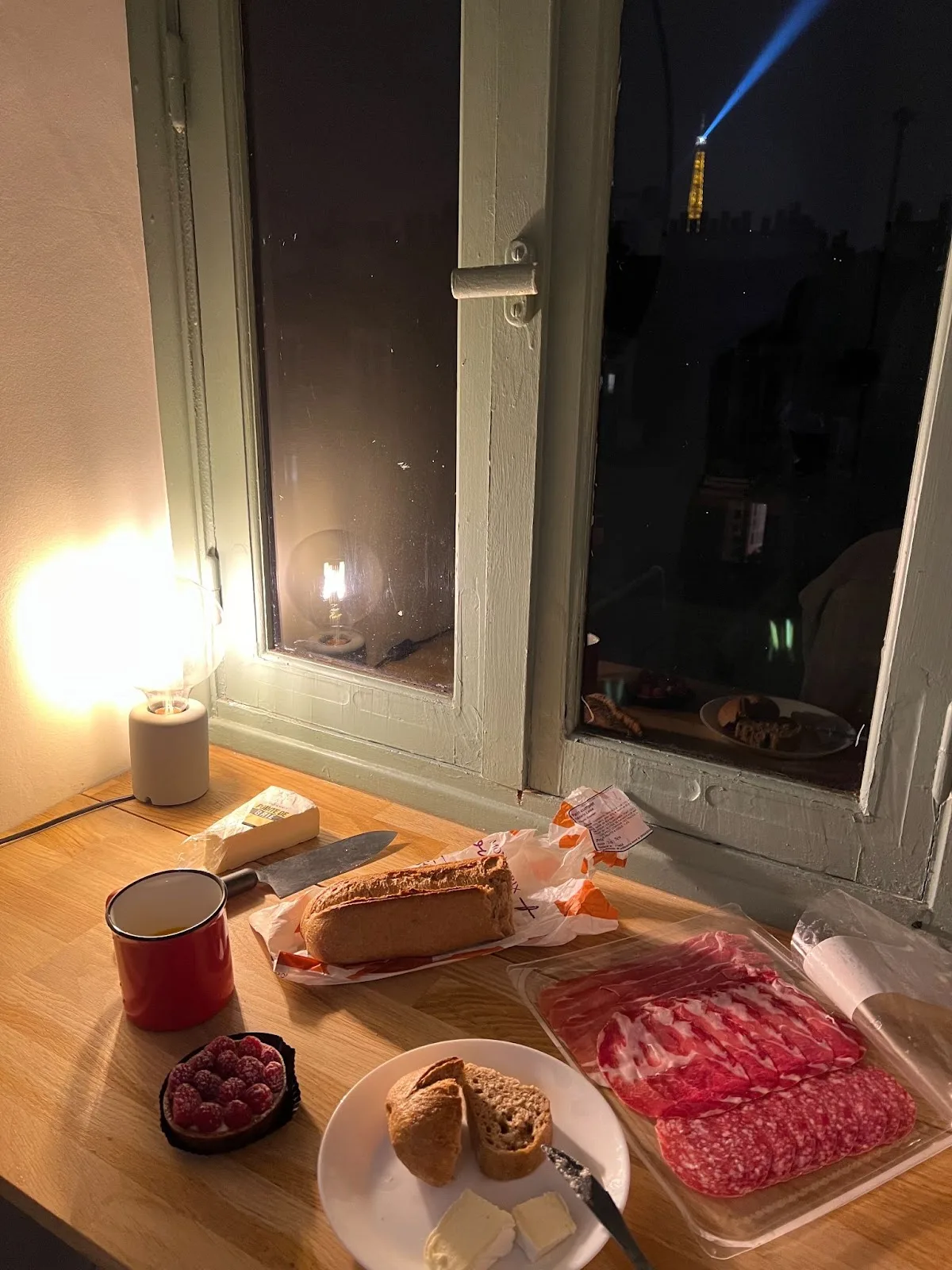
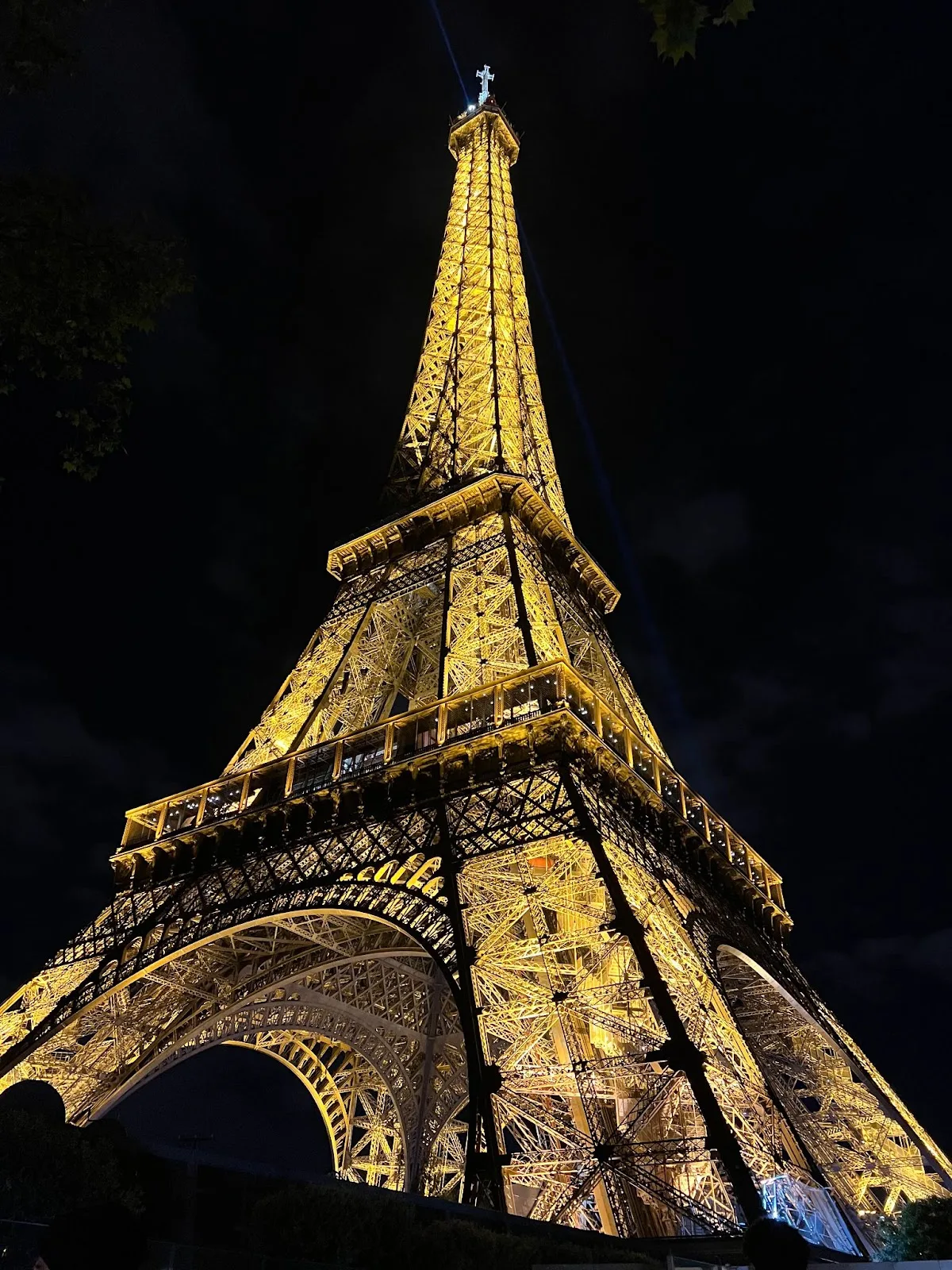
It was already night when I made it back to my room for the stay. As I was gazing through the window, the Eiffel Tower was standing still, shining quietly and diligently – in the same illumination pattern as ten years ago – indifferent to my excitement. But it also felt like my very own welcome back message from the city.
June 4, 2024, Paris
Even after getting here, I needed to take my memory tour slowly. Last week, I finally called my elementary school principal, who kindly agreed to let me visit the school.
Classes were still in session when I arrived, but the colorfulness and energy of the school immediately brought me back to when I was a student there. I met my old teachers and talked to them in the printing room, which used to be off-limits for students; somehow, it still felt wrong after all these years.
I stopped at my old classrooms and facilities one by one. Some of them were repurposed completely, others looked similar but with different name cards. The unchanged structure of the building made the shifts in its use more apparent. Classrooms were reassigned based on the number of students, and art that was up ten years ago was gone and replaced by creations of current students. Drawings and posters that my classmates and I left were slowly disappearing, reminding me of the impermanence of my presence in any place.
“I have a feeling that you actually want to become a teacher,” said my first-grade teacher as I looked at the shelves full of books after saying that I was studying political science.
Maybe I do want to be a teacher and have that sort of conversation with old students.
June 15, 2024, Paris
My last day in Paris was a little rainy.
I did a last tour of the places I used to go as a child, and saw my elementary school best friend, to make our first goodbye ten years ago really only a “see you later.”
When I first left Paris, what hurt me most was the unavoidable reality that I would not be able to experience the moments that meant everything to me anymore. Laughing during school recess for things that do not make any sense, seeing my friends and teachers, hanging out in the park after school.
And 10-year-old me was right. Moments don’t come back. I won’t be as close with my elementary school friends as I used to be, and I won’t be a kid forever. But the impermanence of these memories does not make them any less real.
In fact, memories live on even after I leave. Teachers at my elementary school still remembering me or staying connected to my friends means that I never really left Paris. Even if it is not home anymore, my memory lingers — maybe that means I haven’t left definitely yet.
As I was going to bed for the last time, I was watching the Eiffel Tower shining through the window, like the first day I arrived, and like it will continue after I leave. I found my own smallness in an old and rich city comforting.
I am scared. Tomorrow, I am embarking on a twelve-hour train ride from Berlin to Paris, back to the city I used to call home ten years ago. Does the city have the potential to become home again? Or would I now feel like a stranger in the place that once brought me a sense of home?
I grew up between cultures. Being from everywhere is like being from nowhere. I never belonged somewhere the way some people appear to be connected to their hometowns. I spent most of my childhood in Paris, but even as a child, I was aware that I was seen as an outsider – from how often my name was changed by autocorrect or how people commented on my “good Parisian accent” that is now gone.
In Tokyo, my friends complimented my clothes saying they looked foreign despite all my wardrobe being acquired in Japan. My parents, who taught me Japanese, think that my native language skills are questionable; I don’t trust myself to write essays in Japanese anymore.
Moving to Berlin with Minerva was my first time in Europe since I left after finishing elementary school. The distance between me and my childhood home was the closest in ten years, but strangely, I did not have the urge to hop on a flight on the first weekend, the first break, or the next…
After some time, I had to realize: I was scared. I was scared of facing how bad my French had become, scared of not being able to find familiarity in Paris anymore. And most of all, scared of not having the liberty to imagine what Paris has become in my head. I avoided looking up my neighborhood on Google street view for the past ten years to preserve the imaginary freedom that only ignorance allows for.
Seeing the reality of what Paris has become would come at the cost of letting go of everything it could have been in my mind. I did not want to leave the safety of my imagination and be faced with the reality of what Paris had become – the same as not wanting to wake up from a dream even when I knew that I was dreaming.
But I decided to take a leap of faith. Faith that I would be able to process what Paris and I have both become over the past decade, and faith to make peace with it.
April 27, 2024, Paris
I wasn’t aware of it when I booked my trains, but I think I needed to approach the city slowly. I wanted to do this long-awaited reunion justice by taking the time to build the proper anticipation. Because letting dreams fade by waking up naturally to the sun shining through the window feels much better than being startled into consciousness by a blaring alarm.
But there are no dreams from which you don’t wake up, and trains eventually make it to their destination. After three transfers, I was there. Paris. I stood in the bustle of North Station, looking for a sense of familiarity.
I found it first in the metro tickets, the street signs, and in the grocery stores. The big bags of Haribo snacks that my parents never allowed me to buy, or different types of mineral water that I forgot existed.
It was already night when I made it back to my room for the stay. As I was gazing through the window, the Eiffel Tower was standing still, shining quietly and diligently – in the same illumination pattern as ten years ago – indifferent to my excitement. But it also felt like my very own welcome back message from the city.
June 4, 2024, Paris
Even after getting here, I needed to take my memory tour slowly. Last week, I finally called my elementary school principal, who kindly agreed to let me visit the school.
Classes were still in session when I arrived, but the colorfulness and energy of the school immediately brought me back to when I was a student there. I met my old teachers and talked to them in the printing room, which used to be off-limits for students; somehow, it still felt wrong after all these years.
I stopped at my old classrooms and facilities one by one. Some of them were repurposed completely, others looked similar but with different name cards. The unchanged structure of the building made the shifts in its use more apparent. Classrooms were reassigned based on the number of students, and art that was up ten years ago was gone and replaced by creations of current students. Drawings and posters that my classmates and I left were slowly disappearing, reminding me of the impermanence of my presence in any place.
“I have a feeling that you actually want to become a teacher,” said my first-grade teacher as I looked at the shelves full of books after saying that I was studying political science.
Maybe I do want to be a teacher and have that sort of conversation with old students.
June 15, 2024, Paris
My last day in Paris was a little rainy.
I did a last tour of the places I used to go as a child, and saw my elementary school best friend, to make our first goodbye ten years ago really only a “see you later.”
When I first left Paris, what hurt me most was the unavoidable reality that I would not be able to experience the moments that meant everything to me anymore. Laughing during school recess for things that do not make any sense, seeing my friends and teachers, hanging out in the park after school.
And 10-year-old me was right. Moments don’t come back. I won’t be as close with my elementary school friends as I used to be, and I won’t be a kid forever. But the impermanence of these memories does not make them any less real.
In fact, memories live on even after I leave. Teachers at my elementary school still remembering me or staying connected to my friends means that I never really left Paris. Even if it is not home anymore, my memory lingers — maybe that means I haven’t left definitely yet.
As I was going to bed for the last time, I was watching the Eiffel Tower shining through the window, like the first day I arrived, and like it will continue after I leave. I found my own smallness in an old and rich city comforting.
Nonfiction
Seoul Oatmeal
I know ice cream is dessert, but I can justify eating it for breakfast. Time is confusing enough without bringing food into it. Plus, plain milk ice cream is barely even ice cream. It's not even flavored. It's the ice cream used in an affogato. It's just a scoop, maybe two, that I plop on my hot oatmeal, cashews, and cacao powder. Some Italian cafes refuse to label affogato as a dessert. It's a beverage, they say.
I like that kind of thinking.
I cook my oatmeal with water, so adding a scoop of ice cream is no different from adding sugar and milk.
Normal people do it.
While I don’t usually buy ice cream, the previous night was special. This is the story of the ice cream that ended up on my oats. The previous morning, I traveled far south of Seoul’s Han River to attend an event with Minervans and schoolchildren from North Korea, only to arrive and learn it was canceled due to Covid. Instead of traveling for hours on a series of trains and buses back north of the Han River to our Minerva residence near Namsan Park, I stopped to look around.
It is springtime in Seoul.
The difference between summer and winter is like the difference between a film and a photograph. In winter, all signs of time slow to a stop. Many insects lose all ability to move when it gets too cold. The ponds and rivers become parking lots and roads of ice. The ducks have long migrated away, leaving only turtles brumating in the mud. Above ground, we mammals with enough fur or intelligence frolic in frozen time when all else is still. My favorite superpower is stopping time, and luckily for me it nearly happens every winter.
As spring comes, the sun sets the world in motion. Faster and faster the semester in Korea spins ever faster, and I can't keep up with the speed of the growing buds, blooming cherry blossoms, and my own emerging but quiet addiction to bungeoppang.
I stop at a street stand to buy three of these red bean paste fish-shaped pastries.
In an effort to slow down and digest my snack, I walk to the nearby Yangjae Citizen's Forest. It’s warm enough to pull out a guidebook and identify the bird in the tree as an Oriental turtle dove, but cold enough to still wear a hoodie and a light jacket.
Like a good Minervan, my phone has two primary uses: opening Telegram only to ignore the messages people send me and performing internet speed tests. By Korean standards, the wifi in the forest is slow: 40 mb/s, though it is fast enough for a Forum class. My session on sunk costs and discount rates is coming up in an hour.
At Minerva we learn one should not base decisions on previously sunk costs because you can land in sub-optimal situations. If your ice cream business invested money in buying high quality vanilla beans, but your customers really want plain ice cream, then you ought not to stubbornly persist in mixing vanilla into your batches of plain ice cream. But today I found sunk costs encouraged exploration rather than stagnation. I already invested time in going to southern Seoul, so even if my reason to be here evaporated, I could always condense a new purpose out of the fresh forest air.
My wandering takes me to an aesthetically pleasing, if not entirely comfortable, root system that proceeds to hug me against the trunk of a pine tree. I join the Forum class from my laptop, and I twirl the linear pine needles into hyperbolic and exponential discounting curves, mimicking the ones on my screen. I let go and they bounce back. I do not mind my inability to shape the world today.
One of my favorite things about Minerva is I find myself bored after, not during, class. To find relief from the pain of nothing, I start to walk. The secondary uses of my phone are to orient myself in space (Google Maps) and time (Google Calendar). The calendar tells me I have nothing to do for the rest of the day. The map gets me out of the forest and heading north back to the residence near Namsan Park.
My phone has no tertiary uses.
The battery dies by the time I reach Gangnam.
Unlike running or biking, walking is easy enough on my body to move for a full day. It is also slower, which means when I walk for a long time, I walk through time as much if not more than I walk through space.
The previously empty afternoon streets flood with suits leaving important office buildings in Gangnam. Construction forces the flow of people into a narrower stream. Reinforcing loops blur my consciousness. People go to work to make money to buy their suits, watches, and cars, to impress people so they can make more money to buy more suits, watches, and cars. I see a Dunkin Donuts and walk in because I feel homesick for New England, thus reinforcing my own association between Dunkin and the place I come from. One person a few meters ahead steps to the right or left and changes the motion of everyone snaking behind them.
I walk past the time when everyone finishes their commute. The streets darken and empty. Multicolored lights outline bridges over the Han River. I lose sight of Namsan Seoul Tower, my North Star, when I reach the northern river bank, but I have strong faith in my internal compass. I tell myself I’m not scared of being alone at night in the city.
Revision: I’m not scared of being scared.
I know I will make it home. I can always stop in a small restaurant and ask them to charge my phone. But I don’t. I’m close. I’m hungry and should treat myself to a reward after my long walk. Bright plasticky lights entice me into a Baskin Robbins. They ask if I want dry ice to keep my plain ice cream cold and I say no. I don’t have far, I think. I do not want to impose. As soon as I step out of the store, my doubt doubles down.
I walk back in and ask for dry ice.
My ramble reiterates versions of unknown Seoul spaces, though time clearly continues. The sun already set, restaurants start to close, and bright lights illuminate signs and point out a security camera watching the neighborhood.
Big Brother knows where I am better than I do.
I need to get a better view of the city. I’m pining for a glimpse of Namsan to reorient myself. I go to the top of a forested hill. With a fresh view of Namsan Seoul Tower to my west, I stop to rest and eat ice cream. A combination of gravity, a body, and a winding path covered in layers of what looks like matted rope bring me down the hill closer to home.
After another hour I stumble into a few recognizable blocks of Itaewon with cafes in which I have studied. Up and down a few more hills and I make it to our residence hall at the base of Namsan. Minervans wander in Brownian motion between common spaces filled with cushions, ping-pong tables, fake grass, and washing machines. I say hi and ask if they want ice cream. Some friends take a scoop, but by the time I want to go to bed, there is still enough left over that I need to put it in the freezer.
I walk in my dreams, dancing with gravity down hills, over rocks, and through frozen waterfalls that swim with bungeoppang. Everything changes. I wake up and feel like a freshly made candle, waiting for the day to first illuminate me and then burn me down again.
The res hall’s wooden deck outside the first floor calls out with an echo of the pine tree roots that hugged me yesterday in Yangjae Citizen's Forest. I step outside before everyone else is up, cradling my bowl of hot oatmeal, cashews, cacao powder, and a scoop of plain ice cream. I sink into the city as the morning begins. In a strange loop that will reinvent itself every three and a half months for the next few years of Minerva, I’m confused by my own certainty that it is morning, I am awake, and I happen to know where I am.
I like that kind of thinking.
I cook my oatmeal with water, so adding a scoop of ice cream is no different from adding sugar and milk.
Normal people do it.
While I don’t usually buy ice cream, the previous night was special. This is the story of the ice cream that ended up on my oats. The previous morning, I traveled far south of Seoul’s Han River to attend an event with Minervans and schoolchildren from North Korea, only to arrive and learn it was canceled due to Covid. Instead of traveling for hours on a series of trains and buses back north of the Han River to our Minerva residence near Namsan Park, I stopped to look around.
It is springtime in Seoul.
The difference between summer and winter is like the difference between a film and a photograph. In winter, all signs of time slow to a stop. Many insects lose all ability to move when it gets too cold. The ponds and rivers become parking lots and roads of ice. The ducks have long migrated away, leaving only turtles brumating in the mud. Above ground, we mammals with enough fur or intelligence frolic in frozen time when all else is still. My favorite superpower is stopping time, and luckily for me it nearly happens every winter.
As spring comes, the sun sets the world in motion. Faster and faster the semester in Korea spins ever faster, and I can't keep up with the speed of the growing buds, blooming cherry blossoms, and my own emerging but quiet addiction to bungeoppang.
I stop at a street stand to buy three of these red bean paste fish-shaped pastries.
In an effort to slow down and digest my snack, I walk to the nearby Yangjae Citizen's Forest. It’s warm enough to pull out a guidebook and identify the bird in the tree as an Oriental turtle dove, but cold enough to still wear a hoodie and a light jacket.
Like a good Minervan, my phone has two primary uses: opening Telegram only to ignore the messages people send me and performing internet speed tests. By Korean standards, the wifi in the forest is slow: 40 mb/s, though it is fast enough for a Forum class. My session on sunk costs and discount rates is coming up in an hour.
At Minerva we learn one should not base decisions on previously sunk costs because you can land in sub-optimal situations. If your ice cream business invested money in buying high quality vanilla beans, but your customers really want plain ice cream, then you ought not to stubbornly persist in mixing vanilla into your batches of plain ice cream. But today I found sunk costs encouraged exploration rather than stagnation. I already invested time in going to southern Seoul, so even if my reason to be here evaporated, I could always condense a new purpose out of the fresh forest air.
My wandering takes me to an aesthetically pleasing, if not entirely comfortable, root system that proceeds to hug me against the trunk of a pine tree. I join the Forum class from my laptop, and I twirl the linear pine needles into hyperbolic and exponential discounting curves, mimicking the ones on my screen. I let go and they bounce back. I do not mind my inability to shape the world today.
One of my favorite things about Minerva is I find myself bored after, not during, class. To find relief from the pain of nothing, I start to walk. The secondary uses of my phone are to orient myself in space (Google Maps) and time (Google Calendar). The calendar tells me I have nothing to do for the rest of the day. The map gets me out of the forest and heading north back to the residence near Namsan Park.
My phone has no tertiary uses.
The battery dies by the time I reach Gangnam.
Unlike running or biking, walking is easy enough on my body to move for a full day. It is also slower, which means when I walk for a long time, I walk through time as much if not more than I walk through space.
The previously empty afternoon streets flood with suits leaving important office buildings in Gangnam. Construction forces the flow of people into a narrower stream. Reinforcing loops blur my consciousness. People go to work to make money to buy their suits, watches, and cars, to impress people so they can make more money to buy more suits, watches, and cars. I see a Dunkin Donuts and walk in because I feel homesick for New England, thus reinforcing my own association between Dunkin and the place I come from. One person a few meters ahead steps to the right or left and changes the motion of everyone snaking behind them.
I walk past the time when everyone finishes their commute. The streets darken and empty. Multicolored lights outline bridges over the Han River. I lose sight of Namsan Seoul Tower, my North Star, when I reach the northern river bank, but I have strong faith in my internal compass. I tell myself I’m not scared of being alone at night in the city.
Revision: I’m not scared of being scared.
I know I will make it home. I can always stop in a small restaurant and ask them to charge my phone. But I don’t. I’m close. I’m hungry and should treat myself to a reward after my long walk. Bright plasticky lights entice me into a Baskin Robbins. They ask if I want dry ice to keep my plain ice cream cold and I say no. I don’t have far, I think. I do not want to impose. As soon as I step out of the store, my doubt doubles down.
I walk back in and ask for dry ice.
My ramble reiterates versions of unknown Seoul spaces, though time clearly continues. The sun already set, restaurants start to close, and bright lights illuminate signs and point out a security camera watching the neighborhood.
Big Brother knows where I am better than I do.
I need to get a better view of the city. I’m pining for a glimpse of Namsan to reorient myself. I go to the top of a forested hill. With a fresh view of Namsan Seoul Tower to my west, I stop to rest and eat ice cream. A combination of gravity, a body, and a winding path covered in layers of what looks like matted rope bring me down the hill closer to home.
After another hour I stumble into a few recognizable blocks of Itaewon with cafes in which I have studied. Up and down a few more hills and I make it to our residence hall at the base of Namsan. Minervans wander in Brownian motion between common spaces filled with cushions, ping-pong tables, fake grass, and washing machines. I say hi and ask if they want ice cream. Some friends take a scoop, but by the time I want to go to bed, there is still enough left over that I need to put it in the freezer.
I walk in my dreams, dancing with gravity down hills, over rocks, and through frozen waterfalls that swim with bungeoppang. Everything changes. I wake up and feel like a freshly made candle, waiting for the day to first illuminate me and then burn me down again.
The res hall’s wooden deck outside the first floor calls out with an echo of the pine tree roots that hugged me yesterday in Yangjae Citizen's Forest. I step outside before everyone else is up, cradling my bowl of hot oatmeal, cashews, cacao powder, and a scoop of plain ice cream. I sink into the city as the morning begins. In a strange loop that will reinvent itself every three and a half months for the next few years of Minerva, I’m confused by my own certainty that it is morning, I am awake, and I happen to know where I am.
Sequential Art
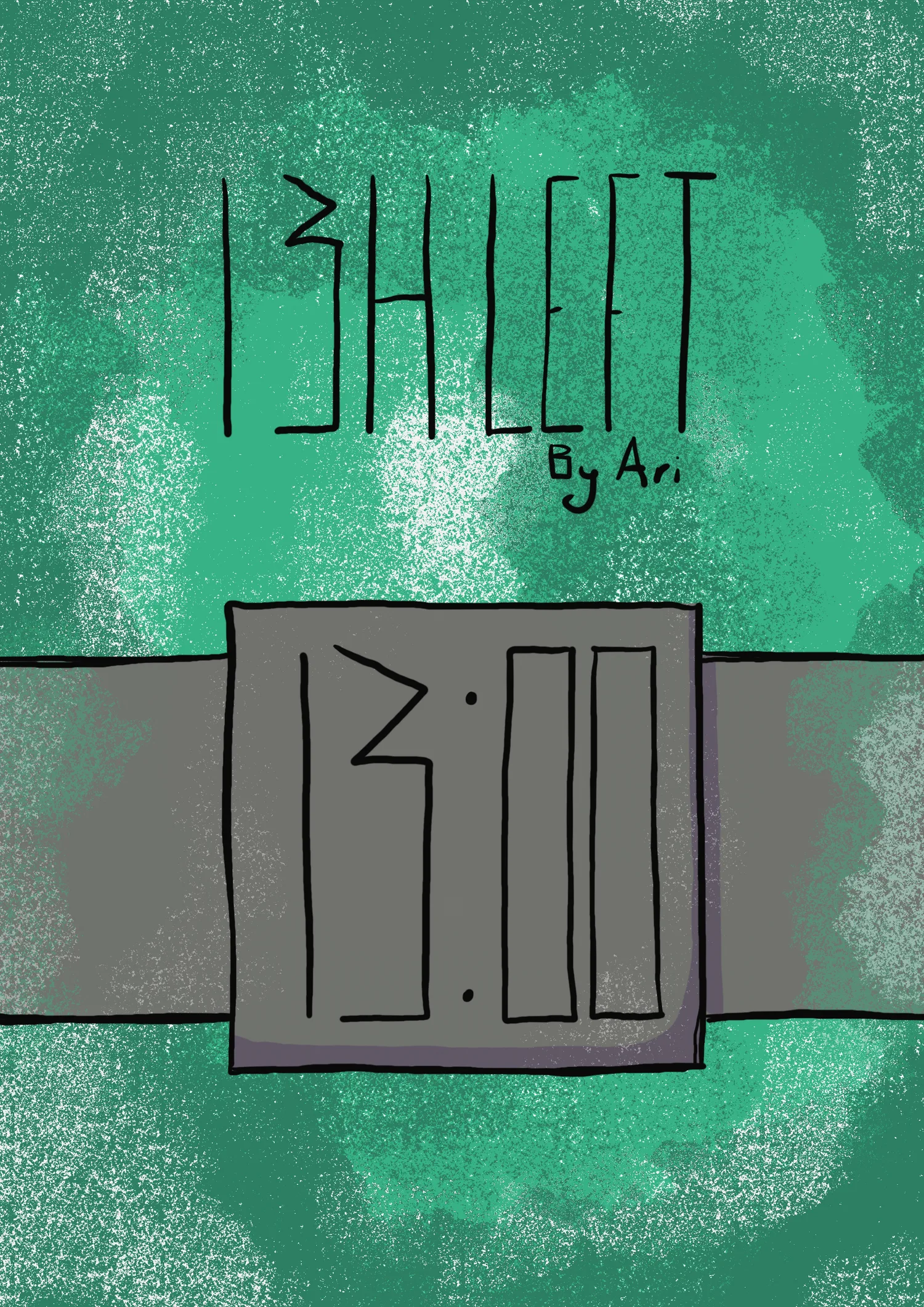
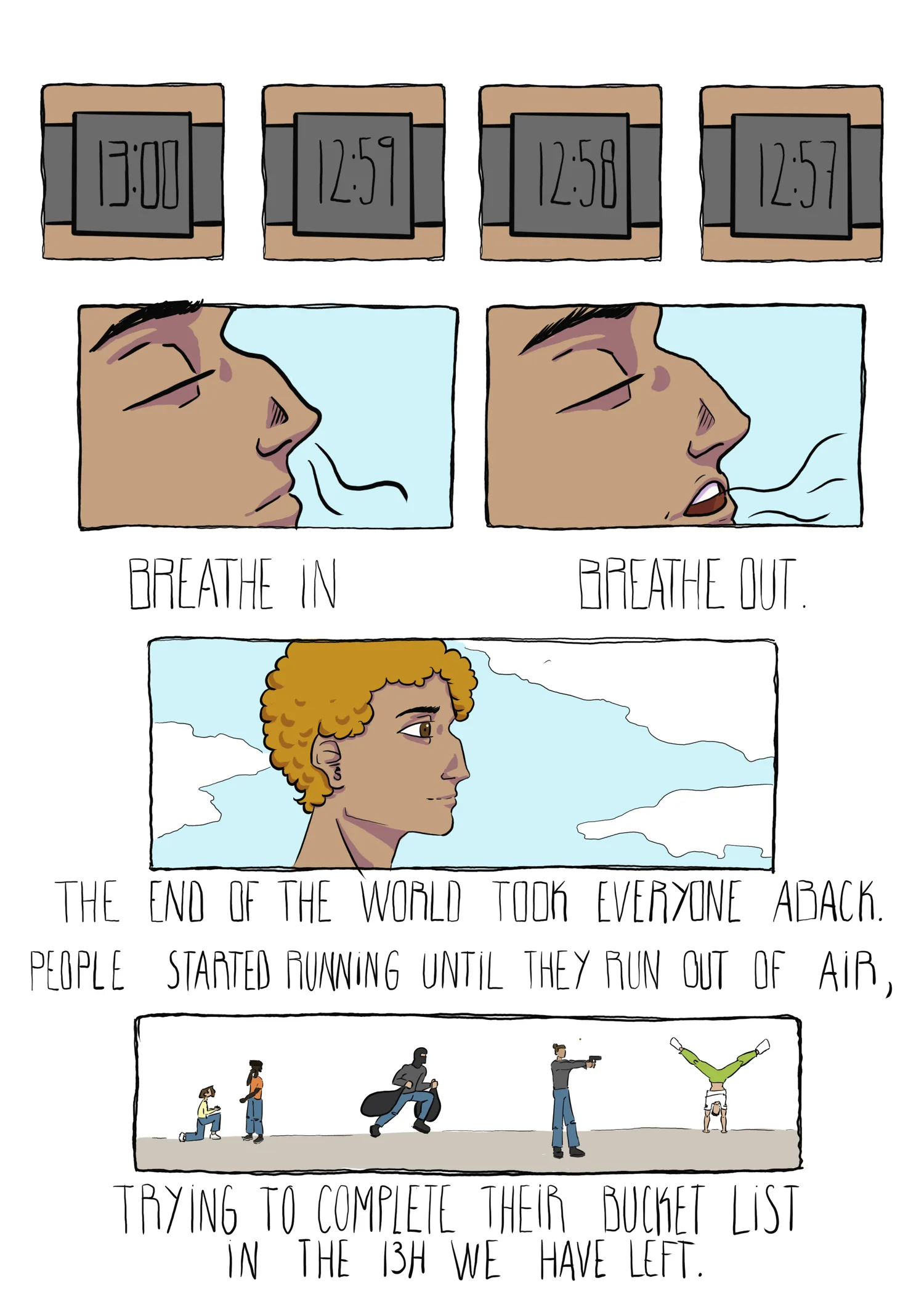
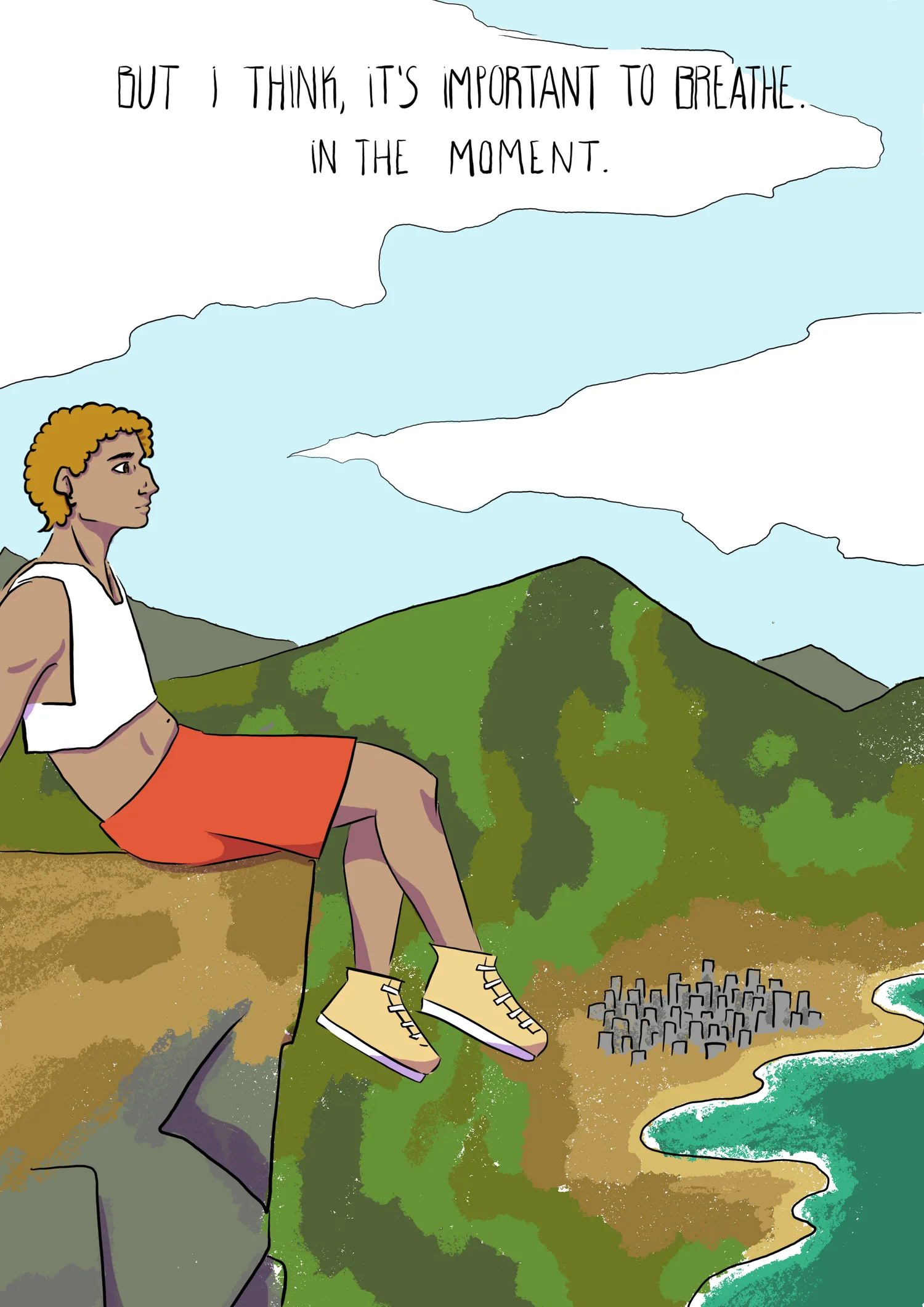
13h Left
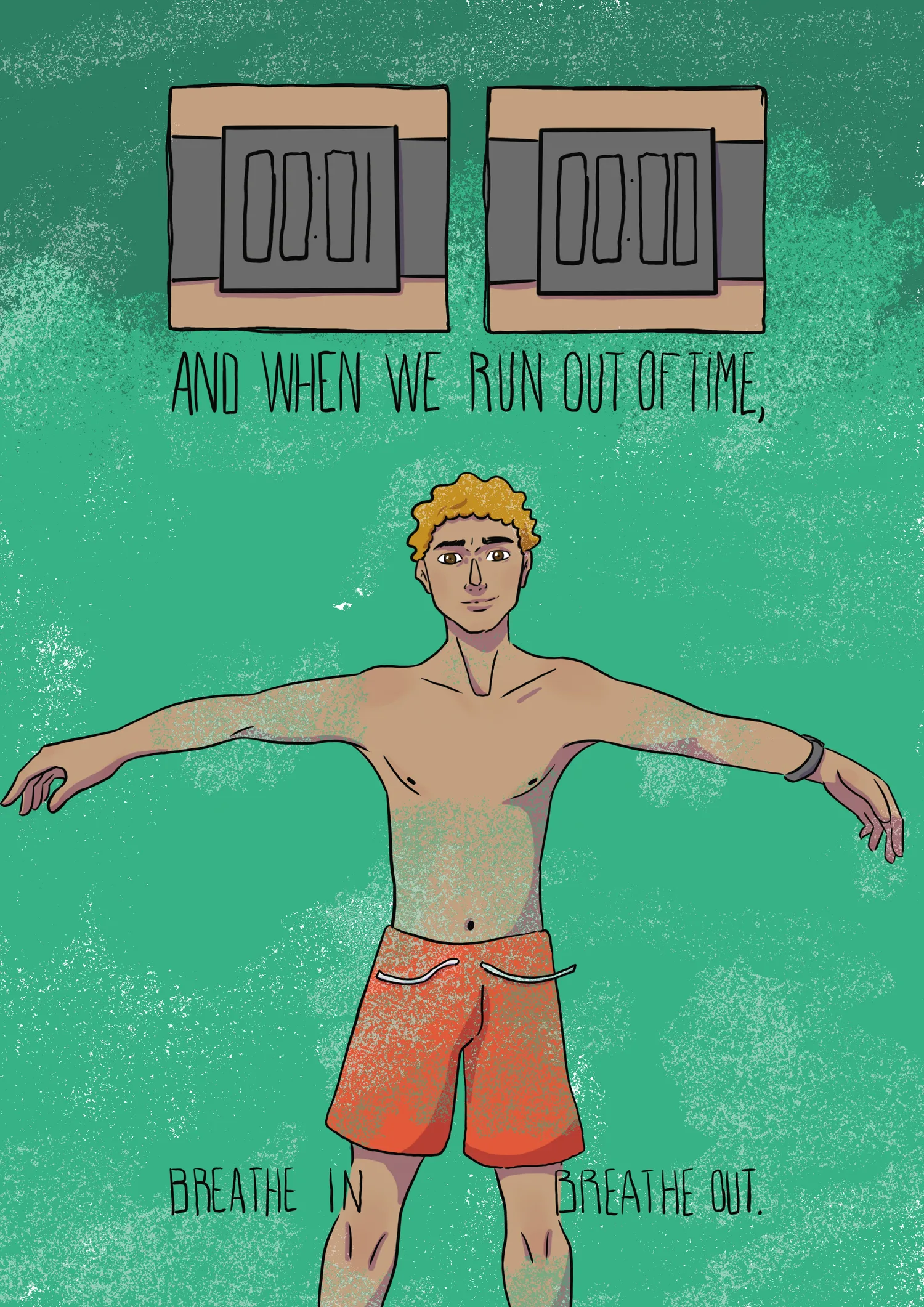
Poetry
On the beach I saw a jellyfish
On the beach I saw a jellyfish –
tentacles up;
lying there,
lying there.
I stepped closer,
bent my knees,
put my nose right near its sandy, silly, not-real body -
silicon melted and returned to the factory,
lost at sea on the way -
and it moved.
One heaving, tensing, muscle-movement
saying,
I'm
still alive,
still alive.
I prodded it with my finger to see if it would hurt.
(It felt like the brush of a stranger's shoulder
on the way into a too-small doorway)
I pushed it with my hand towards the ocean,
rolling, kicking, apologizing,
stopping each time to check if it was
still alive.
Finally
I shoved it partway into the water.
It rolled over like an obedient dog in the waves.
I saw for the very first time,
Right in the middle,
a piece of jellyfish was missing,
as though someone had taken a bite and forgotten the rest.
I realized it would not make it
in the sea.
tentacles up;
lying there,
lying there.
I stepped closer,
bent my knees,
put my nose right near its sandy, silly, not-real body -
silicon melted and returned to the factory,
lost at sea on the way -
and it moved.
One heaving, tensing, muscle-movement
saying,
I'm
still alive,
still alive.
I prodded it with my finger to see if it would hurt.
(It felt like the brush of a stranger's shoulder
on the way into a too-small doorway)
I pushed it with my hand towards the ocean,
rolling, kicking, apologizing,
stopping each time to check if it was
still alive.
Finally
I shoved it partway into the water.
It rolled over like an obedient dog in the waves.
I saw for the very first time,
Right in the middle,
a piece of jellyfish was missing,
as though someone had taken a bite and forgotten the rest.
I realized it would not make it
in the sea.
Sequential Art
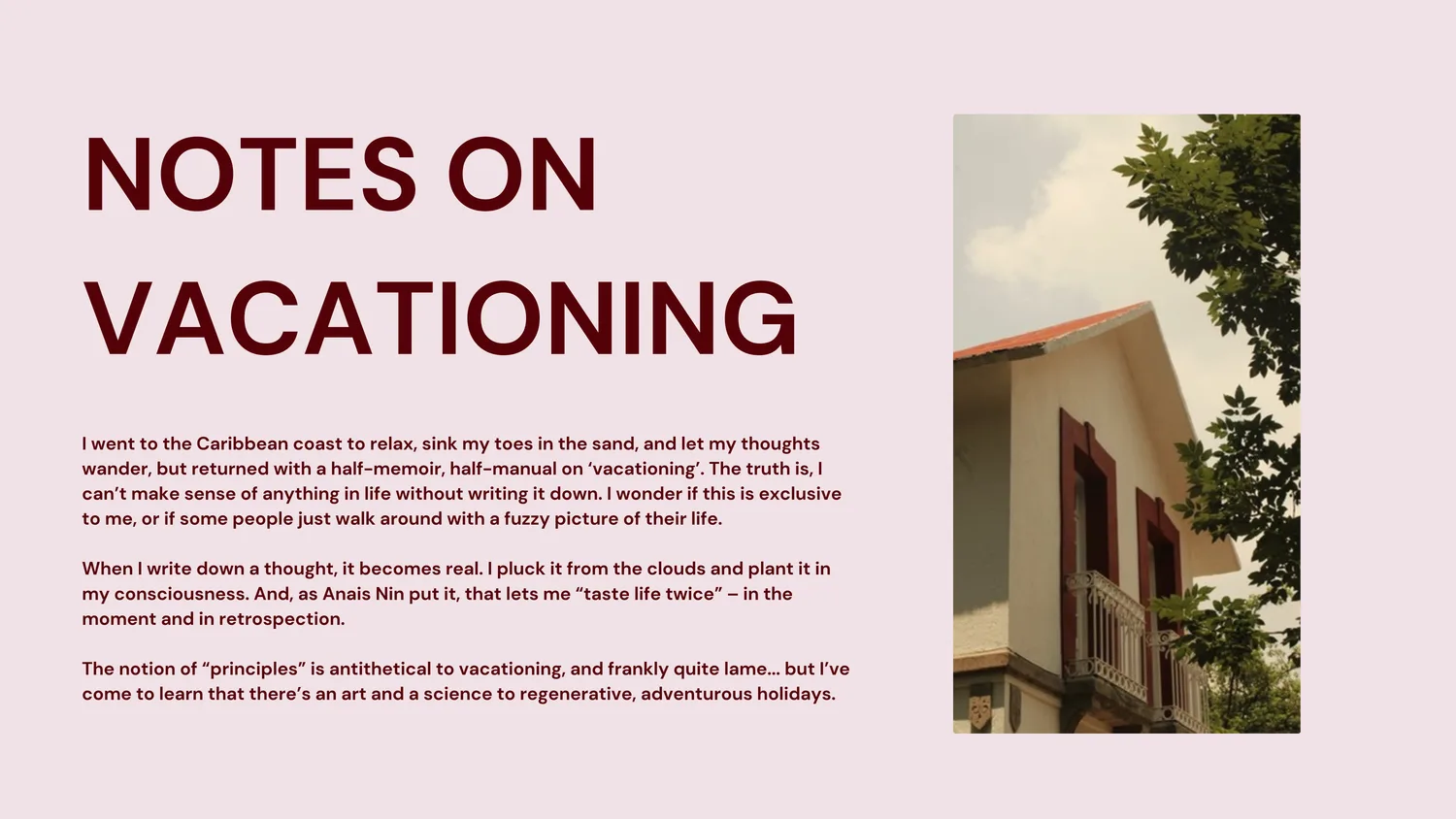
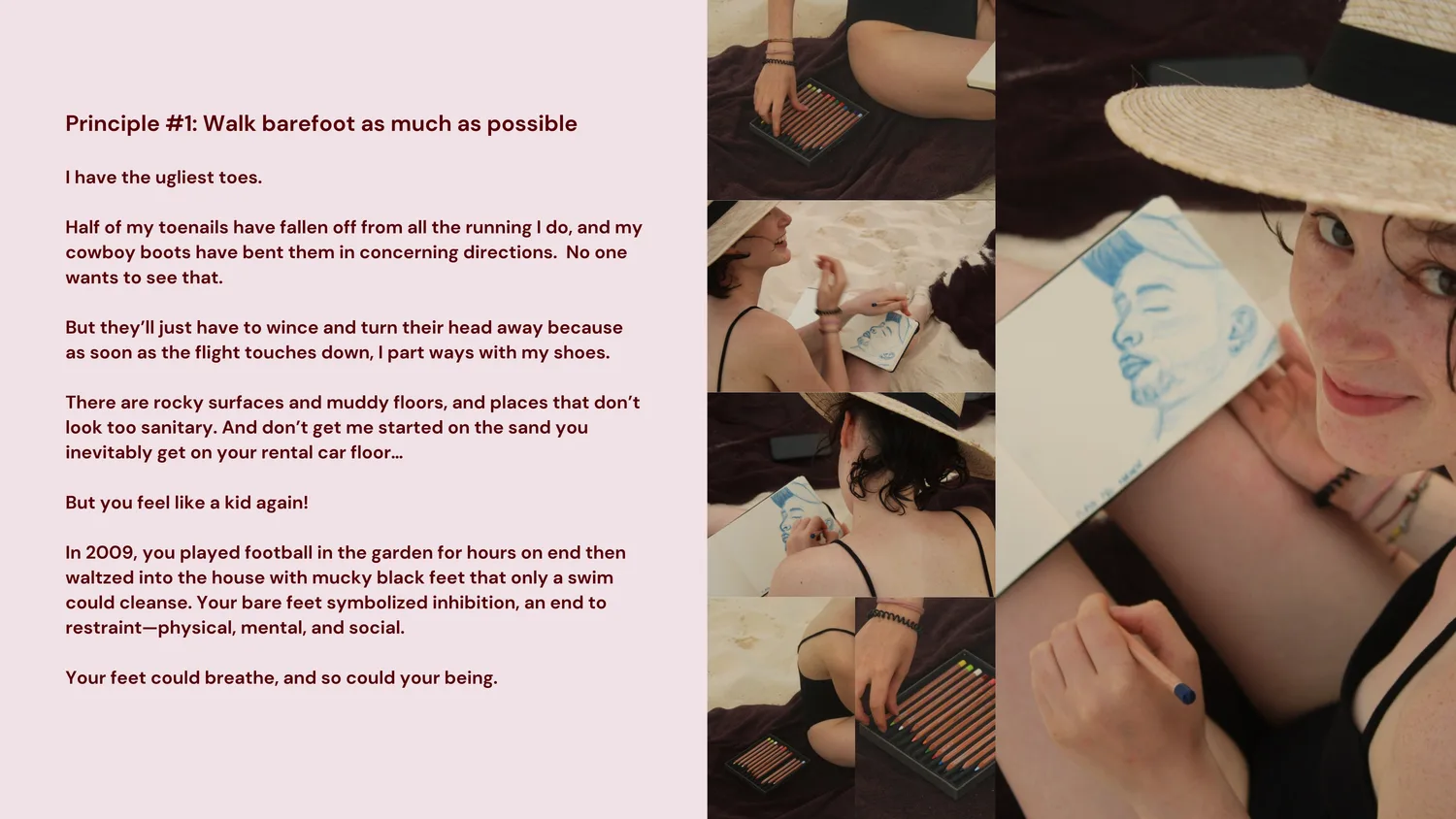
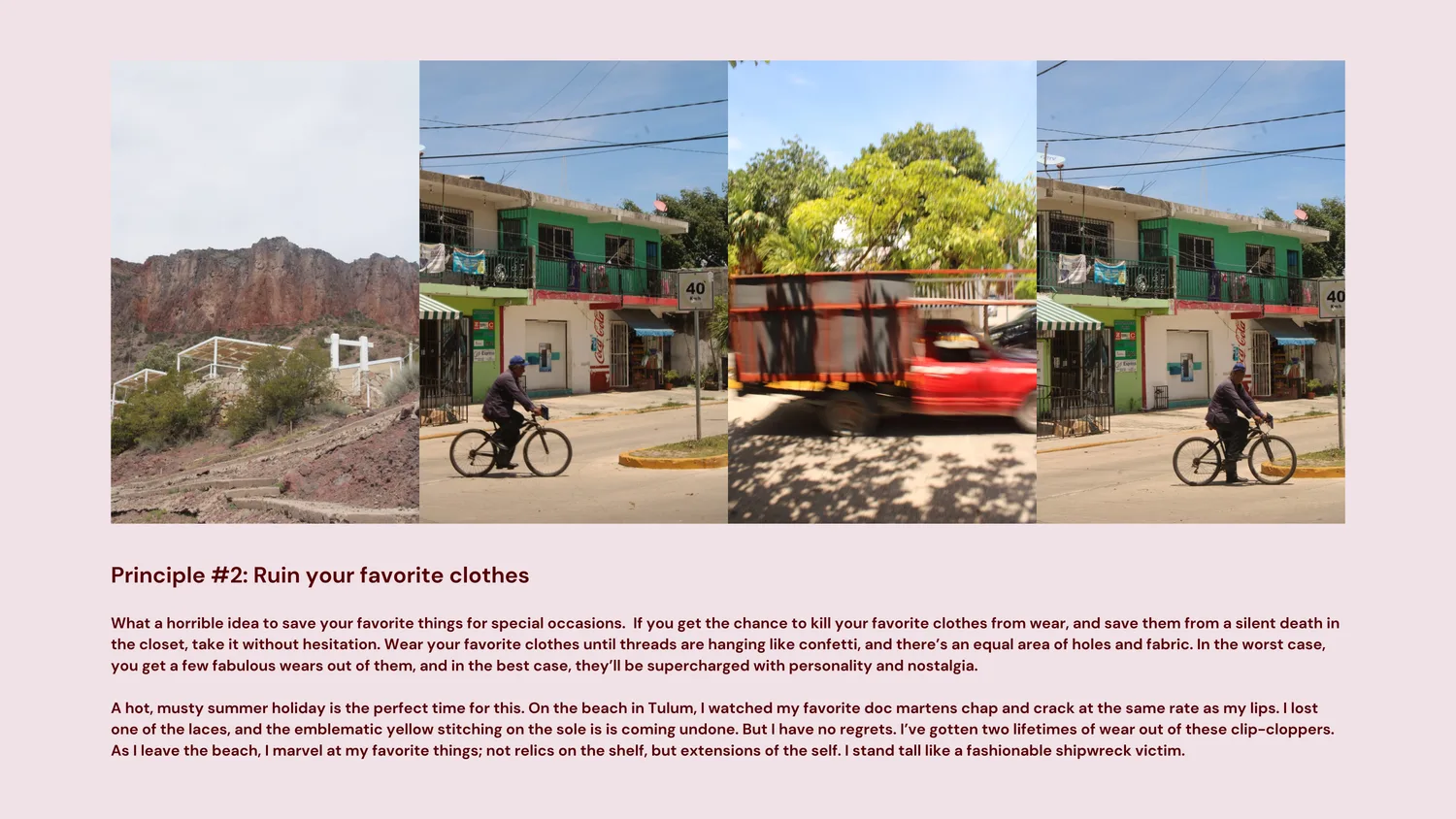
Notes on Vacationing
Nonfiction
Fragments
Of Bus Rides and Visas
Despite only being the fourth most dangerous car ride I had taken in that 10-day trip, I was still not quite accustomed to such a shanty minibus speeding this fast on the pot-holed Grand Trunk Road at dusk. I had already survived an "ambulance" ride in a carry diba which ran over a cat and a dog on the way— so-called only because of a few parchment bandages stuffed in the trunk — a long bus ride through Diameer Bhasha— where a landslide blocked our road and we got rear-ended by a truck—, the jeep ride to Fairy Meadows— where if I stuck my head out I might as well have upset the center of gravity of the entire machine and sent it falling down into a crevice—, not to mention the other minibus in which we ended up getting into a road rage situation and our driver had to threaten the driver of the soapbox-sized car with a wrench—though I suppose that would be the fifth.
The minibus seemed to hover above the tarmac, and whenever the driver pressed the horn, which he did whenever a vehicle was seen in a 200-meter radius, it let out the entire hour-long rendition of a symphony from Bach. It managed to cover the 3-hour distance between Pir Wadhai station in Rawalpindi and Mirpur in a speedy 3 hours - an impressive feat for a Hiace with 20 people sitting in it. Much like the minibus, I hovered too, half of me in the air right next to the sole exit/entry door, as my neighbor had elected to put all his mortal belongings, and maybe even some of the gifts promised to him in heaven, on a part of my seat.
"Are you from Mirpur?" he asked me. It was a silly question. I would have tried to explain to him how no one emigrates to smaller cities, the poor quality of educational and professional opportunities in Mirpur, and how it was downright mathematically certain that, of course, I was from Mirpur - for why else would someone in their right mind go to the city? However, I had asked him earlier, "How much is the ticket for?" which arguably is a stupider thing to ask someone who - it turns out - is not the conductor of the bus, and so I instead replied with a simple "Yes." I mentioned that I was returning home from the US as I had studied abroad. Given that I was in a Hiace with a small luggage bag only, there was a fat chance this was true, and the guy probably knew it too. It was a lie; I had returned home 10 days ago, but as soon as I came I had left again, venturing north with my friends, so in a spiritual sense, it felt right to say and much more terse than whatever my mind could capture of the events from the last 10 days.
"Are you from Mirpur?" I asked.
"No," he said, explaining how he was actually from Faisalabad, applying for a UK visa. I hadn't known this, but there were only three British consulates in Pakistan: Islamabad, Karachi, and Mirpur - due to the heavy immigration to the UK from my city. He was surprised that I had no one in my immediate family who lived in the UK, but then again, I was studying in the US, and the stereotype fit just the same.
"But why are you coming from Islamabad then?" I was perplexed; he probably would've been better off just going to the consulate in Rawalpindi, but he explained how the appointments there had been booked all the way through to some unknowable future date. Mirpur had free slots earlier, and he was in a hurry to go to the UK and make a quick buck, so he stopped in Islamabad for one night before heading back south to Mirpur.
We talked about where he was staying (I knew the spot) and what or where Sector F1 was (I explained to him), and I told him to reach out if he needed any help (he did not in the two days he was in the city). I was struck by how much this man was traveling just for a UK visa, to a random town like Mirpur, which he would have no interest in or reason to visit otherwise. I thought about how convenient my life had been - born into the privilege of studying abroad, having better pipelines to success, and a visa office I hadn't even known about until minutes ago, sitting just a 15-minute drive from home. Outside, the last of the dusk sun reddened a rotating pattern of unkempt fields and dust-colored hills.
The red glare cast shadows onto the interior of the Greyhound bus that hovered through the freeways between SF and LA: far from home and from anywhere near my list of most dangerous bus rides. I was on my way to answer the call of the Argentine consulate, who had been so kind as to offer me a visit to their office 1000 kilometers away for my Argentine visa application. To not inconvenience them as hosts or waste ink writing my name in some register of theirs or occupy some bits in their computer counter system, I had tried to excuse myself. Despite my insistence that I had work, that it was a Wednesday, and why I was needed there in the first place when none of my classmates were (because of my Pakistani passport), I had failed. 2 months after meeting the unnamed traveler, I was reminded of him on my way to LA, as I stared into a deep purple sky.
—-----------------
Notes from Buenos Aires
Just like a person unable to sleep tosses and turns, I too hop from the room's table to the common floors of the building to cafes, mostly to no avail. Enough time spent ricocheting between different Café Martinezes, and having seen the ones on my side of the Avenida de Julio, I began to exile myself to Palermo and other more distant parts of town. That day’s search had launched me across the avenue, into the streets behind Congreso, following Google Maps' promise of power outlets and wifi.
The avenue is the bounding punctuation of the walkable world: to the north of our neighborhood lies Retiro station, and I am chained in by train tracks and then the port beyond it. To the east is the canal of the citadel of Puerto Madero, where yachts stand with their white sails upheld like lanced cavalry, and to the south - if you manage to walk enough through cobblestone to the San Telmo market - the wall of the highways bound me back. The avenue is the softest barrier, walkably far from where I live, yet once escaping it, I could be walking endlessly down roads, neighborhood to neighborhood, until they turn to streets that turn to paths that turn to dirt somewhere along the infinite length of Argentina.
Crossing the grand avenue, I was off by one street - misled by Google maximizing some ununderstandable efficiency metric. Streets slipped into streets as I made my way parallel to the avenue that threads between Congress and the presidential palace. There are a few things to do in Congreso besides protesting or seeing the world's only libertarian government swear in (political leanings notwithstanding). However, this was before either of those events, so I simply walked the road to Plaza Congreso, past Palacio Barolo and other postcard buildings. Instead, I found myself enveloped by arrays of old overhanging balconies, beautifully carved, that I knew dripped rain on rainy days and stole the sun away on others. The ground level was all parking garages and shutters tattooed with bright paints, the upper floors punctured by windows, interrupting chamfered corners rising to be capped by still-preserved domes.
In these early morning hours, a man high up on one of the balconies played some Andean type of pan flute which I hadn't learned to describe yet because this was before my trip to Jujuy. He played to somehow no one and everyone in particular, but especially not to himself. A person shouted something to him, and a conversation passed me by, then the flute continued carving sound out of thin air, setting up into a tune for a moment and a half until it dissolved into blunt whistles and raspy notes, catching and releasing melodies again and again.
The streets otherwise were empty; on such a wintery morning, the city had decided to leave the roads be, except for the hapless public buses en route. People stood mostly in the same confusion as me, looking around in surprise that anyone had been out at all. Intersection built on intersection to envelop the park in front of the Congress building. I just walked on, saving everything for later, everything for the walk back, marching on the sidelines, having just exited the lattice of streets.
I remembered reading about Palacio Barolo's fourteen staircases - seven for heaven and seven for hell, all inspired by Dante. But for better or worse, I exist only on the level ground, and there was work to be done and coffee to be had. I connected to the wifi and hooked in the plug.
All that sifted through was the morning light on the blue-green dome of the congress, the blind glare of the northern sun through southern apartment windows, a Palacio Barolo not ever seen on one end, a Café Martinez on the other - had brought me there…
And now I realize I can't think what that task was.
—--------------
The Garden of Entropy
The leg of the chair poked into the seam between two small grey ceramic tiles. It rocked back and forth as I failed to find a firm footing from which to approach my work. In synchrony, the grey clouds parted, revealing a serpentine cleft of bright white sunshine pouring through onto me. The light trickled down as drops of pearls withdrew to the floor, neatly ordering themselves in queues as they marched between the blocks of tiles in neat canals, avoiding the shadows, pouring themselves out into the central boulevard of white stones, like a dry stream bed. The pearls slipped into the seams between them and into the great underground, under the stones, to water the garden of Entropy.
Others scattered on the miniature palms that lay in the hillpots toward the upper edge of the land, dammed by the all-encompassing grey concrete which seemed to stare back at the glaring sun. A pearl of light dripped down from the tip of a discolored leaf, catching my eye as it flew toward a glimmering blue ceramic cup on the other end of the room.
"Cafe Latte!" announced the barista, and I leaped toward the counter through the puddles of light, scattering and splashing, piercing and breaking the light. The heavens, disturbed by this pause in worship, moved yet again, and the great tear in the sky stitched up, leaving me in the dark, gloomy netherworld with my morning coffee.
—--------------------
Conversations
When all else goes dark, the lights of the ice cream store at Plaza San Martin hold up against the night, and being done with business, we moth our way to it. Shadows layer over shadows as we step out of the dark and into the storefront, discussing how awful the political situation has become back home. I don't really remember when any of this was; it's generally true most of the time in the century.
Jumping out from behind his ice cream cone, a large man ambushed our conversation asking where we were from and posing questions about our country's situation in global politics, the big war in some part of the world, another conflict in another, the pandemic, and all other topics known to any keen reader of various political 4chan boards. After being affirmed that he was right, that taxation was indeed theft and that I had always thought the ice cream server had a reptile-like quality to his skin, he felt confident in confiding with us that he believed his homeland was falling apart too: law and order on the streets had broken down, the leadership was corrupt, the economy based on lies, and he was compelled to leave it for the city of Buenos Aires. His new home, to which he had managed to escape, was so much superior and safer in every way, he said as I stared through the window at the empty streets, thinking about the 5-minute sprint I'd have to make to our residence at this time of night.
I was curious about what such a horrid, run-down place on the brink of collapse could be.
"I moved here 2 years ago from San Francisco."
San Francisco. Of course, San Francisco, I should’ve guessed: the city that dropped acid once in the year 1969 and never looked back. I shed a tear, took a deep sigh, and embraced him (fortunately, figuratively): here was someone who kept the uniquely San Francisco brand of weird alive, our ambassador in such a distant foreign place.
Images of finding a piece of your home in a country far away appeared - the sound of being spoken to in your dialect, the taste of the roasted sesame treats you used to have as a kid, the memory of the smell of grass that only your city has … except in this case, the memories involved having unprompted conversations about aliens with some Market Street mystics on a chilly San Francisco midnight.
He explained that he had escaped San Francisco during the pandemic - that never was, of course - as the leaders took off their masks and the people put theirs on. To him, Buenos Aires was just a short walk to catch some fresh air.
We prodded each other for a few more thoughts, but my ice cream had dripped away like candle wax, and I excused myself before the conspiracies would start burning my fingers. Surveying the plaza with its fenced-off statue of de San Martin trying its best to glimmer in the moonless night, I prepared for my 5-minute sprint and other journeys.
—------------------------
A Basin of Salt and Memory
I once had a dream of an apocalypse. Not surprising - I think this was at some point after 2019 - the year in which I had seen military jets fly above my city and India and Pakistan come close to a nuclear war, and months later, an earthquake that shattered many dreams and vases forever in the city I had called home. I had the vision of a ruined, desolate, and yellowed Mirpur, some grey concrete mansions hardly standing, with the earth stripped barren of all its greenery. I saw an endless yellow waste from a hill, the same one from which I used to look down on my own home in D4.
I saw it again when our car turned at the oxygen-starved heights of some hill of the Andes. From the port of the car, I saw a never-ending valley covered in nothing but yellowish gravel, with not a sight of a breathing creature for the entirety of the basin that lay before me. And in the distance, hills crowned by the glimmering plain of salt - the Salinas Grandes. It was awe-striking how empty the world could be.
There isn't enough space for me to explain what emptiness is. Sitting in your room in Nob Hill if I were to strip away all furniture leaving behind nothing but yellow walls, then strip away the yellow walls, then strip away the building, then the street, the city, the ground, the Bay, the feeling of time and wind, then whatever yellowish ether remains suspended around would be: empty.
The altitude sickness made me delirious, and I became assured that if a nuclear war were to happen and if Mangla Dam ever became dry, the world would look no different.
The territory was claimed by neither man nor animal nor plant. Few are frontiers where humans haven't been and fewer where we won't find a distant mammalian kinsman burrowing, none where some toad or insect couldn't be found, and yet here was a place that life had dared not touch, where not even the hardiest of animal or plant could have the luxury of being at its mercy.
I was sure that this was what hell would look like: not only the pain and anguish that attack us after death: a ghostscape of an endless hot valley, with no water to drink and no creature to celebrate the existence of life with, a Martian barren wasteland rising as a canvas of yellow, surrounding you on all sides, but also the physical hell that will take our landscapes after they die: a bowl of dust in the high Andes mountains that perhaps was never meant to be found, that no man was meant to travel, the inverse of Eden, where nothing has grown in the past 1000 years and nothing shall bloom for a 1000 more.
—---------------------------------
Penguins at World's End
Punta Tombo felt more like the end of the world than Ushuaia did. We went there towards the very last days of our semester. It has nondescript land covered with nondescript grasses that merge seamlessly into a nondescript sea that seems to begin but never end. It lacks human or natural features, like a work in progress, a space not fully rendered, a part of the world still in development where God has yet to determine where to place the rocks, the trees, and the wood cabins. There, you will find estancias without any sheep, streams without any water, and roads without any tarmac. And at the end of the world, you will find neatly uniformed penguins patrolling their nests, entirely indifferent to the trivialities of tourists who, to them, are as nondescript as the rest of their world.
—---------------------------------
Election Day at Fitzroy
When you told me that up there was Fitz Roy, I had to take your word for it. It was a cloudy day, and neither of us could see. Half an hour ago, before we had made that turn to El Chaltén, I would have done anything to see it. Hell, I would have even made someone drive - six hours total, here and back - across these grey-green tundra fields with icy glacial veins flowing through them, on such a cloudy day as this.
I saw Fitz Roy clearly then: I was sure that slightly grey patch was where the peak was, that other weird curved edge of the cloud was where the second highest point was, and somewhere along the rest of the blank grey sky the rest of the mountain hid. Well, that was that. We only paid to roll the dice. Now the dice were rolled, and all the pieces had to move back before it got too dark.
And so the six of us headed back to an SUV where an impatient driver awaited both us and the election results.
"Told you guys it's too cloudy and too late in the day," he said. "There was no point coming here in the first place, but you know."
I appreciated the sentiment, but the sky was cast. It was no use arguing over a decision made many hours ago; despite the protests from our driver, Javier, we could only do nothing.
I opened my phone - still no signal. The higher arcs of my wifi sign had disappeared as much as the peaks of Fitz Roy had.
"Any news of the election, Javier?" I asked before we began our three-hour drive back to Calafate.
"No."
As we shut the car door, the sky and earth collapsed, the world shrinking between door to door and bonnet to bumper. Most of the group soon fell asleep, exhausted from travel, and those who remained awake simply watched the same film in reverse that we had seen on their way here, left to silly procrastinations of looking at the mountains around us and making absurd guesses of how long it would take to climb them.
A traveler appeared in the distance: the river itself, milky-blue and chalked with glacial sediment, grinding stone to dust as it snaked down the hills. We leaped over it across a bridge and turned into the parking lot of a log cabin souvenir store, the only excuse for a stop on the journey. A single dish crowned one of the corners of the building from which a twig-like antenna poked out. Javier disappeared into the cabin. Unlike last time, we didn't get off, or rather, we didn't have time to. He was back soon.
"They don't have signals either. Their stuff is broken."
The film rewound, and our car set off again.
Javier had said we were surrounded by sheep ranches, but we never saw any. Instead, there were only two parallel fences guarding these empty farms on either side, threaded by guanaco corpses in different states of rot, stuck between the road and the ranch, their heads pointing towards the distant hills. But the mountains were left far behind and, merging with a larger road, we watched the river blossom into the bright blue pan of Lake Argentino, the edge of Calafate visible along its shore.
A single pop emerged from my pocket, and soon, my phone leaped into my hands. The lock screen made funny faces about undelivered WhatsApp messages, of downloads stuck at 1%, and other mild impossibilities.
Then the wifi bars reached higher and higher, and my phone was flooded by meaningless notifications, a million messages, and PedidosYa marketing. The wifi bars grew, enveloped the car, and reached out to some distant cell tower, catapulted to space forever, and then quickly struck down by satellites down to the city of Buenos Aires. They heard everything they could.
Javier's ears shot up upon hearing the notifications. He passed a look into the rearview mirror.
Expecting.
I shuffled to switch tabs.
"Milei won".
He just sighed and drove on.
—--------
Cordoba Dream
It starts.
We spin spin spin spin, endlessly, ages pass, just people staring at each other, hardly hanging on to the metal. If I let it go now, I will go flying.
We make it over to the great black tarmac highway, some sort of Styx that divides civilization, the village on one end with the endless farmland and pampas on the other side. The elevated highway blocks us from seeing what is there on the other end. A few trucks pass down its infinite length - the hardly worn surface is majestic and formidable on foot, but having seen the end of the world, now we must turn back.
The mint is an entire rainforest on my tongue; I can hear the animals; it feels like I just licked every single leaf in that forest, but my tongue goes silent soon, fully numb, lost somewhere in that jungle.
Mary of Lujan stands there indifferent. The image with its multitude of banners stretching out ever radiant strikes fear in me. But what is she doing here on the outskirts of the town? Is she warding off some evil, but from whom or what? She doesn’t seem too keen on me.
Was that a fox in the dark? I’m pretty sure it was a fox. In the singular light of the stars, there is a single constellation of a face grimacing down at me, and all I can see in that light is imagined foxes.
The stream dances on the rocks to the sound of chimes, sweet orchestral notes bouncing off. The rocks must be very round and smooth, like the sounds and the jets of water are.
Smoke cannot be seen in the dark, and I cannot smell it either now. I inhale the dust as moonlight pours through into the chamber. We stand in a circle, not sure what any of this means.
It ends.
—--------------
Velocity:Design:Comfort
I found it somewhere in my Spotify Discover while in Buenos Aires, tucked between the clamshells of my laptop keyboard and display. Finals week spiraled - one song latching onto another: Dsco, Pro:Lov:Ad, Velocity, then Design: 1, playing endlessly back to back, never letting the white line cross the grey.
Why do I like VDC so much? I'm not sure.
Is it the cover art of the never-ending grey-blue panels spanning to infinity, the pastel rainbow that zaps towards you, outrunning you at lightspeeds to some future? The great concrete building wrapped around itself, and the blue sky that someone has picked right from my balcony? The same deep, deep blue merging somewhere out of frame with space itself and puffs of dreamt white clouds hanging perfectly spaced out?
Or is it that in some outer edge of Buenos Aires, dreaming vividly with eyes wide open I had opened my phone to a full screen of that image as Design: 1 played, and it felt like I was moving along all those parallel and intersecting lines towards the future too and that life was good? That the soft piano bounced around, formless against all the discord of the world, like a heart beating arrhythmically, trying to jump out of the drowning, glitching sounds, order out of disorder, but never fully emerging?
Or was it that, as I worked on my final assignment - something about Prolog, Peano's axioms, and a calculator - shirtless and delirious, I looked out of the 16th-floor window to see and hear the same clouds, the same grey glassy panels, the same sharp-angled corners as our building? Thinking: it's all ending?
I'm not sure, but Velocity:Design:Comfort is something that I play a lot now. It sounds like life on the upper stories.
Life on steel, glass, and sky.
Despite only being the fourth most dangerous car ride I had taken in that 10-day trip, I was still not quite accustomed to such a shanty minibus speeding this fast on the pot-holed Grand Trunk Road at dusk. I had already survived an "ambulance" ride in a carry diba which ran over a cat and a dog on the way— so-called only because of a few parchment bandages stuffed in the trunk — a long bus ride through Diameer Bhasha— where a landslide blocked our road and we got rear-ended by a truck—, the jeep ride to Fairy Meadows— where if I stuck my head out I might as well have upset the center of gravity of the entire machine and sent it falling down into a crevice—, not to mention the other minibus in which we ended up getting into a road rage situation and our driver had to threaten the driver of the soapbox-sized car with a wrench—though I suppose that would be the fifth.
The minibus seemed to hover above the tarmac, and whenever the driver pressed the horn, which he did whenever a vehicle was seen in a 200-meter radius, it let out the entire hour-long rendition of a symphony from Bach. It managed to cover the 3-hour distance between Pir Wadhai station in Rawalpindi and Mirpur in a speedy 3 hours - an impressive feat for a Hiace with 20 people sitting in it. Much like the minibus, I hovered too, half of me in the air right next to the sole exit/entry door, as my neighbor had elected to put all his mortal belongings, and maybe even some of the gifts promised to him in heaven, on a part of my seat.
"Are you from Mirpur?" he asked me. It was a silly question. I would have tried to explain to him how no one emigrates to smaller cities, the poor quality of educational and professional opportunities in Mirpur, and how it was downright mathematically certain that, of course, I was from Mirpur - for why else would someone in their right mind go to the city? However, I had asked him earlier, "How much is the ticket for?" which arguably is a stupider thing to ask someone who - it turns out - is not the conductor of the bus, and so I instead replied with a simple "Yes." I mentioned that I was returning home from the US as I had studied abroad. Given that I was in a Hiace with a small luggage bag only, there was a fat chance this was true, and the guy probably knew it too. It was a lie; I had returned home 10 days ago, but as soon as I came I had left again, venturing north with my friends, so in a spiritual sense, it felt right to say and much more terse than whatever my mind could capture of the events from the last 10 days.
"Are you from Mirpur?" I asked.
"No," he said, explaining how he was actually from Faisalabad, applying for a UK visa. I hadn't known this, but there were only three British consulates in Pakistan: Islamabad, Karachi, and Mirpur - due to the heavy immigration to the UK from my city. He was surprised that I had no one in my immediate family who lived in the UK, but then again, I was studying in the US, and the stereotype fit just the same.
"But why are you coming from Islamabad then?" I was perplexed; he probably would've been better off just going to the consulate in Rawalpindi, but he explained how the appointments there had been booked all the way through to some unknowable future date. Mirpur had free slots earlier, and he was in a hurry to go to the UK and make a quick buck, so he stopped in Islamabad for one night before heading back south to Mirpur.
We talked about where he was staying (I knew the spot) and what or where Sector F1 was (I explained to him), and I told him to reach out if he needed any help (he did not in the two days he was in the city). I was struck by how much this man was traveling just for a UK visa, to a random town like Mirpur, which he would have no interest in or reason to visit otherwise. I thought about how convenient my life had been - born into the privilege of studying abroad, having better pipelines to success, and a visa office I hadn't even known about until minutes ago, sitting just a 15-minute drive from home. Outside, the last of the dusk sun reddened a rotating pattern of unkempt fields and dust-colored hills.
The red glare cast shadows onto the interior of the Greyhound bus that hovered through the freeways between SF and LA: far from home and from anywhere near my list of most dangerous bus rides. I was on my way to answer the call of the Argentine consulate, who had been so kind as to offer me a visit to their office 1000 kilometers away for my Argentine visa application. To not inconvenience them as hosts or waste ink writing my name in some register of theirs or occupy some bits in their computer counter system, I had tried to excuse myself. Despite my insistence that I had work, that it was a Wednesday, and why I was needed there in the first place when none of my classmates were (because of my Pakistani passport), I had failed. 2 months after meeting the unnamed traveler, I was reminded of him on my way to LA, as I stared into a deep purple sky.
—-----------------
Notes from Buenos Aires
Just like a person unable to sleep tosses and turns, I too hop from the room's table to the common floors of the building to cafes, mostly to no avail. Enough time spent ricocheting between different Café Martinezes, and having seen the ones on my side of the Avenida de Julio, I began to exile myself to Palermo and other more distant parts of town. That day’s search had launched me across the avenue, into the streets behind Congreso, following Google Maps' promise of power outlets and wifi.
The avenue is the bounding punctuation of the walkable world: to the north of our neighborhood lies Retiro station, and I am chained in by train tracks and then the port beyond it. To the east is the canal of the citadel of Puerto Madero, where yachts stand with their white sails upheld like lanced cavalry, and to the south - if you manage to walk enough through cobblestone to the San Telmo market - the wall of the highways bound me back. The avenue is the softest barrier, walkably far from where I live, yet once escaping it, I could be walking endlessly down roads, neighborhood to neighborhood, until they turn to streets that turn to paths that turn to dirt somewhere along the infinite length of Argentina.
Crossing the grand avenue, I was off by one street - misled by Google maximizing some ununderstandable efficiency metric. Streets slipped into streets as I made my way parallel to the avenue that threads between Congress and the presidential palace. There are a few things to do in Congreso besides protesting or seeing the world's only libertarian government swear in (political leanings notwithstanding). However, this was before either of those events, so I simply walked the road to Plaza Congreso, past Palacio Barolo and other postcard buildings. Instead, I found myself enveloped by arrays of old overhanging balconies, beautifully carved, that I knew dripped rain on rainy days and stole the sun away on others. The ground level was all parking garages and shutters tattooed with bright paints, the upper floors punctured by windows, interrupting chamfered corners rising to be capped by still-preserved domes.
In these early morning hours, a man high up on one of the balconies played some Andean type of pan flute which I hadn't learned to describe yet because this was before my trip to Jujuy. He played to somehow no one and everyone in particular, but especially not to himself. A person shouted something to him, and a conversation passed me by, then the flute continued carving sound out of thin air, setting up into a tune for a moment and a half until it dissolved into blunt whistles and raspy notes, catching and releasing melodies again and again.
The streets otherwise were empty; on such a wintery morning, the city had decided to leave the roads be, except for the hapless public buses en route. People stood mostly in the same confusion as me, looking around in surprise that anyone had been out at all. Intersection built on intersection to envelop the park in front of the Congress building. I just walked on, saving everything for later, everything for the walk back, marching on the sidelines, having just exited the lattice of streets.
I remembered reading about Palacio Barolo's fourteen staircases - seven for heaven and seven for hell, all inspired by Dante. But for better or worse, I exist only on the level ground, and there was work to be done and coffee to be had. I connected to the wifi and hooked in the plug.
All that sifted through was the morning light on the blue-green dome of the congress, the blind glare of the northern sun through southern apartment windows, a Palacio Barolo not ever seen on one end, a Café Martinez on the other - had brought me there…
And now I realize I can't think what that task was.
—--------------
The Garden of Entropy
The leg of the chair poked into the seam between two small grey ceramic tiles. It rocked back and forth as I failed to find a firm footing from which to approach my work. In synchrony, the grey clouds parted, revealing a serpentine cleft of bright white sunshine pouring through onto me. The light trickled down as drops of pearls withdrew to the floor, neatly ordering themselves in queues as they marched between the blocks of tiles in neat canals, avoiding the shadows, pouring themselves out into the central boulevard of white stones, like a dry stream bed. The pearls slipped into the seams between them and into the great underground, under the stones, to water the garden of Entropy.
Others scattered on the miniature palms that lay in the hillpots toward the upper edge of the land, dammed by the all-encompassing grey concrete which seemed to stare back at the glaring sun. A pearl of light dripped down from the tip of a discolored leaf, catching my eye as it flew toward a glimmering blue ceramic cup on the other end of the room.
"Cafe Latte!" announced the barista, and I leaped toward the counter through the puddles of light, scattering and splashing, piercing and breaking the light. The heavens, disturbed by this pause in worship, moved yet again, and the great tear in the sky stitched up, leaving me in the dark, gloomy netherworld with my morning coffee.
—--------------------
Conversations
When all else goes dark, the lights of the ice cream store at Plaza San Martin hold up against the night, and being done with business, we moth our way to it. Shadows layer over shadows as we step out of the dark and into the storefront, discussing how awful the political situation has become back home. I don't really remember when any of this was; it's generally true most of the time in the century.
Jumping out from behind his ice cream cone, a large man ambushed our conversation asking where we were from and posing questions about our country's situation in global politics, the big war in some part of the world, another conflict in another, the pandemic, and all other topics known to any keen reader of various political 4chan boards. After being affirmed that he was right, that taxation was indeed theft and that I had always thought the ice cream server had a reptile-like quality to his skin, he felt confident in confiding with us that he believed his homeland was falling apart too: law and order on the streets had broken down, the leadership was corrupt, the economy based on lies, and he was compelled to leave it for the city of Buenos Aires. His new home, to which he had managed to escape, was so much superior and safer in every way, he said as I stared through the window at the empty streets, thinking about the 5-minute sprint I'd have to make to our residence at this time of night.
I was curious about what such a horrid, run-down place on the brink of collapse could be.
"I moved here 2 years ago from San Francisco."
San Francisco. Of course, San Francisco, I should’ve guessed: the city that dropped acid once in the year 1969 and never looked back. I shed a tear, took a deep sigh, and embraced him (fortunately, figuratively): here was someone who kept the uniquely San Francisco brand of weird alive, our ambassador in such a distant foreign place.
Images of finding a piece of your home in a country far away appeared - the sound of being spoken to in your dialect, the taste of the roasted sesame treats you used to have as a kid, the memory of the smell of grass that only your city has … except in this case, the memories involved having unprompted conversations about aliens with some Market Street mystics on a chilly San Francisco midnight.
He explained that he had escaped San Francisco during the pandemic - that never was, of course - as the leaders took off their masks and the people put theirs on. To him, Buenos Aires was just a short walk to catch some fresh air.
We prodded each other for a few more thoughts, but my ice cream had dripped away like candle wax, and I excused myself before the conspiracies would start burning my fingers. Surveying the plaza with its fenced-off statue of de San Martin trying its best to glimmer in the moonless night, I prepared for my 5-minute sprint and other journeys.
—------------------------
A Basin of Salt and Memory
I once had a dream of an apocalypse. Not surprising - I think this was at some point after 2019 - the year in which I had seen military jets fly above my city and India and Pakistan come close to a nuclear war, and months later, an earthquake that shattered many dreams and vases forever in the city I had called home. I had the vision of a ruined, desolate, and yellowed Mirpur, some grey concrete mansions hardly standing, with the earth stripped barren of all its greenery. I saw an endless yellow waste from a hill, the same one from which I used to look down on my own home in D4.
I saw it again when our car turned at the oxygen-starved heights of some hill of the Andes. From the port of the car, I saw a never-ending valley covered in nothing but yellowish gravel, with not a sight of a breathing creature for the entirety of the basin that lay before me. And in the distance, hills crowned by the glimmering plain of salt - the Salinas Grandes. It was awe-striking how empty the world could be.
There isn't enough space for me to explain what emptiness is. Sitting in your room in Nob Hill if I were to strip away all furniture leaving behind nothing but yellow walls, then strip away the yellow walls, then strip away the building, then the street, the city, the ground, the Bay, the feeling of time and wind, then whatever yellowish ether remains suspended around would be: empty.
The altitude sickness made me delirious, and I became assured that if a nuclear war were to happen and if Mangla Dam ever became dry, the world would look no different.
The territory was claimed by neither man nor animal nor plant. Few are frontiers where humans haven't been and fewer where we won't find a distant mammalian kinsman burrowing, none where some toad or insect couldn't be found, and yet here was a place that life had dared not touch, where not even the hardiest of animal or plant could have the luxury of being at its mercy.
I was sure that this was what hell would look like: not only the pain and anguish that attack us after death: a ghostscape of an endless hot valley, with no water to drink and no creature to celebrate the existence of life with, a Martian barren wasteland rising as a canvas of yellow, surrounding you on all sides, but also the physical hell that will take our landscapes after they die: a bowl of dust in the high Andes mountains that perhaps was never meant to be found, that no man was meant to travel, the inverse of Eden, where nothing has grown in the past 1000 years and nothing shall bloom for a 1000 more.
—---------------------------------
Penguins at World's End
Punta Tombo felt more like the end of the world than Ushuaia did. We went there towards the very last days of our semester. It has nondescript land covered with nondescript grasses that merge seamlessly into a nondescript sea that seems to begin but never end. It lacks human or natural features, like a work in progress, a space not fully rendered, a part of the world still in development where God has yet to determine where to place the rocks, the trees, and the wood cabins. There, you will find estancias without any sheep, streams without any water, and roads without any tarmac. And at the end of the world, you will find neatly uniformed penguins patrolling their nests, entirely indifferent to the trivialities of tourists who, to them, are as nondescript as the rest of their world.
—---------------------------------
Election Day at Fitzroy
When you told me that up there was Fitz Roy, I had to take your word for it. It was a cloudy day, and neither of us could see. Half an hour ago, before we had made that turn to El Chaltén, I would have done anything to see it. Hell, I would have even made someone drive - six hours total, here and back - across these grey-green tundra fields with icy glacial veins flowing through them, on such a cloudy day as this.
I saw Fitz Roy clearly then: I was sure that slightly grey patch was where the peak was, that other weird curved edge of the cloud was where the second highest point was, and somewhere along the rest of the blank grey sky the rest of the mountain hid. Well, that was that. We only paid to roll the dice. Now the dice were rolled, and all the pieces had to move back before it got too dark.
And so the six of us headed back to an SUV where an impatient driver awaited both us and the election results.
"Told you guys it's too cloudy and too late in the day," he said. "There was no point coming here in the first place, but you know."
I appreciated the sentiment, but the sky was cast. It was no use arguing over a decision made many hours ago; despite the protests from our driver, Javier, we could only do nothing.
I opened my phone - still no signal. The higher arcs of my wifi sign had disappeared as much as the peaks of Fitz Roy had.
"Any news of the election, Javier?" I asked before we began our three-hour drive back to Calafate.
"No."
As we shut the car door, the sky and earth collapsed, the world shrinking between door to door and bonnet to bumper. Most of the group soon fell asleep, exhausted from travel, and those who remained awake simply watched the same film in reverse that we had seen on their way here, left to silly procrastinations of looking at the mountains around us and making absurd guesses of how long it would take to climb them.
A traveler appeared in the distance: the river itself, milky-blue and chalked with glacial sediment, grinding stone to dust as it snaked down the hills. We leaped over it across a bridge and turned into the parking lot of a log cabin souvenir store, the only excuse for a stop on the journey. A single dish crowned one of the corners of the building from which a twig-like antenna poked out. Javier disappeared into the cabin. Unlike last time, we didn't get off, or rather, we didn't have time to. He was back soon.
"They don't have signals either. Their stuff is broken."
The film rewound, and our car set off again.
Javier had said we were surrounded by sheep ranches, but we never saw any. Instead, there were only two parallel fences guarding these empty farms on either side, threaded by guanaco corpses in different states of rot, stuck between the road and the ranch, their heads pointing towards the distant hills. But the mountains were left far behind and, merging with a larger road, we watched the river blossom into the bright blue pan of Lake Argentino, the edge of Calafate visible along its shore.
A single pop emerged from my pocket, and soon, my phone leaped into my hands. The lock screen made funny faces about undelivered WhatsApp messages, of downloads stuck at 1%, and other mild impossibilities.
Then the wifi bars reached higher and higher, and my phone was flooded by meaningless notifications, a million messages, and PedidosYa marketing. The wifi bars grew, enveloped the car, and reached out to some distant cell tower, catapulted to space forever, and then quickly struck down by satellites down to the city of Buenos Aires. They heard everything they could.
Javier's ears shot up upon hearing the notifications. He passed a look into the rearview mirror.
Expecting.
I shuffled to switch tabs.
"Milei won".
He just sighed and drove on.
—--------
Cordoba Dream
It starts.
We spin spin spin spin, endlessly, ages pass, just people staring at each other, hardly hanging on to the metal. If I let it go now, I will go flying.
We make it over to the great black tarmac highway, some sort of Styx that divides civilization, the village on one end with the endless farmland and pampas on the other side. The elevated highway blocks us from seeing what is there on the other end. A few trucks pass down its infinite length - the hardly worn surface is majestic and formidable on foot, but having seen the end of the world, now we must turn back.
The mint is an entire rainforest on my tongue; I can hear the animals; it feels like I just licked every single leaf in that forest, but my tongue goes silent soon, fully numb, lost somewhere in that jungle.
Mary of Lujan stands there indifferent. The image with its multitude of banners stretching out ever radiant strikes fear in me. But what is she doing here on the outskirts of the town? Is she warding off some evil, but from whom or what? She doesn’t seem too keen on me.
Was that a fox in the dark? I’m pretty sure it was a fox. In the singular light of the stars, there is a single constellation of a face grimacing down at me, and all I can see in that light is imagined foxes.
The stream dances on the rocks to the sound of chimes, sweet orchestral notes bouncing off. The rocks must be very round and smooth, like the sounds and the jets of water are.
Smoke cannot be seen in the dark, and I cannot smell it either now. I inhale the dust as moonlight pours through into the chamber. We stand in a circle, not sure what any of this means.
It ends.
—--------------
Velocity:Design:Comfort
I found it somewhere in my Spotify Discover while in Buenos Aires, tucked between the clamshells of my laptop keyboard and display. Finals week spiraled - one song latching onto another: Dsco, Pro:Lov:Ad, Velocity, then Design: 1, playing endlessly back to back, never letting the white line cross the grey.
Why do I like VDC so much? I'm not sure.
Is it the cover art of the never-ending grey-blue panels spanning to infinity, the pastel rainbow that zaps towards you, outrunning you at lightspeeds to some future? The great concrete building wrapped around itself, and the blue sky that someone has picked right from my balcony? The same deep, deep blue merging somewhere out of frame with space itself and puffs of dreamt white clouds hanging perfectly spaced out?
Or is it that in some outer edge of Buenos Aires, dreaming vividly with eyes wide open I had opened my phone to a full screen of that image as Design: 1 played, and it felt like I was moving along all those parallel and intersecting lines towards the future too and that life was good? That the soft piano bounced around, formless against all the discord of the world, like a heart beating arrhythmically, trying to jump out of the drowning, glitching sounds, order out of disorder, but never fully emerging?
Or was it that, as I worked on my final assignment - something about Prolog, Peano's axioms, and a calculator - shirtless and delirious, I looked out of the 16th-floor window to see and hear the same clouds, the same grey glassy panels, the same sharp-angled corners as our building? Thinking: it's all ending?
I'm not sure, but Velocity:Design:Comfort is something that I play a lot now. It sounds like life on the upper stories.
Life on steel, glass, and sky.
Short Fiction
The Meat Of It
In flatlands beneath a towering sheer cliff lies the infamous town of Mignon. The word ‘mignon’ has two meanings. The first is “a tender piece of meat.” This refers to a putrid stench, akin to rotting flesh, that saturates its neighbourhoods and is so fetid that visitors don gas masks. It is the smell of the drug Baste, addiction to which grips Mignon. Its production, like sizzling meat, releases plumes of smoke so dense that it blocks sunlight and obscures addicts scattered on the pavements, lying amidst litter and discarded needles. In their restless sleep, they twitch and gasp for air.
The second definition, “a young, attractive woman,” alludes to Mignon’s rampant prostitution and crime. The people sell their dignity for pleasure and squander money on Baste and thus cannot afford homes. People in Mignon reside in suffocatingly small rental apartments or tents by the road. Many fear meeting the same fate as their friends found overdosed and dead, undiscovered until they were consumed by maggots and contributors to the town’s stench.
Atop that cliff is Such Fortune, a thriving epicentre for groundbreaking innovation. The world’s brightest and most passionate journey there to actualise their ambitions. Its people are renowned for their steadfast diligence, productivity and fiery spirit. Proud, vermillion superstructures of cloud-piercing height dot the landscape, within which the world’s richest and mightiest sow the seeds for revolutionary advancement and look down upon the rest of the world.
Mignon, far below, appears as a speck of obsidian haze. But the sight is so grotesque that people in Such Fortune want Mignon’s problems, or perhaps Mignon itself, gone.
The Such Fortune City Council is holding a hearing on Mignon. In a majestic white hall with soaring ceilings, the Duchess steps onto a wooden podium.
“Allow me to unveil our robust strategy,” she announced triumphantly to townsfolk and journalists. “We’ll embark on a vigorous campaign, increasing housing budgets to create not simply dwellings but sanctuaries for solace and security! Additionally, makers of the cursed elixir Baste will be swiftly banished! Not forgetting the vital significance of the body and spirit, food programmes will be so boldly bolstered that they’ll eat cake!”
The room erupts with noise and protest. People stand and proclaim:
“Verily, such exceeding generosity only lures undesirables to Mignon, fostering idleness in their hearts and a culture of dependency.”
“Exactly! If these folks yearn for a better living, they ought to demonstrate the work ethic and toil we exemplify!”
“People with initiative and discipline should be prioritised over those who shun self-help. Why not cast your gaze upon us? Housing now is ludicrously expensive!”
The hearing goes on with debate so fervent it inspires the following day’s headline: “MIGNON: The Duchess’ Pledged Reform.”
In a tiny apartment in Mignon with windows sealed by cellophane tape, a little girl gets out of bed, showers in the community washroom, pours herself a small bowl of cereal and gets dressed before heading downstairs. She is only eight years old but is praised as an intellectual prodigy. She grabs a copy of the morning paper and reads it quietly in the musty lobby.
The door opens. The girl’s mother has just returned from work to pick up and send her daughter to school. She works through the night, every night, fuelled by ambitions of affording her daughter a prestigious school in Such Fortune. She wants nothing more than for her to live a better life. She was younger than one might expect a mother to be, but appeared older from responsibility and exhaustion.
Her daughter runs to her, holding up the newspaper.
“Ma! Look! The big people say they’re going to send us help,” she gleamed. “Maybe then you won’t have to work so hard.”
Her mother’s porcelain smile fractures for a moment, but it’s fixed before her daughter notices.
“That’s amazing, sweetie. Let’s get to school.”
The mother returns, sleeps for a few hours and showers thoroughly to erase her ‘Mignon stench.’ She heads to her first job stocking shelves at a grocery store, handling foods she’ll never taste. In the evening, she goes to her second job in a brothel on the edge of Mignon, which is popular among men from Such Fortune.
Their pockets are bottomless from collecting rent in Mignon. They own Baste factories and keep generous helpings for themselves. Their gas masks embolden them with anonymity and erase any sense of shame.
Today, one of their regulars has brought a friend: a government official. She thinks the official is different. He looks young, kind… and manipulable.
“I hope you enjoyed it, Sir. Would you be so kind as to leave a little extra for my service?” She says in a woeful tone, striking a seductive pose.
“Well, what considers you worthy?” He asked, appearing intrigued.
“It’s not me, Sir, but my eight-year-old daughter. She’s incredibly bright and deserves a quality education in Such Fortune, but I can’t afford—”
He chuckled sinisterly. “Neither you nor your child will ever belong in Such Fortune like this. Should you wish to salvage yourselves, work harder and earn it rightfully.” He stood to leave.
She snapped.
“I was born in Such Fortune!” She cried. It was true. “At sixteen, I gave birth, and my parents threw me out. I had nowhere to go. Rent was exorbitant. I had to come here!”
“Enough! You’re nothing but a strain on our society! We would be much better off without the likes of you.”
He whips out something from his pocket.
A flash of metal.
A shriek.
A loud boom.
She should have died that day.
Dozens rallied to offer her tireless care, keeping by her bedside at all hours and concocting remedies from their meagre resources. The sheer strength of Mignon’s community is monumental.
She lived another three months before succumbing to infection.
“At least the maggots won’t get to me,” she chuckled. She held her daughter till her final, pained breath— a bare whisper: “Never surrender.”
She will be burned, and her body will emit a nauseating smell and thick, black smoke.
Another day in Mignon.
In a tiny apartment in Mignon with windows sealed by cellophane tape, a young woman gets out of bed, showers in the community washroom, pours herself a small bowl of cereal and gets dressed before leaving for her first hearing as a lawyer specialising in pro bono legal service. On her way, she grabs a copy of the morning paper. The front headline read: “MIGNON: Massive Drug Dealer Exiles Promised.”
Across the street is a beautiful mural of her mother. Her death became a political symbol of oppression, her dying words now a rallying slogan. Visitors never see these artworks through the black fog.
The young woman stops by it, as she does every day.
The second definition, “a young, attractive woman,” alludes to Mignon’s rampant prostitution and crime. The people sell their dignity for pleasure and squander money on Baste and thus cannot afford homes. People in Mignon reside in suffocatingly small rental apartments or tents by the road. Many fear meeting the same fate as their friends found overdosed and dead, undiscovered until they were consumed by maggots and contributors to the town’s stench.
Atop that cliff is Such Fortune, a thriving epicentre for groundbreaking innovation. The world’s brightest and most passionate journey there to actualise their ambitions. Its people are renowned for their steadfast diligence, productivity and fiery spirit. Proud, vermillion superstructures of cloud-piercing height dot the landscape, within which the world’s richest and mightiest sow the seeds for revolutionary advancement and look down upon the rest of the world.
Mignon, far below, appears as a speck of obsidian haze. But the sight is so grotesque that people in Such Fortune want Mignon’s problems, or perhaps Mignon itself, gone.
───※ ·❆· ※───
The Such Fortune City Council is holding a hearing on Mignon. In a majestic white hall with soaring ceilings, the Duchess steps onto a wooden podium.
“Allow me to unveil our robust strategy,” she announced triumphantly to townsfolk and journalists. “We’ll embark on a vigorous campaign, increasing housing budgets to create not simply dwellings but sanctuaries for solace and security! Additionally, makers of the cursed elixir Baste will be swiftly banished! Not forgetting the vital significance of the body and spirit, food programmes will be so boldly bolstered that they’ll eat cake!”
The room erupts with noise and protest. People stand and proclaim:
“Verily, such exceeding generosity only lures undesirables to Mignon, fostering idleness in their hearts and a culture of dependency.”
“Exactly! If these folks yearn for a better living, they ought to demonstrate the work ethic and toil we exemplify!”
“People with initiative and discipline should be prioritised over those who shun self-help. Why not cast your gaze upon us? Housing now is ludicrously expensive!”
The hearing goes on with debate so fervent it inspires the following day’s headline: “MIGNON: The Duchess’ Pledged Reform.”
───※ ·❆· ※───
In a tiny apartment in Mignon with windows sealed by cellophane tape, a little girl gets out of bed, showers in the community washroom, pours herself a small bowl of cereal and gets dressed before heading downstairs. She is only eight years old but is praised as an intellectual prodigy. She grabs a copy of the morning paper and reads it quietly in the musty lobby.
The door opens. The girl’s mother has just returned from work to pick up and send her daughter to school. She works through the night, every night, fuelled by ambitions of affording her daughter a prestigious school in Such Fortune. She wants nothing more than for her to live a better life. She was younger than one might expect a mother to be, but appeared older from responsibility and exhaustion.
Her daughter runs to her, holding up the newspaper.
“Ma! Look! The big people say they’re going to send us help,” she gleamed. “Maybe then you won’t have to work so hard.”
Her mother’s porcelain smile fractures for a moment, but it’s fixed before her daughter notices.
“That’s amazing, sweetie. Let’s get to school.”
───※ ·❆· ※───
The mother returns, sleeps for a few hours and showers thoroughly to erase her ‘Mignon stench.’ She heads to her first job stocking shelves at a grocery store, handling foods she’ll never taste. In the evening, she goes to her second job in a brothel on the edge of Mignon, which is popular among men from Such Fortune.
Their pockets are bottomless from collecting rent in Mignon. They own Baste factories and keep generous helpings for themselves. Their gas masks embolden them with anonymity and erase any sense of shame.
Today, one of their regulars has brought a friend: a government official. She thinks the official is different. He looks young, kind… and manipulable.
───※ ·❆· ※───
“I hope you enjoyed it, Sir. Would you be so kind as to leave a little extra for my service?” She says in a woeful tone, striking a seductive pose.
“Well, what considers you worthy?” He asked, appearing intrigued.
“It’s not me, Sir, but my eight-year-old daughter. She’s incredibly bright and deserves a quality education in Such Fortune, but I can’t afford—”
He chuckled sinisterly. “Neither you nor your child will ever belong in Such Fortune like this. Should you wish to salvage yourselves, work harder and earn it rightfully.” He stood to leave.
She snapped.
“I was born in Such Fortune!” She cried. It was true. “At sixteen, I gave birth, and my parents threw me out. I had nowhere to go. Rent was exorbitant. I had to come here!”
“Enough! You’re nothing but a strain on our society! We would be much better off without the likes of you.”
He whips out something from his pocket.
A flash of metal.
A shriek.
A loud boom.
───※ ·❆· ※───
She should have died that day.
Dozens rallied to offer her tireless care, keeping by her bedside at all hours and concocting remedies from their meagre resources. The sheer strength of Mignon’s community is monumental.
She lived another three months before succumbing to infection.
“At least the maggots won’t get to me,” she chuckled. She held her daughter till her final, pained breath— a bare whisper: “Never surrender.”
She will be burned, and her body will emit a nauseating smell and thick, black smoke.
Another day in Mignon.
───※ ·❆· ※───
In a tiny apartment in Mignon with windows sealed by cellophane tape, a young woman gets out of bed, showers in the community washroom, pours herself a small bowl of cereal and gets dressed before leaving for her first hearing as a lawyer specialising in pro bono legal service. On her way, she grabs a copy of the morning paper. The front headline read: “MIGNON: Massive Drug Dealer Exiles Promised.”
Across the street is a beautiful mural of her mother. Her death became a political symbol of oppression, her dying words now a rallying slogan. Visitors never see these artworks through the black fog.
The young woman stops by it, as she does every day.
Fiction
A Spiritual Introduction to Golden Gate Island
Teen Drowns in Golden Gate Strait, Shocking Local Community
The body of an unidentified teenage girl was recovered early this morning from the Golden Gate Strait, just hours after she was reported missing.
The girl had been last seen near Golden Gate Beach, a shoreline known for its dangerous currents. Rescue teams searched overnight, finding her body at dawn. Authorities have ruled the drowning accidental but are investigating the circumstances
The girl had been last seen near Golden Gate Beach, a shoreline known for its dangerous currents. Rescue teams searched overnight, finding her body at dawn. Authorities have ruled the drowning accidental but are investigating the circumstances
###
I. The Coast
Seasonal winds have long washed away the scent of blood, but sometimes you can still catch a whiff of it. It lingers like a stain you can’t quite remove, hiding in the cracks between rocks, among the seashells scattered ashore, and in every rise of the tide. At dawn, the sun appears first, then draws shadows from the water. Wispy black bodies stumble ashore, then melt away into wooden hedgehogs. They lie like webs where the water meets the sand. When we were little, we used to climb atop them; sweat would drip down our foreheads as we tried rolling them like barrels. After decades of disuse, they now serve as a foundation for barnacles, a death trap for seaweed that may have washed ashore. I sometimes go there, sit upon a dead log, and listen to the seagulls. I’ve heard that once on this island the birds were silent. It makes me wonder what sights they saw, what things they witnessed that made them open their mouths and scream — because once they started, they were never quiet again.
II. The Bunkers
Small hands; big hands; weathered hands; calloused hands. Hands meant for harvesting and nurturing molded to the shape of a trigger; hearts meant to love blackened as they were taught to hate. Chests pressed into sweet-smelling dirt, soldiers piled into stone bunkers. Some held telescopes; others manned cannons and guns. The speakers symphonized the enemy’s arrival. Wet boots sank into the sand. Bodies splashed into the sea. Ash rained from the sky. Ask people who were there in 1949, and they would tell you the world was burning. Ask me, and I’ll tell you that it’s still burning.
III. The Neighborhood.
It is 2024 and my generation is overdue for a war. I have waited decades, but the enemy never comes. We grew up learning about the ten thousand soldiers who defended our island, and the brave civilians who fashioned weapons out of glass bottles and kitchen knives when the killing raged up the beach and into their streets. And though the battle has long finished, the land still bears its scars. The houses still stand, with broken bricks or smashed windows. Roofs cave in like wailing mouths, wooden slats are nailed across doors, and plaster peels off the exterior walls. Clothes flutter on drying racks in the midday heat. The air smells of salt and metal everywhere, and the streets are red. Perhaps that is the natural state of the cobblestones, but in some places, if you look closely, you might notice that it resembles the color of blood.
IV. The Mainland.
A narrow strait separates us from the mainland — you can see straight across. One day, the buildings on the other side began growing, and they never stopped. As my people patched their roofs and told stories of how ten-thousand soldiers held back an army in 1949, I watched the mainland pluck stars from the sky and place them atop their skyscrapers. I witnessed them build a bridge, timber by timber, and lighthouses, to guide their boats home. Inspired by what lay across the ocean, people said, “Maybe we should start over.” Tear our neighborhoods down and rebuild them sleek and shiny. Break apart the wooden hedgehogs and allow greenery to creep along the stone bunkers. Repaint the streets, and let the island heal over its own scars, instead of scraping them open in painful remembrance. Maybe we should. But we never do. As borders opened, mainlanders began arriving. We showed them our coast. Our bunkers. Our neighborhoods. “We won the battle,” we told them. They replied, “Yes, but we won the war.”
V. The Fields
Shoots of wheat grow from dirt in neat, orderly lines. Straw hats and umbrellas. The setting sun beats down on workers, skin taut and bronzed as they make one last trip through the rows, baskets swaying against their hips, rocking babies strapped to their backs. They have worked the same field for centuries. They’ll tell you that life is a lot like the seasons — cyclical in nature. They’ll tell you that the ground has never quite recovered from being trampled by combat boots and fertilized by blood, and that trauma is inherited, but it is our responsibility to make it part of our identity. Like a curtain, the fields split apart in the middle. When the wind is right, and you spread out your arms, it will carry you away down to the water. The path to the sea is longer than I remember.
VI. The Drowning.
One once witnessed, in the dead of night, a girl floating across the strait. They say she drowned trying to reach the mainland. She was trying to escape. They laugh. “Escape from what?” But I would know better than most: you don’t need water to feel like you’re drowning. I have never belonged in 1949.
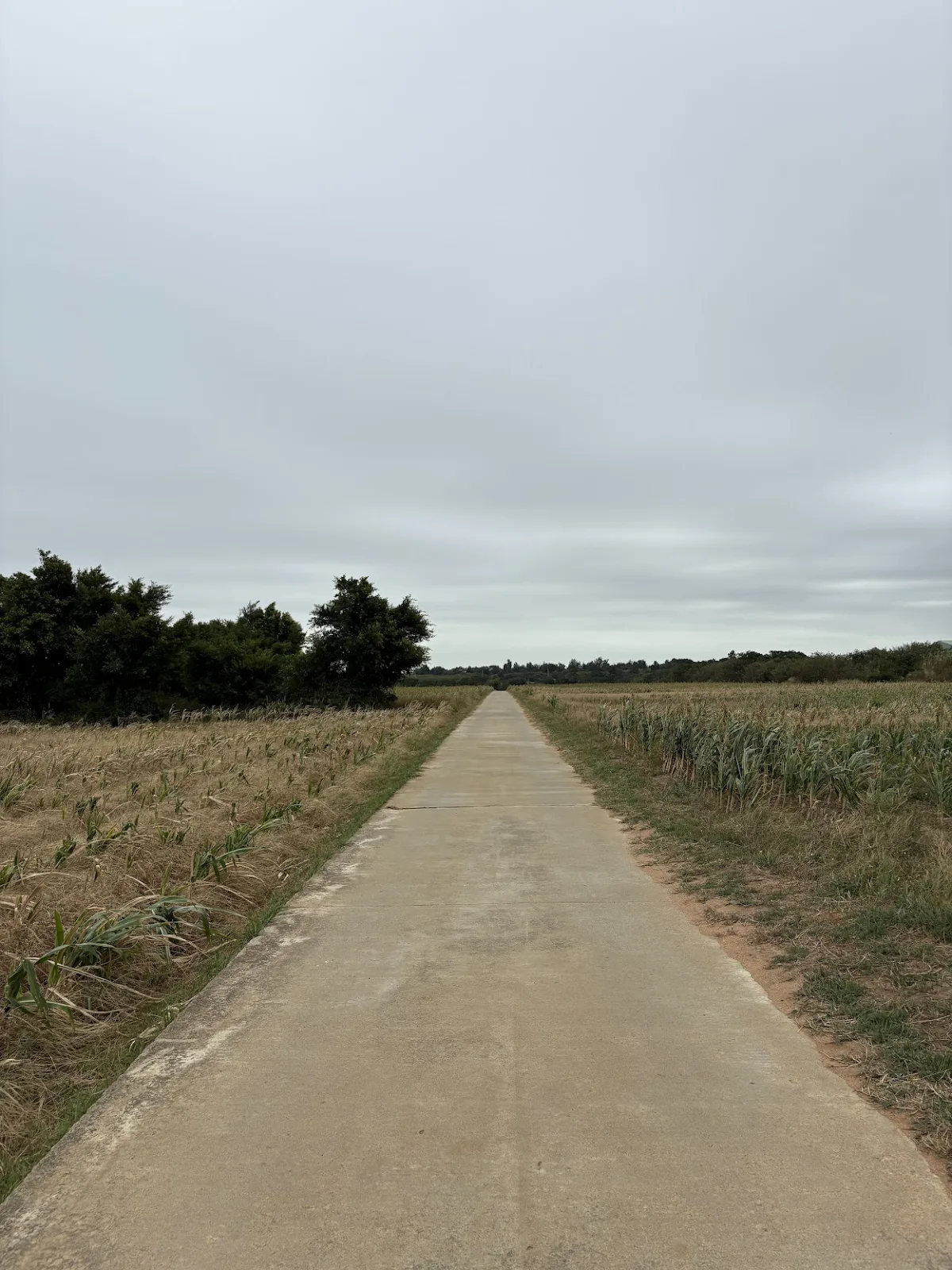
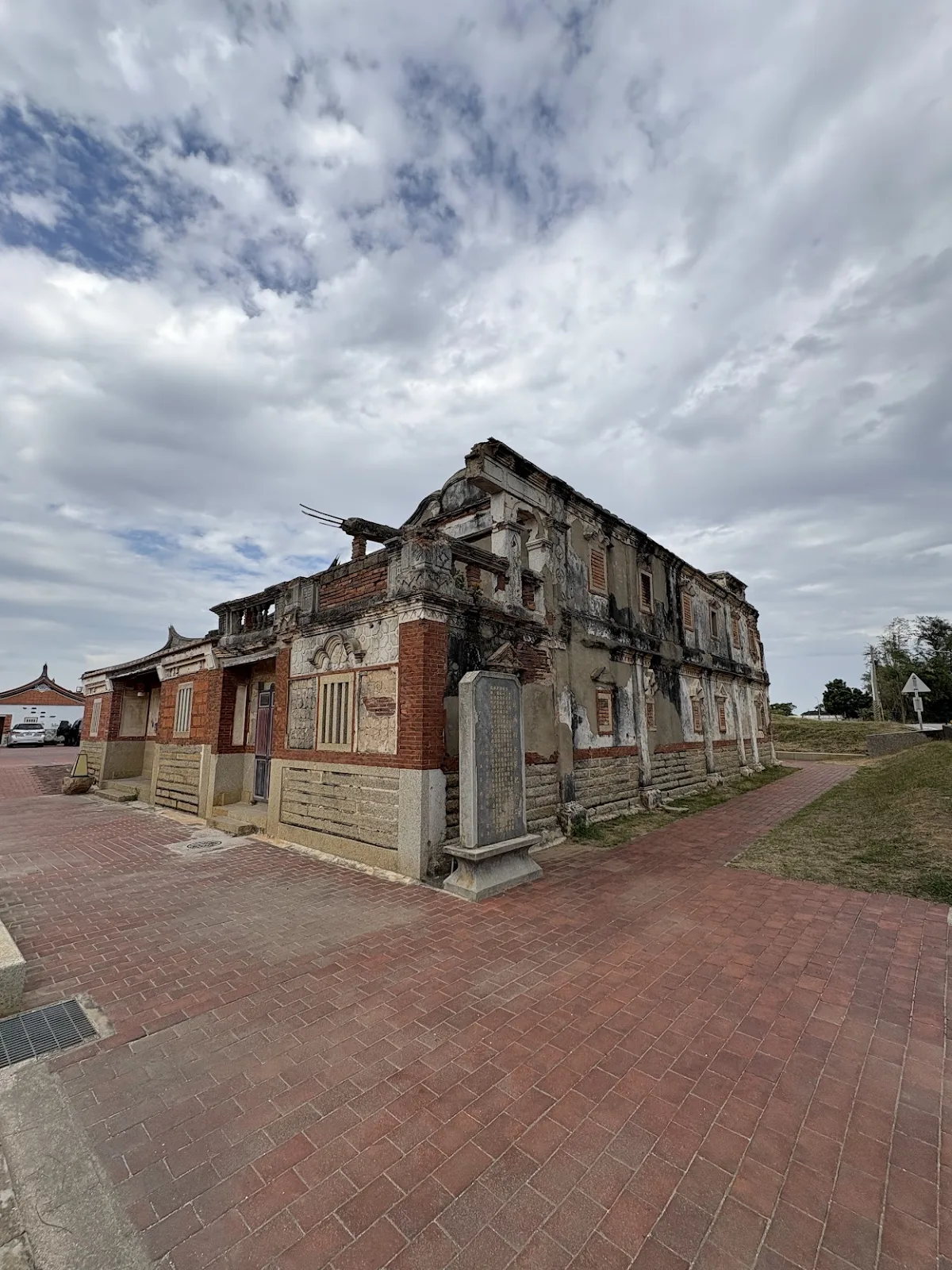
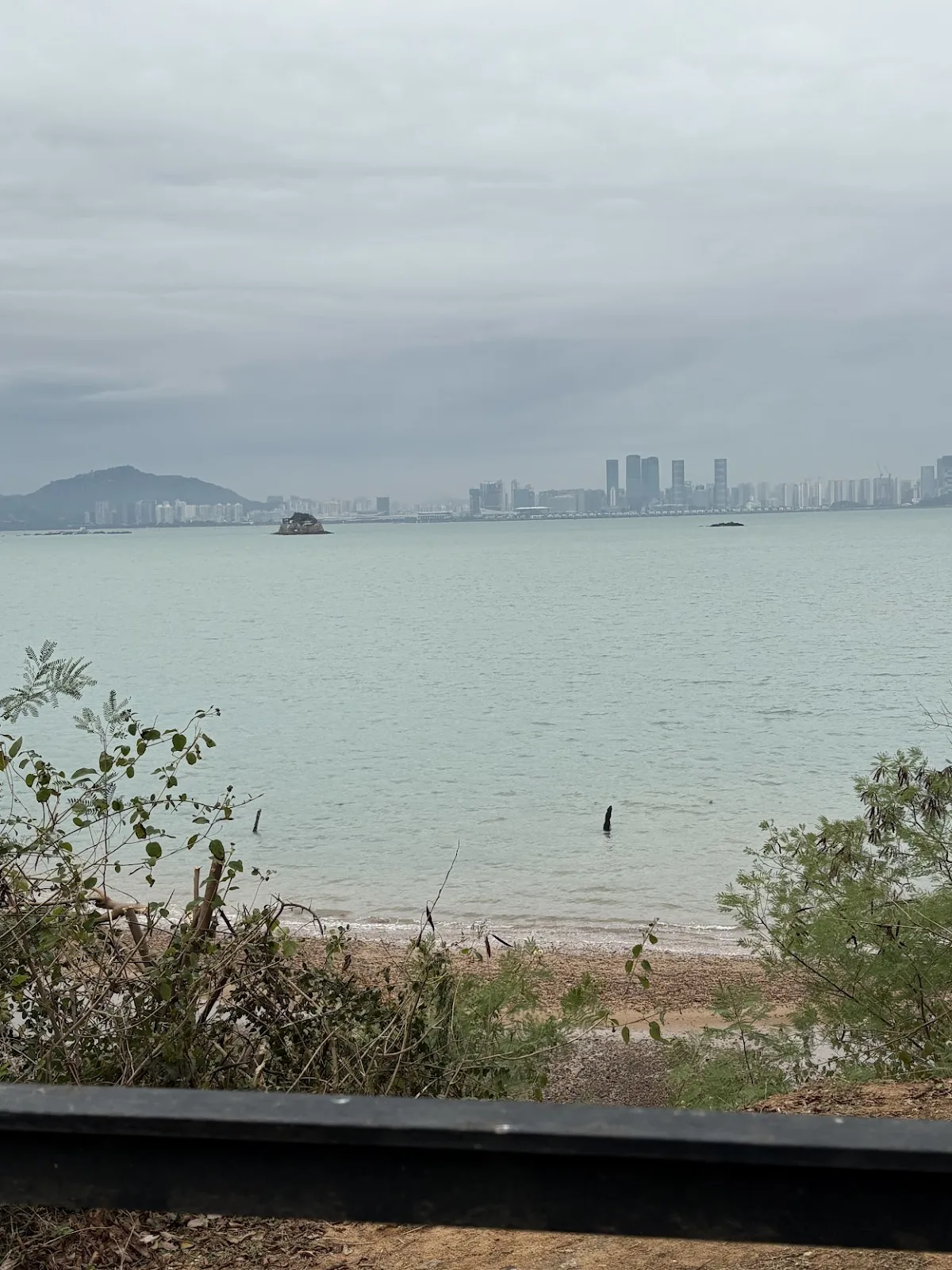
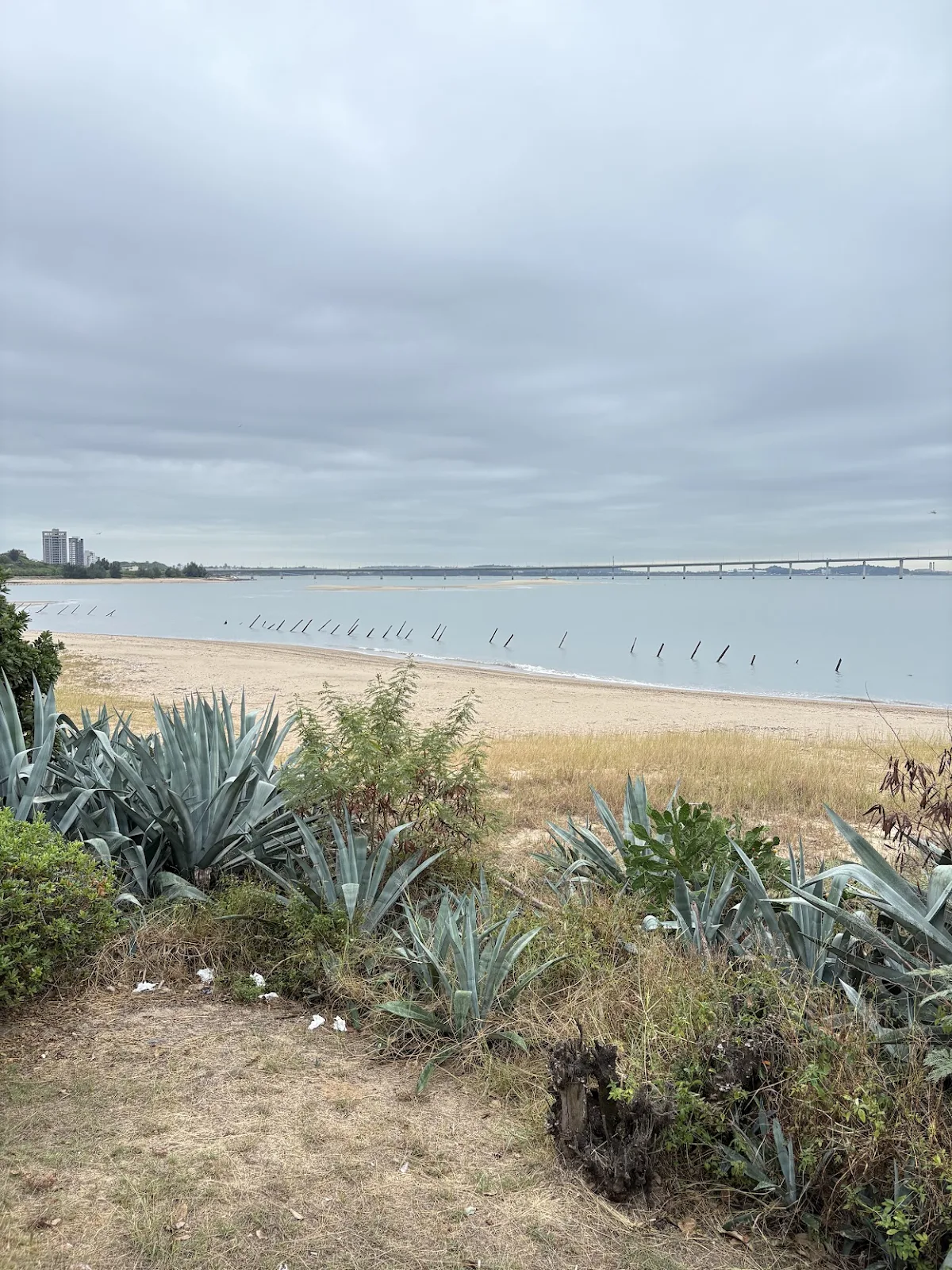
Historical Note
This piece was partially inspired by Kinmen Islands (金門), which directly translates to “Golden Gate Island”. As a group of islands located only 10km away from Mainland China (Xiamen), Kinmen was a prime target for hostilities following the Chinese Civil War in 1949. On 25 October 1949, the Battle of Kuningtou took place, in which the ROC held off the People’s Liberation Army (PLA) preventing an attack on Taiwan. Several years later, rising tensions between the ROC and PLA, combined with international pressure, led to the First and Second Taiwan Strait Crises in 1954–1955 and 1958 respectively. Today, mainly rural, the island serves as a ROC military base; many museums and historical sites remain as a testament to the island’s years of conflict and war. Some details in this piece were extrapolated from history for storytelling purposes.
Poetry
where it’s winter in the summer
verse 1:
coffee in the morning
sunlight rays and telling stories
oh the good old days
evenings getting bitter
i don’t like wine
i like liquor
but she drank it
like it’s water
anyway
chorus:
where it’s winter in the summer
snowstorms gather in the clouds
oh how much they wish to
laugh and dance around the sun
but winter’s happy and she’s smiling still
my soul is wrapped around it feels
so warm and cozy, oh, like so much fun
where it’s winter in the summer
verse 2:
the dance has left a shimmer
gliding
coffee in the morning
sunlight rays and telling stories
oh the good old days
evenings getting bitter
i don’t like wine
i like liquor
but she drank it
like it’s water
anyway
chorus:
where it’s winter in the summer
snowstorms gather in the clouds
oh how much they wish to
laugh and dance around the sun
but winter’s happy and she’s smiling still
my soul is wrapped around it feels
so warm and cozy, oh, like so much fun
where it’s winter in the summer
verse 2:
the dance has left a shimmer
gliding
Credits
Editorettes-in-Chief Ari Perez (M26) Daria Bassot (M26) Editors Almira Halkina (M27) Emma Zhang (M27) Mara Dumitru (M27) Fabian Steinmetz (M27) Miray Özmutlu (M27) Elfriede Suarez Reichenberger (M27) Mariam Kvavadze (M27) Cover Artist Ari Perez (M26) Web Team Daria Bassot (M26)