Short Fiction
My Little Infinity
Sustainable fashion wasn’t a conscious choice to me, but rather an underlying lifestyle.
I was five years old when my brown stuffed Tesco bear caught on a tree and slit his throat, a clean 3 inches down the center of him. I did what any child would: I dragged his lifeless carcass, stuffing and all, up the winding dozen steps to my house and thrust it in front of my mother. She, understanding the graveness of the situation, looked me in the eye and commanded, “Get the kit.” The kit, a Quality Street box filled with not chocolate but needles and threads that, when wielded by medicinal hands like hers, can bring the dead back to life - and so she did. Halfway through the nerve-wracking procedure, she turned the silver needle and brown thread to me.
“I don’t know how to,” I offered back.
She smiled before quipping, “That’s how we all start”.
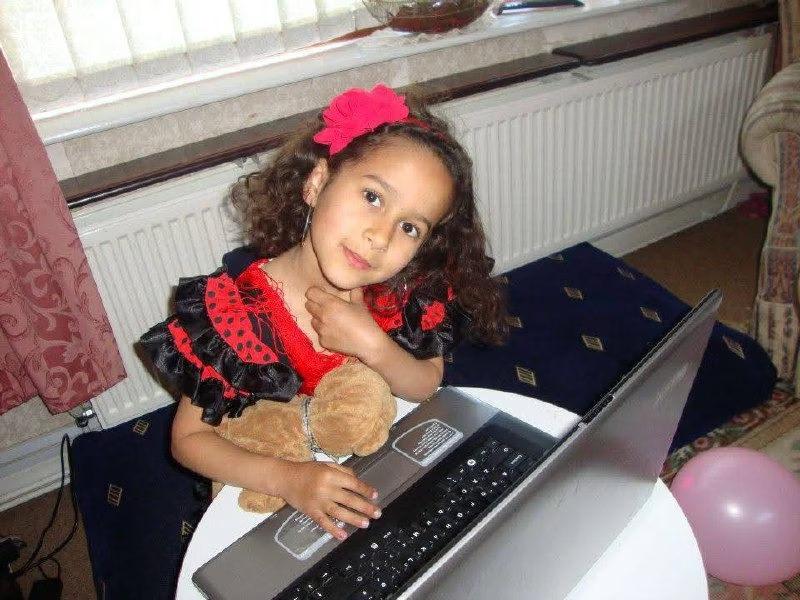 Fig 1. Me and my brown stuffed bear from Tesco at age five, pre-slaughter.
And so I started. One stitch turned into ten, turned into making dresses for my dolls out of used wet wipes, to puppets out of old socks, to bags for my friends out of felt pads. It was my mother who taught me how to mend and stitch, but it was my grandmother and her sewing machine I would steal, summer after summer, that taught me how to sew. From t-shirts out of torn pants, corsets out of a collection of zippers, dresses out of old tablecloths, kimonos out of floral mattress fabrics, bodices out of bathroom curtains… within any material, no matter how small and scrapy, dirty or ugly it was, lied endless realm of possibilities on what it could be, I only need give it the opportunity to.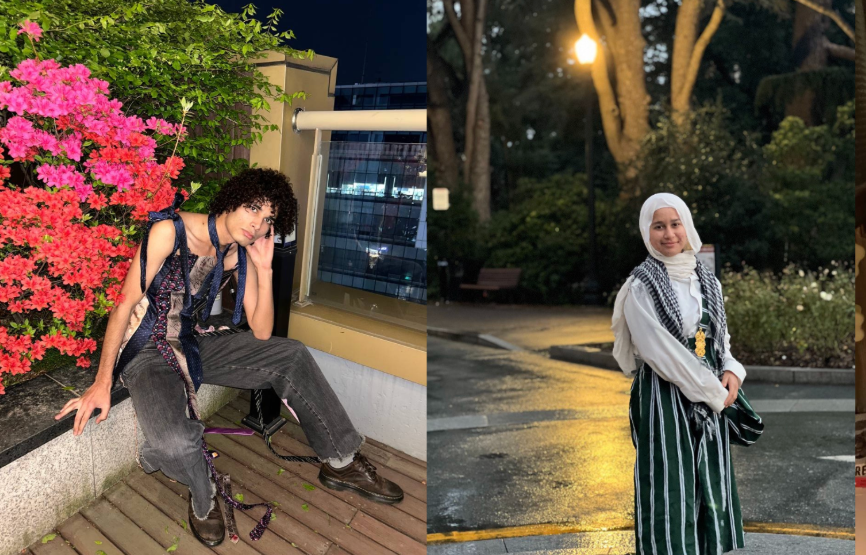 Fig 2. A flashy silver suit made out of table covering, a revamped Libyan traditional dress (photo by Bakr, M27), a corset top made out of old ties (modeled by Rere, M27), and a silk dress (modeled by Aisha, M27).
This methodology was ingrained in me so much so that when I grew up and gained access to fabric stores, an overwhelmingly endless realm of possibilities, I still preferred hand-me-down fabrics and scrapyard scraps. As Hazel Grace Lancaster once quoted, “Some infinities are bigger than other infinities”, and I quite enjoyed my little infinity of possibilities. While the former provided comfort in knowing that anything you can think of, you can assuredly make, and more creative freedom than your average seamstress knows what do with, the latter posed a challenge: what can make with materials nobody else knows what to make with?
This is a challenge I happily take, and it’s taken me far from the comfort of my grandma’s sewing machine. During Minerva, I have hosted several small-scale sustainable sewing workshops, my favorite of which was Valentine's Day’s Sew for Self-Love in The Mix @ SfPL, where we taught each other how to take pre-loved fabrics and infuse them with new love by tailoring them to suit our bodies. From San Francisco’s Noisebridge, where I made a gown out of old curtains, to Seoul’s Upcycling Plaza, where I crafted a dress out of Daiso curtains and a used hanbok, I have had a legacy of making my own Quinqatria dresses, a legacy I intend to uphold all four years, and thanks to Makerspaces like these, I confidently can. Fig 3. Quinqatria ‘24 (photo by Rim, M27) and Quinqatria ‘25 dress (photo by Youran, M27).
It was in the Upcycling Plaza where I made my two favorite pieces: a sweetheart-neckline ruched sleeved floral corset top, and a patchwork denim dress, entirely out of recycled fabrics. Fig 4. A ruched-sleeved, sweetheart neckline floral top and a patchwork denim dress (photo by Hectar, M27), and me presenting them at the gallery in Seoul (photo by David, M27).
The cost of both pieces together came to a total of around $4.59, marking sustainable fashion not only the most ecologically conscious, but also economically friendly, a double thumbs up to sustainability.
Being able to breathe life back into pieces once thought dead was a skill I learned from my mother and her mother, a skill I intend to use to the maximum extent of my ability. Because of it, my closet is full of thrift-store fits and hand-made pieces from hand-me-downs… and I wouldn’t have it any other way. You can see me hacking away in the corner of any makerspace in every rotation city - on that note, if you’re ever interested in sewing, no matter who you are or what you want to do, hit me up on Telegram @porquenoquiero, I’m always excited to hear from a stranger, or rather, soon-to-be-friend.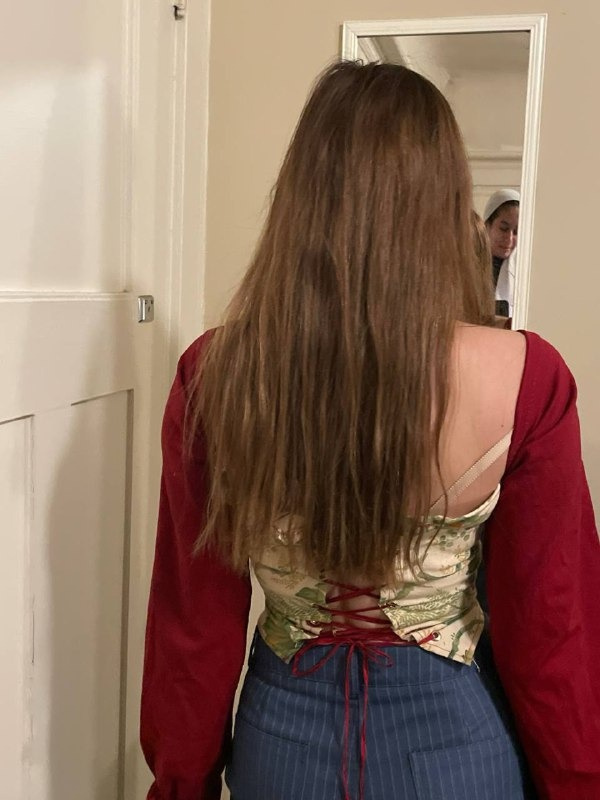 Fig. 5 A sneak-peak at my latest work-in-progress (modeled by Kamilla, M27).
Additionally, I heard that there are a lot of Minerva weddings coming up, and so, seeing as I just enrolled in a wedding-dress making course, I would love to pledge my services by offering 50% off dress making for any Minervan getting married, and 100% off if it’s a Minerva couple getting married! What can I say, I’m a sucker for post-love as much as I am pre-love. Lastly, if you haven’t taken anything away from this article, please take this:
Sustainable fashion wasn’t a conscious choice to me, but it is now, and it can be to you.
I was five years old when my brown stuffed Tesco bear caught on a tree and slit his throat, a clean 3 inches down the center of him. I did what any child would: I dragged his lifeless carcass, stuffing and all, up the winding dozen steps to my house and thrust it in front of my mother. She, understanding the graveness of the situation, looked me in the eye and commanded, “Get the kit.” The kit, a Quality Street box filled with not chocolate but needles and threads that, when wielded by medicinal hands like hers, can bring the dead back to life - and so she did. Halfway through the nerve-wracking procedure, she turned the silver needle and brown thread to me.
“I don’t know how to,” I offered back.
She smiled before quipping, “That’s how we all start”.
And so I started. One stitch turned into ten, turned into making dresses for my dolls out of used wet wipes, to puppets out of old socks, to bags for my friends out of felt pads. It was my mother who taught me how to mend and stitch, but it was my grandmother and her sewing machine I would steal, summer after summer, that taught me how to sew. From t-shirts out of torn pants, corsets out of a collection of zippers, dresses out of old tablecloths, kimonos out of floral mattress fabrics, bodices out of bathroom curtains… within any material, no matter how small and scrapy, dirty or ugly it was, lied endless realm of possibilities on what it could be, I only need give it the opportunity to.
This methodology was ingrained in me so much so that when I grew up and gained access to fabric stores, an overwhelmingly endless realm of possibilities, I still preferred hand-me-down fabrics and scrapyard scraps. As Hazel Grace Lancaster once quoted, “Some infinities are bigger than other infinities”, and I quite enjoyed my little infinity of possibilities. While the former provided comfort in knowing that anything you can think of, you can assuredly make, and more creative freedom than your average seamstress knows what do with, the latter posed a challenge: what can make with materials nobody else knows what to make with?
This is a challenge I happily take, and it’s taken me far from the comfort of my grandma’s sewing machine. During Minerva, I have hosted several small-scale sustainable sewing workshops, my favorite of which was Valentine's Day’s Sew for Self-Love in The Mix @ SfPL, where we taught each other how to take pre-loved fabrics and infuse them with new love by tailoring them to suit our bodies. From San Francisco’s Noisebridge, where I made a gown out of old curtains, to Seoul’s Upcycling Plaza, where I crafted a dress out of Daiso curtains and a used hanbok, I have had a legacy of making my own Quinqatria dresses, a legacy I intend to uphold all four years, and thanks to Makerspaces like these, I confidently can.
Fig 3. Quinqatria ‘24 (photo by Rim, M27) and Quinqatria ‘25 dress (photo by Youran, M27).Fig 4. A ruched-sleeved, sweetheart neckline floral top and a patchwork denim dress (photo by Hectar, M27), and me presenting them at the gallery in Seoul (photo by David, M27).Being able to breathe life back into pieces once thought dead was a skill I learned from my mother and her mother, a skill I intend to use to the maximum extent of my ability. Because of it, my closet is full of thrift-store fits and hand-made pieces from hand-me-downs… and I wouldn’t have it any other way. You can see me hacking away in the corner of any makerspace in every rotation city - on that note, if you’re ever interested in sewing, no matter who you are or what you want to do, hit me up on Telegram @porquenoquiero, I’m always excited to hear from a stranger, or rather, soon-to-be-friend.
Sustainable fashion wasn’t a conscious choice to me, but it is now, and it can be to you.
Short Fiction
Dear Father and Son
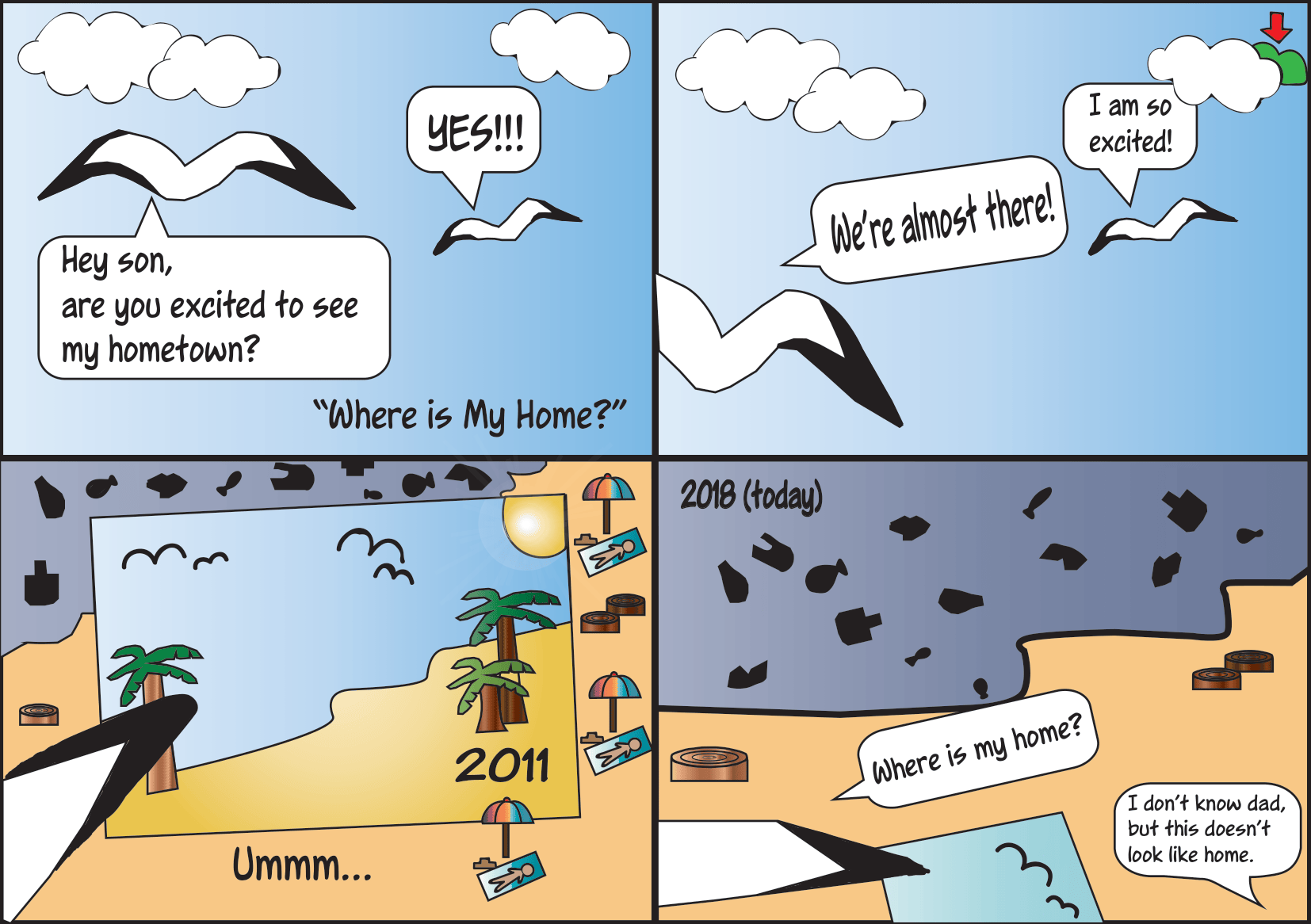
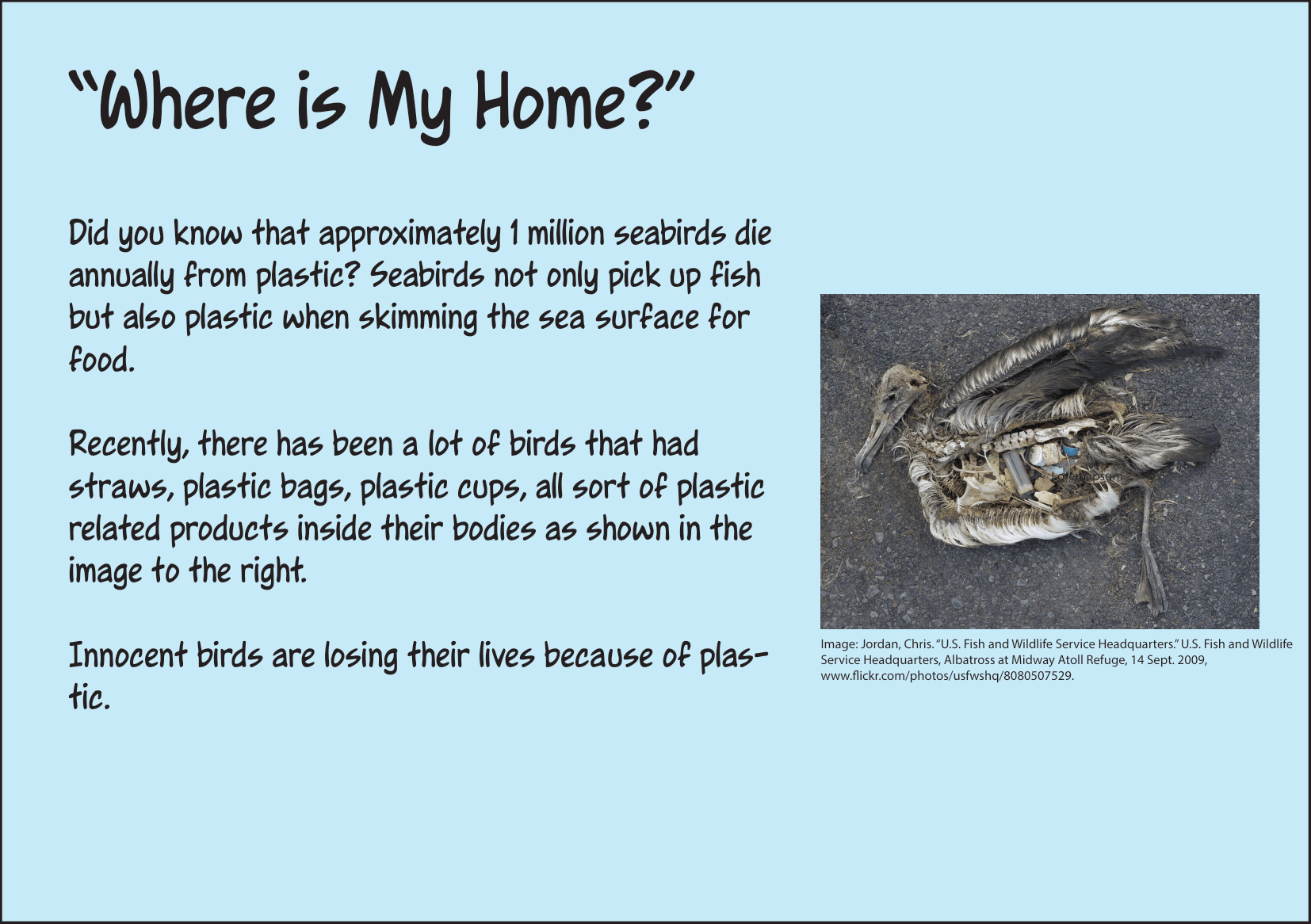
Home should be the gentle rhythm of waves,
the rocky shores where dawn's first light greets your wings.
Home should be endless skies stretching above the vast ocean,
a peaceful haven untouched by harm.
Home should carry salty breezes and the echo of your joyful cries,
a sanctuary where feathers soar freely.
Yet your home has disappeared,
unfairly swept away by hands like mine.
There is no call or cry powerful enough to voice my sorrow.
"Sorry" cannot rebuild cliffs or reclaim skies that were yours.
Please know—I carry profound shame for the harm we've caused.
I pledge to fight
until our worlds can share these skies and shores in harmony
until the ocean breeze once again whispers peace.
Until that day, you are always welcome at my shoreline.
The sands and seas are yours, and kindness awaits your return.
With sincere regret and heartfelt hope,
A human striving to coexist
Sequential Art
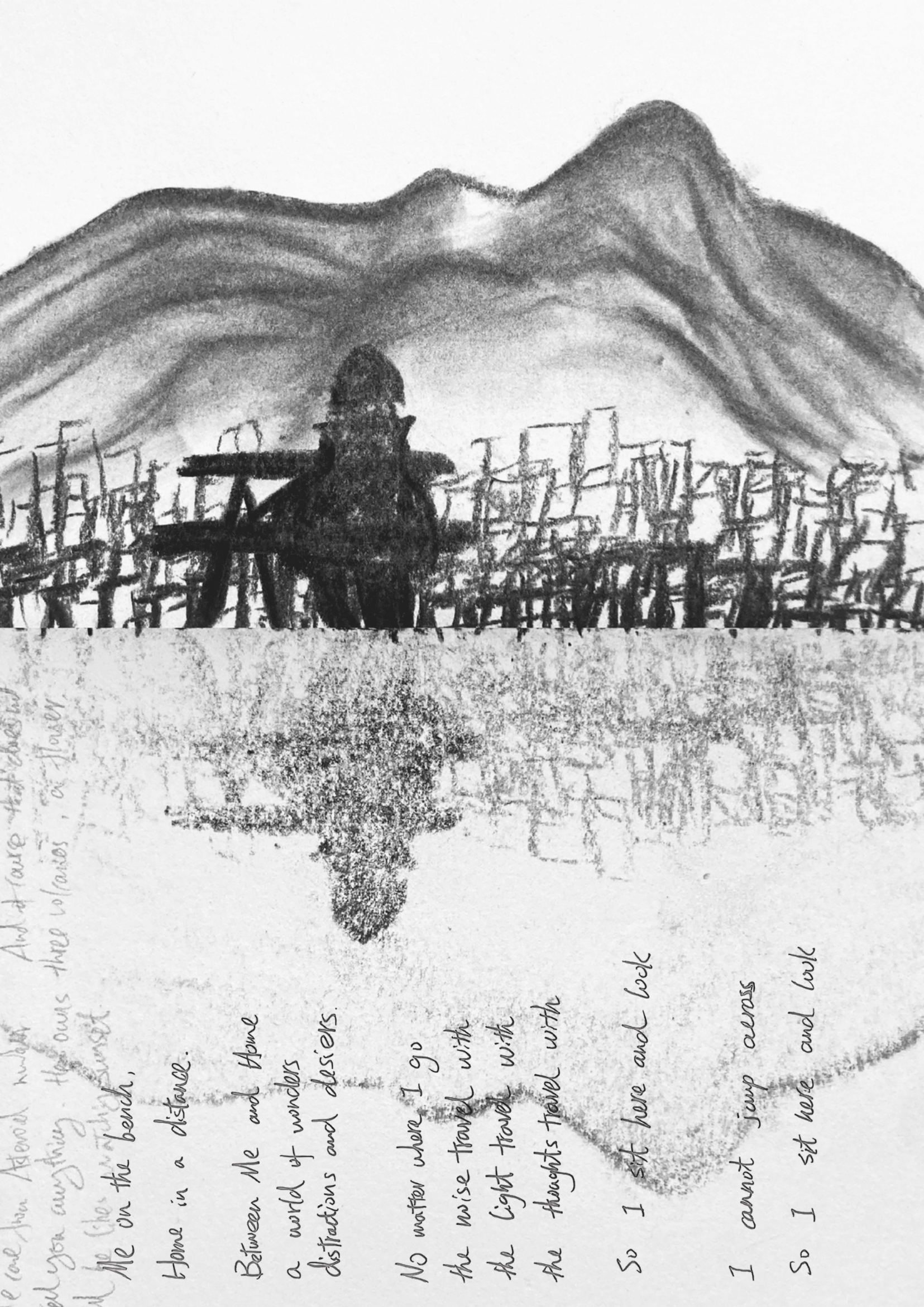
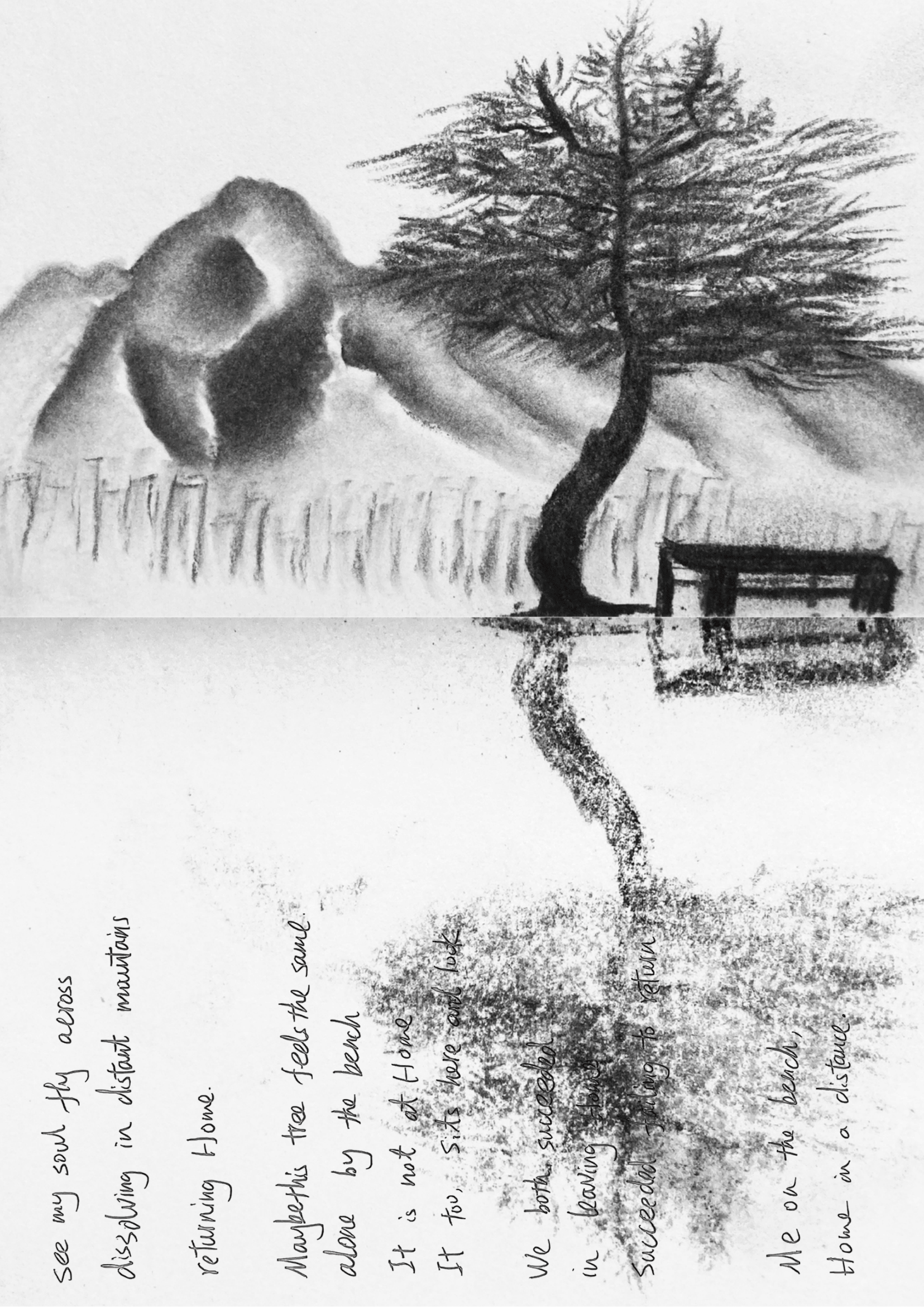
Home I & II
Short Fiction
Due Time
You and I are one. We came from the same source and will return to the same reservoir. I am not ready to move away from who I used to be. In a past life, I was someone I cannot remember. I learned that I can be much more. The disconnection between the sacred and the profane never existed.
We built temples high in the mountains. We created schools. We locked the doors. We trapped the knowledge in books, and we claimed it as ours. We created keys and hid them. We changed the game and killed the opponent. How can I be saved if you die by my steps every day? Poisoning your land and withdrawing your olives murdered my soul. When will I learn we are different expressions of the same soil? The one that cries lavas, laughs waterfalls, blooms sharks, grows condors, sprouts rhinos, and dawns the love from a mother, a partner, and a friend. I fooled myself into believing there would be places in heaven for the saints. I fooled myself into thinking that killing my body would save my soul. In the quotidian of my emotions and the mundanity of my feelings, I longed for a lost shared identity of what it is to be alive. A shared consciousness. Foolish I was when I created all those rites and burned all these offerings to purify myself from my desires. The same desires that once allowed me to freely love without returning.
The other day, I had a dream. I was not myself. Instead, a proclamation:
The word had become flesh.
My brother showed me the cosmos. He told me about supernovas and their power. The stars that create elements and the elements that make new life. Not from a “therefore” but from a “nonetheless.” Above seas, above our heads, we witnessed the creation lady rising. She looked at us. I kept dreaming about how my feelings just are what they happen to be. In the same way the oceans are. The waves crash on the shore just as your hair bounces on your face. The pines from the north resist the winter in the same way you grieve the ones you lost. Like the mycelium and the lichen, you yearn for community. The way you bow to pray reminds me of the rainforest samambaia reaching for the sunlight. The flock of birds imitates your courage to occupy new places. The ants and you share the same desire to build new homes. I was there looking for the sweetest fruit, the clear weather, the shiniest mineral. And all I could find was you. Lost in the clouds, looking for a path to be crossed.
When I think of you, I think of love. And the ease in emptying oneself to give space for another manifestation to become. That is the first evidence of love: the freedom of choosing not to be. I give up the space that was entitled mine so that you have a chance to breathe. Sometimes freedom is a sunny day by the pool. A feast around laughs. The mobile of the year. The ought-to-be is greater than the availability of choices.
How could I understand my brother if I gave him morals and philosophies? I baptized him and named him after my senses. I created a language only I could speak, and depleted him of grammars and alphabets. Hoping to free him, I caged him. I did not allow him to experience the turtle island, the sweetgrass, and the wild flowers. But my brother understood me. He emptied himself before I held notice, and I could see I was leaking from a space full of me. In locking my brother, I locked myself. I built myself a tower with no windows. I could only see the shadows of the external world. Silhouette of a man, and the smell of fresh bread.
Now I understand it is time to break the doorknobs. To open the locks. It is due time to free myself, and to walk outside. To experience the flocks. To support the folks. To reach the skies. To ask for mercy. To learn a new language. To say “I love you” when I mean it. To cook for my mom. To invite my friends over. To throw them a party. It is due time to celebrate. To welcome my brother, who has walked a long journey and whose feet are tired. To care for him. It is due time.
We built temples high in the mountains. We created schools. We locked the doors. We trapped the knowledge in books, and we claimed it as ours. We created keys and hid them. We changed the game and killed the opponent. How can I be saved if you die by my steps every day? Poisoning your land and withdrawing your olives murdered my soul. When will I learn we are different expressions of the same soil? The one that cries lavas, laughs waterfalls, blooms sharks, grows condors, sprouts rhinos, and dawns the love from a mother, a partner, and a friend. I fooled myself into believing there would be places in heaven for the saints. I fooled myself into thinking that killing my body would save my soul. In the quotidian of my emotions and the mundanity of my feelings, I longed for a lost shared identity of what it is to be alive. A shared consciousness. Foolish I was when I created all those rites and burned all these offerings to purify myself from my desires. The same desires that once allowed me to freely love without returning.
The other day, I had a dream. I was not myself. Instead, a proclamation:
The word had become flesh.
My brother showed me the cosmos. He told me about supernovas and their power. The stars that create elements and the elements that make new life. Not from a “therefore” but from a “nonetheless.” Above seas, above our heads, we witnessed the creation lady rising. She looked at us. I kept dreaming about how my feelings just are what they happen to be. In the same way the oceans are. The waves crash on the shore just as your hair bounces on your face. The pines from the north resist the winter in the same way you grieve the ones you lost. Like the mycelium and the lichen, you yearn for community. The way you bow to pray reminds me of the rainforest samambaia reaching for the sunlight. The flock of birds imitates your courage to occupy new places. The ants and you share the same desire to build new homes. I was there looking for the sweetest fruit, the clear weather, the shiniest mineral. And all I could find was you. Lost in the clouds, looking for a path to be crossed.
When I think of you, I think of love. And the ease in emptying oneself to give space for another manifestation to become. That is the first evidence of love: the freedom of choosing not to be. I give up the space that was entitled mine so that you have a chance to breathe. Sometimes freedom is a sunny day by the pool. A feast around laughs. The mobile of the year. The ought-to-be is greater than the availability of choices.
How could I understand my brother if I gave him morals and philosophies? I baptized him and named him after my senses. I created a language only I could speak, and depleted him of grammars and alphabets. Hoping to free him, I caged him. I did not allow him to experience the turtle island, the sweetgrass, and the wild flowers. But my brother understood me. He emptied himself before I held notice, and I could see I was leaking from a space full of me. In locking my brother, I locked myself. I built myself a tower with no windows. I could only see the shadows of the external world. Silhouette of a man, and the smell of fresh bread.
Now I understand it is time to break the doorknobs. To open the locks. It is due time to free myself, and to walk outside. To experience the flocks. To support the folks. To reach the skies. To ask for mercy. To learn a new language. To say “I love you” when I mean it. To cook for my mom. To invite my friends over. To throw them a party. It is due time to celebrate. To welcome my brother, who has walked a long journey and whose feet are tired. To care for him. It is due time.
Nonfiction
They Say the World is Built for Two
Hotel beds are always too large for just me to sleep in. So incredibly comfortable yet strangely lonely, as if something is suddenly missing. Taxi drivers, restaurant servers, tour guides always look two seconds too long, like there is a part of me missing, something I don’t know of. As if I were somehow incomplete. As if there was something fundamentally wrong about enjoyment in solitude.
The subtle hints of life are meant to be enjoyed with someone else. Two bedside tables on each side of my bed. Two showers in a suite I booked just for myself, two chairs at the table and two seats next to each other on the plane, train, bus and ferry. Two stand-up paddleboards on the hotel beach. I only need one of them. The scooter I rent fits two people. The ticket seller asks if I came all by myself. Is that boldness, genuine confusion, concern, or something else? Something sinister, even? It makes me uncomfortable, but I fight it, smile as I take my ticket and go on about my day. The adventure that I call my life. So full, so beautiful, always and only mine.
You got a man? He asks. I have a little ring I got for my birthday from my best friends. Yes, I lie. Where is he? At home. I reply. Don’t have a boyfriend? So persistent. I do. I don’t. This man doesn’t know it. I lift my left hand, showing a silver ring with a small glass stone in the middle. A deeper lie. Do you have a man? I leave. I hear his steps behind me, but in a crowd, escaping is easy. Learning to appreciate the safety that overly filled public spaces present is a sign of becoming a woman. Everyone rushing only in the rhythmic ticking of their own watches. They don’t stop to notice that I’m here alone. No need to endure the uncomfortable determination of a man who doesn’t understand a woman’s no. No need to lie that I am taken, like I was a sheep already claimed by a shepherd.
A Twosome Place, the cafe next to my hotel in Seoul. A discount for two at the PyeongChang ski resort and another at a local, not-so-authentic Italian restaurant. Gosh, I miss home. There are countless arcades, and even more photo booths to capture time, shared by a pair. Gangnam, Itaewon, Myeongdong, and Dongdaemun. In all my favourite places in Seoul, there are couples holding hands, sitting by the river together, one’s head on another’s shoulder. Making Tteokbokki noodles by the Han River, enjoying the cherry blossoms, so in peace, as I run past, trying to beat my last week's PB. Just me, the rhythm of my feet, head clearer than ever.
Plans for yet another trip in my notebook. Realising distances are too long to see any friends. Thinking that if I weren’t alone, I could stay in a hotel right in the city centre for less than my hostel price. Realising, too, that tea ceremonies are only bookable for two people. Deciding to climb a mountain instead. 1200 meters of elevation. Peace, quiet, a sunset so beautiful I still wonder if it was real. My happy music fits just my taste. A good book, not about romance, but about life, so full of wonder.
A call in the middle of the night. Tears and shaking words from my best friend. The end of an era of a beautiful love story I truly hoped would last. My comforting words. Questions for what is to come. I’m left baffled. Lay awake for hours waiting for sleep. My two best friends, no longer a team? How is it that the love in one’s eyes can change so suddenly, almost overnight? That a tiny change in the way of life would change a feeling I knew was love. I doubt I could have been so wrong all along. How is it that one can love another one day, not the next? Isn’t the point of love that it doesn’t obey the laws of emotions? That it’s not fleeting but drowns you deep ever deeper, fills your lungs, your veins and the entirety, and doesn’t let go. It makes you obsessed, restless, at peace, productive, and so so incredibly stupid. It biologically rewires you, by the laws of optimisation and survival we like to call evolution.
To answer only to myself has always been such a gift. To give all my energy and love to the world, and receive even more. How can I love the world so unconditionally, when it keeps so subtly yet so loudly, and most annoyingly so persistently reminding me that no matter how complete I feel, until I am part of a team, there is something missing I could not know of? I only want you in my life if your presence is sweeter than my solitude. Words so soft, so reassuring, almost automatically in my mind whenever I was confronted with how I could never be complete by myself. Like Eve was created from Adam’s rib, the pieces of a puzzle are not complete alone. Will I always be treated as incomplete until I obey and walk the world with my better half by my side? But then again, at the end of the day, being alone is a small price to pay for peace.
All of a sudden, almost by accident, someone walks into my life. There is one bed just large enough to fit two people, on it two soft towels. On the table, two coffee cups, two chairs. Enough hangers for two, and of course, two bedside tables. This room is for two. Not three, not one, exactly two. The receptionist’s reaction is different when I tell him that I came with my man, not with a friend or alone. The owner of a Chinese restaurant puts one pair of chopsticks and one pair of Western utensils in the takeaway bag. He has respect, not interest, in his eyes. I ordered a vegetarian dinner special for two.
We filled tables and seats on trains, buses, and planes. We waltzed on lively, ancient plazas to live music under the beating sun. We fit in a bench by the beach perfectly, just the two of us. There are two ice cream flavours to choose from, so we get to try both of them. Two laptops on a table at a pub look intriguing, not lonely. Walking home after dark, and getting up late, suddenly becomes normal, not something to constantly be fighting against. And when we get to bed at midnight, both of the bedside tables are filled, and the bed doesn’t feel lonely, but just as it was designed to be.
On a mountaintop above the clouds, I rest my head on his shoulder—the one from whose rib I might have been created. It was a feeling of safety like no other, but more importantly, a sense of peace so sweet it tingled to the tips of my toes.
The subtle hints of life are meant to be enjoyed with someone else. Two bedside tables on each side of my bed. Two showers in a suite I booked just for myself, two chairs at the table and two seats next to each other on the plane, train, bus and ferry. Two stand-up paddleboards on the hotel beach. I only need one of them. The scooter I rent fits two people. The ticket seller asks if I came all by myself. Is that boldness, genuine confusion, concern, or something else? Something sinister, even? It makes me uncomfortable, but I fight it, smile as I take my ticket and go on about my day. The adventure that I call my life. So full, so beautiful, always and only mine.
You got a man? He asks. I have a little ring I got for my birthday from my best friends. Yes, I lie. Where is he? At home. I reply. Don’t have a boyfriend? So persistent. I do. I don’t. This man doesn’t know it. I lift my left hand, showing a silver ring with a small glass stone in the middle. A deeper lie. Do you have a man? I leave. I hear his steps behind me, but in a crowd, escaping is easy. Learning to appreciate the safety that overly filled public spaces present is a sign of becoming a woman. Everyone rushing only in the rhythmic ticking of their own watches. They don’t stop to notice that I’m here alone. No need to endure the uncomfortable determination of a man who doesn’t understand a woman’s no. No need to lie that I am taken, like I was a sheep already claimed by a shepherd.
A Twosome Place, the cafe next to my hotel in Seoul. A discount for two at the PyeongChang ski resort and another at a local, not-so-authentic Italian restaurant. Gosh, I miss home. There are countless arcades, and even more photo booths to capture time, shared by a pair. Gangnam, Itaewon, Myeongdong, and Dongdaemun. In all my favourite places in Seoul, there are couples holding hands, sitting by the river together, one’s head on another’s shoulder. Making Tteokbokki noodles by the Han River, enjoying the cherry blossoms, so in peace, as I run past, trying to beat my last week's PB. Just me, the rhythm of my feet, head clearer than ever.
Plans for yet another trip in my notebook. Realising distances are too long to see any friends. Thinking that if I weren’t alone, I could stay in a hotel right in the city centre for less than my hostel price. Realising, too, that tea ceremonies are only bookable for two people. Deciding to climb a mountain instead. 1200 meters of elevation. Peace, quiet, a sunset so beautiful I still wonder if it was real. My happy music fits just my taste. A good book, not about romance, but about life, so full of wonder.
A call in the middle of the night. Tears and shaking words from my best friend. The end of an era of a beautiful love story I truly hoped would last. My comforting words. Questions for what is to come. I’m left baffled. Lay awake for hours waiting for sleep. My two best friends, no longer a team? How is it that the love in one’s eyes can change so suddenly, almost overnight? That a tiny change in the way of life would change a feeling I knew was love. I doubt I could have been so wrong all along. How is it that one can love another one day, not the next? Isn’t the point of love that it doesn’t obey the laws of emotions? That it’s not fleeting but drowns you deep ever deeper, fills your lungs, your veins and the entirety, and doesn’t let go. It makes you obsessed, restless, at peace, productive, and so so incredibly stupid. It biologically rewires you, by the laws of optimisation and survival we like to call evolution.
To answer only to myself has always been such a gift. To give all my energy and love to the world, and receive even more. How can I love the world so unconditionally, when it keeps so subtly yet so loudly, and most annoyingly so persistently reminding me that no matter how complete I feel, until I am part of a team, there is something missing I could not know of? I only want you in my life if your presence is sweeter than my solitude. Words so soft, so reassuring, almost automatically in my mind whenever I was confronted with how I could never be complete by myself. Like Eve was created from Adam’s rib, the pieces of a puzzle are not complete alone. Will I always be treated as incomplete until I obey and walk the world with my better half by my side? But then again, at the end of the day, being alone is a small price to pay for peace.
All of a sudden, almost by accident, someone walks into my life. There is one bed just large enough to fit two people, on it two soft towels. On the table, two coffee cups, two chairs. Enough hangers for two, and of course, two bedside tables. This room is for two. Not three, not one, exactly two. The receptionist’s reaction is different when I tell him that I came with my man, not with a friend or alone. The owner of a Chinese restaurant puts one pair of chopsticks and one pair of Western utensils in the takeaway bag. He has respect, not interest, in his eyes. I ordered a vegetarian dinner special for two.
We filled tables and seats on trains, buses, and planes. We waltzed on lively, ancient plazas to live music under the beating sun. We fit in a bench by the beach perfectly, just the two of us. There are two ice cream flavours to choose from, so we get to try both of them. Two laptops on a table at a pub look intriguing, not lonely. Walking home after dark, and getting up late, suddenly becomes normal, not something to constantly be fighting against. And when we get to bed at midnight, both of the bedside tables are filled, and the bed doesn’t feel lonely, but just as it was designed to be.
On a mountaintop above the clouds, I rest my head on his shoulder—the one from whose rib I might have been created. It was a feeling of safety like no other, but more importantly, a sense of peace so sweet it tingled to the tips of my toes.
Videogame
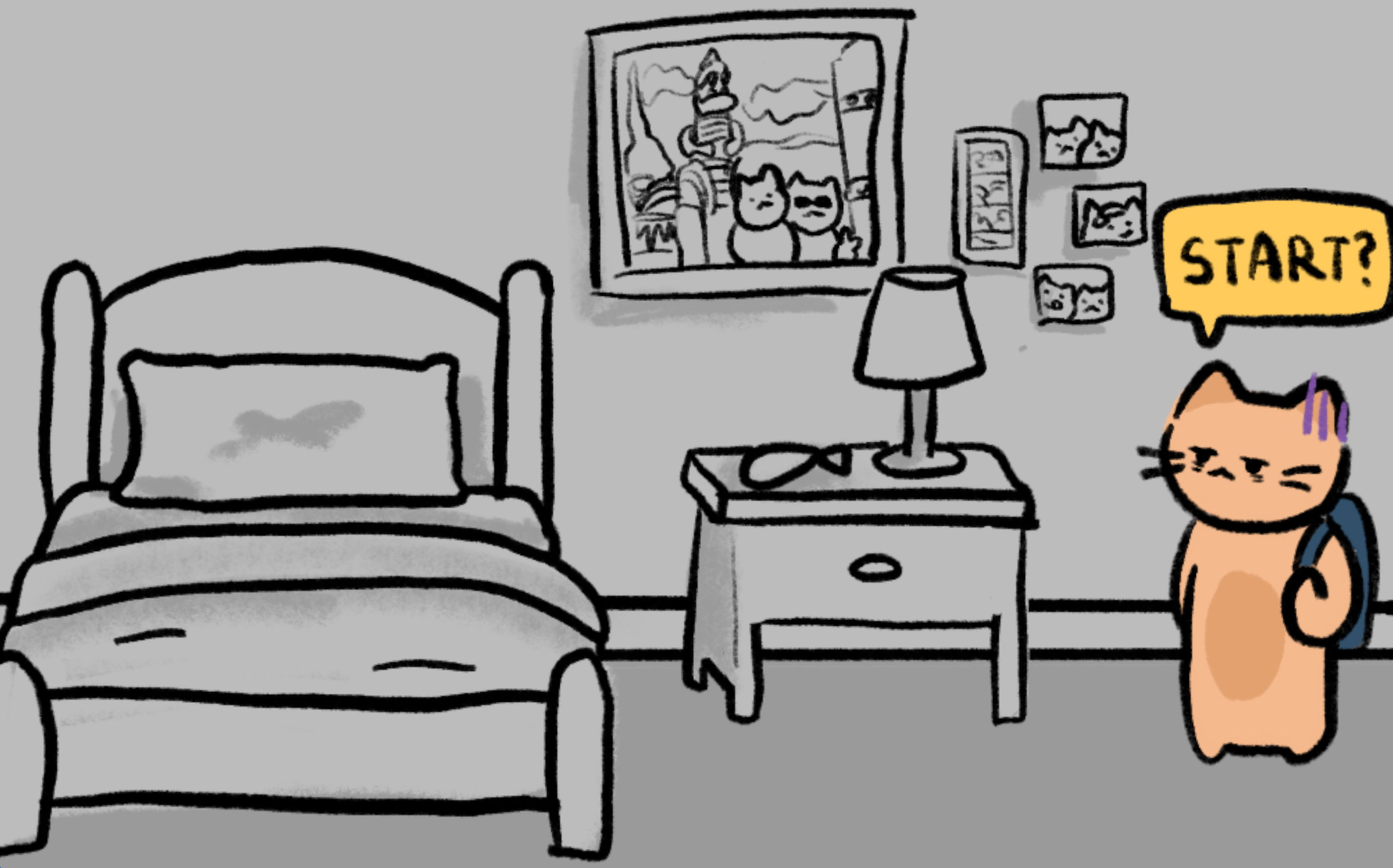
Reel Tired
Play the game here.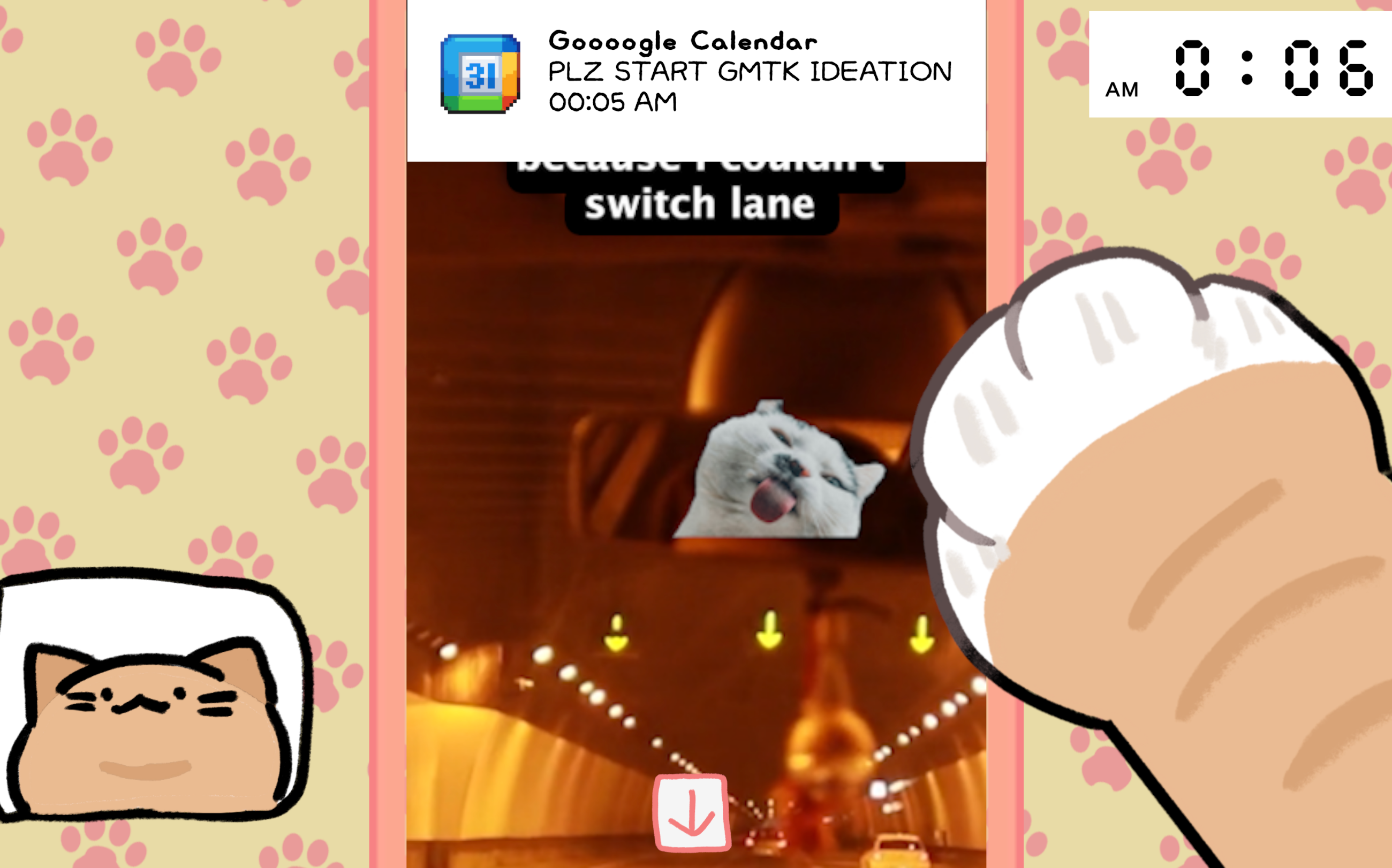
Poetry
Elevator
How the fuck am I supposed to ride an elevator? Every time I push the button I feel myself waiting waiting heartbeat quickens fingers tap tap tapping on my thigh. Sometimes I hide to the right of the elevator in case it comes and there are people in it and I don't want to take it anymore but I also don't want The People to know.
But mostly it comes and I get in and
What in hell am I supposed to do when I'm the fifth person in an elevator?
The other four already
got
the
corners so
I just stand with my hands
clenching
unclenching
sweating and
wiping
by my sides,
in the centre of this stranger-circle of non-starers on their phones.
I wish I had my phone too but I put it in my backpack and there's
no
space
to
move
to get it out and
I must look so strange just standing here.
Do they think I'm staring at myself in the elevator mirror is that why no one else faces the back?
But if I move now it'll just seem weirder. I look at my shoes and I'm
waiting I'm
waiting I'm
waiting I'm
waiting. We lurch to a stop like a rollercoaster;
freedom at last!
I burst forth with a string of excuse me-s and sorry-s and can I just get through-s -
only to realize
this isn't
my floor so I
move to the right
But mostly it comes and I get in and
What in hell am I supposed to do when I'm the fifth person in an elevator?
The other four already
got
the
corners so
I just stand with my hands
clenching
unclenching
sweating and
wiping
by my sides,
in the centre of this stranger-circle of non-starers on their phones.
I wish I had my phone too but I put it in my backpack and there's
no
space
to
move
to get it out and
I must look so strange just standing here.
Do they think I'm staring at myself in the elevator mirror is that why no one else faces the back?
But if I move now it'll just seem weirder. I look at my shoes and I'm
waiting I'm
waiting I'm
waiting I'm
waiting. We lurch to a stop like a rollercoaster;
freedom at last!
I burst forth with a string of excuse me-s and sorry-s and can I just get through-s -
only to realize
this isn't
my floor so I
move to the right
Nonfiction
Madhubala: The Monroe of Bollywood
The East can’t forget her. It was perhaps the playfulness of her eyes, the harmony of her voice, or the calculativeness of her actions. Her beauty conquered hearts; her acting ruled them. Madhubala is, inarguably, the most beautiful artiste to grace the Indian screen. Madhubala’s life has an uncanny familiarity with a film plot. Her rise —overwhelming; her reign — majestic; her demise — heartbreaking.
ACT 1: The overwhelming rise
It was Valentine’s Day in 1933. While Saint Valentine was roaming the planet, spreading love, one of his stray arrows mistakenly hit a newborn girl in a poor, conservative family of Pathan Muslims in Delhi. Her father, Attaulah Khan, named her after the sole resident of the mighty Taj Mahal, “Mumtaz Jahan Beghum”(Superior to the universe). Confused as to whom to declare her valentine, the saint decided that any person who laid eyes on the creature would fall in love with her.
Her charm could not be leashed. She was made for the screen, and the screen for her: a connection so strong that even circumstances couldn’t deter their attraction. Her father, Ataullah Khan, lost his job in the Imperial Tobacco Company and moved the family to Bombay in search of a better life. But Bombay was not a kind place. The family lived near destitution, surviving on hope and the promise of a brighter tomorrow. It was this desperate need that pushed little Mumtaz into the world of cinema. With her charm, bewitching to the naked eye, she graced the screen at the tender age of eight. After about five years of playing background child roles, Madhubala got her first break in a lead role in Neel Kamal (1947), produced and directed by her mentor, veteran filmmaker Kidar Sharma. Then, at the age of 14, she starred in a lead role against another fledgling star, Raj Kapoor, and that role was what truly introduced Madhubala to the big screen.
ACT 2: The majestic reign
Madhubala (English for “sweet like honey”) became a household name. Men began to carry her photos in their wallets. Women began to dress like her, speak like her, behave like her. Madhubala’s era was marked by great tensions between Hindus, Muslims, and the British. The sub-continent was partitioning, the British were leaving, masses were migrating to their newly acquired homelands, and riots were springing up everywhere. In this time of great national tensions and repressions, her presence was a national treasure.
Madhubala's path into acting was never just a professional one; rather, it was a spiritual journey and an unwavering dedication to the limitless secrets of expression. Every gesture she made and every shade of silence she inhabited was fuelled by her unadulterated and unwavering love for the art. She played not only Shobha but also the obstinate heartbeat of a village girl whose scarlet scarf became the wing of her soul in Lal Dupatta, her first real breakthrough performance. As The Indian Express correctly pointed out, the movie was more than just a box office hit — it was her rebirth in front of the world, with the flame of fame being lit in her name.
Then came the first great haunting in Indian cinema, Mahal. It was a low-budget ghost that held the audience's attention until it was remembered. In the haze of gothic hallways, Madhubala did more than just perform: she blossomed like a phantom rose, a vision so mysterious that it cemented her place in cinematic history. What started as a gamble turned into the year's third-greatest victory, and with it came opportunities to lead in movies, become a legend, and even become fate.
She embraced Hanste Ansoo in 1950, the first Indian film to be certified as adults only, with a bold theme and unrestrained ambition. She then appeared in Amiya Chakravarty's Badal (1951) the following year, cloaked in the guise of a princess, oblivious to fate and enamoured with the rebellious forest son. The story used Robin Hood's skeleton, but what really made it shine was her face. Critics, enthralled but unforgiving, pointed out the irregularity in her speech — her words gushing out as quickly as water, wild and urgent, rattling in monotone where silence might have existed. However, this was the essence of Madhubala: more wild flame, less practiced knife.
Perhaps she was never Waheeda's measured brilliance, Nutan's solemn excellence, or Meena Kumari's flawlessly polished stature. Like light through a prism, Madhubala was something else, something rarer, with new wonders revealed from every angle. She was a presence rather than artifice. She would outshine the scene no matter where you put her, whether it was in a mirrored hall shining with royalty or in the quiet agony of a desolate workshop filled with shadows and grease.
Her gift was rhythm, a secret covenant with music itself. She did not just live through lyrics; lyrics chose her, adored her, leaned into her presence as though words had finally found a vessel worthy of inhabiting. Her songs did not stop at the ears — they poured themselves into the eyes. A lift of her brow was poetry, a tilt of her head — a chorus, a hush between her breaths — an orchestra.
The crowning jewel of Madhubala’s career undoubtedly came from her role as Anarakali in Mughal-e-azam (The Great Mughal). A lowly kaneez (female servant) born to serve achieves the role of Shahnshah Akbar’s Kaneez-e-khaas because of her charm and wit. When the crown prince, Saleem, puts his eye on Anarkali’s face, he recognises a part of himself that had been missing from time unbeknownst. Despite common belief, it was not Saleem who had chosen Anarkali, but, perhaps, the other way around. Saleem was the future king, meant to be loved, to be longed for. Anarkali was meant to serve, and serve alone. She showed audacity to love, to break free of the norms, to proclaim the victory of her heart over her mind. She could have prospered as the Kaneez-e-khaas (chief servant), could have lived lavishly, but she didn’t. She made her “decision”: chose Saleem as her lover.
Who could better embody this role than Madhubala? She was determined to play to the best of her abilities, and her chemistry with Dilip Kumar was a given. It is said that Madhubala starved herself and kept herself chained for the prison scenes to not only act the pain but to feel it too. Her dance in the sheesh mahal (mirror palace) on the song “pyaar kiya tau darna kya” (why fear to love) was a cinematic challenge in itself. The palace was full of mirrors, so it was considered impossible to hide the cameras while showing the swaying Anarkali defying the king’s orders. Cinematographer R.D. Mathur eventually found a solution by identifying a specific corner where the camera could be placed to avoid reflections, saving the sequence. This movie took a staggering 14 years to make, and since it was finally released in 1960, it is to date considered one of the best movies to ever come out of Bollywood.
ACT 3: The heartbreaking demise
Behind the scenes of flashy movie stories, the heart of Madhubala lived in a different world. Her love had blossomed in the spring of hope and prosperity before it crumbled in reality. The love, who knocked the air out of her lungs, had also shared her passion for acting. Part of why Madhubala had fallen for him could be explained through their impeccable chemistry on screen. Dilip Kumar, another monumental actor of Bollywood, starred alongside her for years, while their relationship breathed soul and devotion into all-time Indian classics.
To rule the world, one needs a world of things. To rule hearts, one just needs the heart for it. As if overwhelmed by the love it had accumulated, Madhubala’s heart gave out: she was diagnosed with Ventricular Septal Defect (VSD). A disease so malignant that it made it fatal for her to bear children. Perhaps the gods couldn’t have another Madhubala walking the planet. Perhaps, they, too, could only bestow a blessing like her once a century. The bitter joke caught up with the beloved and landed nine years later: Dilip, uncompromising of Madhubala’s inability to bear children, broke up with her. For Madhubala’s tender nature, such behavior and personal deceit hit like a plane crash. As if mirroring their last on-screen appearance together, the story of an unrequited love, Mughal-e-Azam, the king of fates separated them, leaving her alone inside the burning house Dilip and Madhu had dreamt and built together.
After their love, as profound as it may be, had ended, Dilip Kumar married one of his fans, Saira Bano, in desperation to have kids. But fate couldn’t bear to see Madhubala’s pain remain unmet. Dilip’s tragedy continued, and he did not have any kids with Saira Bano either. Dilip Kumar, in his autobiography, recalled his last meeting with Madhubala. "Soon after our nikah (marriage), while we were staying in Madras, I received a message from Madhubala that she wished to see me urgently. I confided in Saira as soon as we returned to Bombay about the message. Saira Banu at once insisted that I should meet Madhu since it must be something she was distressed about." He added, "When I went to Madhu’s home, I was pained to see that she was frail and looked very weak. The pallor on her face not only belied her ill health, but her magnificent, impish smile seemed such an effort. She was happy to see me and said: ‘Hamarey shehzade ko unki shehzadi mil gayi hai, main bahut khush hoon!’ (Our prince has got his princess, I am very happy!)."
Dilip also wrote that Madhubala was worried about “some personal matters that she needed my advice on, and we discussed them until she was somewhat satisfied that they could be sorted out. She then relaxed. That was the last time I saw her.” At the end of their relationship, there was no hate, no remorse. It was just two people, perfect for each other, in devastating circumstances. The Indian goddess of love and beauty found that in her last days she had lost both. An era was coming to an end.
She still married, however. Working with him for long hours on comical masterpieces, slowly finding solace and comfort in his presence, Madhubala found her perfect man in Kishore Kumar. Regardless of how connected the couple felt, there was a sea of difference between them. Kishore was a Hindu, Madhubala was a Muslim. It was a union even god didn’t permit. Kishore, for Madhubala’s sake, converted to Islam and named himself Karim Abdul (servant of the generous). Sadly, Madhubala was never accepted into Kishore Kumar’s family. She moved back to her house after 1 month of marriage because of familial tensions. Her life, however, did not have a happy ever after. After a few days of their wedding, Kishore and Madhubala left for London to inaugurate their new beginnings, beginnings much anticipated, beginnings much tormenting. There, when she had some health issues, doctors revealed that her heart condition had gotten worse. Madhur had recalled:
“Kishore Bhaiyya flew her to London about 10 days later. The doctors said, ‘her heart is finished’. And that she wouldn’t live beyond two years.”
The couple was now at a critical turn. Kishore was at the peak of his career; to nurse his beloved to death was a task he could not bear to take on. After hearing the news, Kishore Kumar took her to her father’s house. Madhur had further narrated the story of Kishore Kumar leaving Madhubala at her home and had said:
“Soon after that, Kishore Bhaiyya left her at our home. He said that she was sick and needed care while he had to travel, work, and sing, and hence wouldn’t be able to give her his time. He said, “I tried my best, I took her to London. But the doctors have said she won’t survive. What’s my fault?”
In this final stage of life, Madhubala desperately wanted the company of her husband. However, it was only available to her once every one or two months. The woman for whose sight a thousand men waited in queues the whole day long was now longing for support and company. Madhubala’s sister recalled:
“We’re not saying that he was wrong. Aapa was told by the doctors ‘You cannot have sex, you cannot have children… But yet a woman needs emotional support no matter what’. Aapa insisted that she wanted to be with him. So he bought a flat at Quarter Deck, Carter Road, where they stayed for a while. But she’d be alone most of the time. The sea breeze made her sicker. [...] Often, Kishore Bhaiyya’s phone was disconnected. He’d visit her once every two to three months. He’d say, ‘If I come, you’ll cry, and it will not be good for your heart. You’ll go into depression. You should rest'. She was young, and jealousy was natural. Perhaps, a feeling of being abandoned killed her. Maybe he wanted to detach himself from her so that the final separation wouldn’t hurt. But he never abused her as was reported. He bore her medical expenses."
A woman known to defy odds, Madhubala, managed to prolong her life, or perhaps her suffering. For the 2 years given by the doctors, Madhubala lived for a staggering 9 years after her initial diagnosis, waiting for science to find a cure. The Indian goddess of beauty took her last breath on February 23rd, 1969. In the timeless allure of Madubala's legacy, we find an everlasting inspiration that continues to captivate hearts across generations.
ACT 1: The overwhelming rise
It was Valentine’s Day in 1933. While Saint Valentine was roaming the planet, spreading love, one of his stray arrows mistakenly hit a newborn girl in a poor, conservative family of Pathan Muslims in Delhi. Her father, Attaulah Khan, named her after the sole resident of the mighty Taj Mahal, “Mumtaz Jahan Beghum”(Superior to the universe). Confused as to whom to declare her valentine, the saint decided that any person who laid eyes on the creature would fall in love with her.
Her charm could not be leashed. She was made for the screen, and the screen for her: a connection so strong that even circumstances couldn’t deter their attraction. Her father, Ataullah Khan, lost his job in the Imperial Tobacco Company and moved the family to Bombay in search of a better life. But Bombay was not a kind place. The family lived near destitution, surviving on hope and the promise of a brighter tomorrow. It was this desperate need that pushed little Mumtaz into the world of cinema. With her charm, bewitching to the naked eye, she graced the screen at the tender age of eight. After about five years of playing background child roles, Madhubala got her first break in a lead role in Neel Kamal (1947), produced and directed by her mentor, veteran filmmaker Kidar Sharma. Then, at the age of 14, she starred in a lead role against another fledgling star, Raj Kapoor, and that role was what truly introduced Madhubala to the big screen.
ACT 2: The majestic reign
Madhubala (English for “sweet like honey”) became a household name. Men began to carry her photos in their wallets. Women began to dress like her, speak like her, behave like her. Madhubala’s era was marked by great tensions between Hindus, Muslims, and the British. The sub-continent was partitioning, the British were leaving, masses were migrating to their newly acquired homelands, and riots were springing up everywhere. In this time of great national tensions and repressions, her presence was a national treasure.
Madhubala's path into acting was never just a professional one; rather, it was a spiritual journey and an unwavering dedication to the limitless secrets of expression. Every gesture she made and every shade of silence she inhabited was fuelled by her unadulterated and unwavering love for the art. She played not only Shobha but also the obstinate heartbeat of a village girl whose scarlet scarf became the wing of her soul in Lal Dupatta, her first real breakthrough performance. As The Indian Express correctly pointed out, the movie was more than just a box office hit — it was her rebirth in front of the world, with the flame of fame being lit in her name.
Then came the first great haunting in Indian cinema, Mahal. It was a low-budget ghost that held the audience's attention until it was remembered. In the haze of gothic hallways, Madhubala did more than just perform: she blossomed like a phantom rose, a vision so mysterious that it cemented her place in cinematic history. What started as a gamble turned into the year's third-greatest victory, and with it came opportunities to lead in movies, become a legend, and even become fate.
She embraced Hanste Ansoo in 1950, the first Indian film to be certified as adults only, with a bold theme and unrestrained ambition. She then appeared in Amiya Chakravarty's Badal (1951) the following year, cloaked in the guise of a princess, oblivious to fate and enamoured with the rebellious forest son. The story used Robin Hood's skeleton, but what really made it shine was her face. Critics, enthralled but unforgiving, pointed out the irregularity in her speech — her words gushing out as quickly as water, wild and urgent, rattling in monotone where silence might have existed. However, this was the essence of Madhubala: more wild flame, less practiced knife.
Perhaps she was never Waheeda's measured brilliance, Nutan's solemn excellence, or Meena Kumari's flawlessly polished stature. Like light through a prism, Madhubala was something else, something rarer, with new wonders revealed from every angle. She was a presence rather than artifice. She would outshine the scene no matter where you put her, whether it was in a mirrored hall shining with royalty or in the quiet agony of a desolate workshop filled with shadows and grease.
Her gift was rhythm, a secret covenant with music itself. She did not just live through lyrics; lyrics chose her, adored her, leaned into her presence as though words had finally found a vessel worthy of inhabiting. Her songs did not stop at the ears — they poured themselves into the eyes. A lift of her brow was poetry, a tilt of her head — a chorus, a hush between her breaths — an orchestra.
The crowning jewel of Madhubala’s career undoubtedly came from her role as Anarakali in Mughal-e-azam (The Great Mughal). A lowly kaneez (female servant) born to serve achieves the role of Shahnshah Akbar’s Kaneez-e-khaas because of her charm and wit. When the crown prince, Saleem, puts his eye on Anarkali’s face, he recognises a part of himself that had been missing from time unbeknownst. Despite common belief, it was not Saleem who had chosen Anarkali, but, perhaps, the other way around. Saleem was the future king, meant to be loved, to be longed for. Anarkali was meant to serve, and serve alone. She showed audacity to love, to break free of the norms, to proclaim the victory of her heart over her mind. She could have prospered as the Kaneez-e-khaas (chief servant), could have lived lavishly, but she didn’t. She made her “decision”: chose Saleem as her lover.
Who could better embody this role than Madhubala? She was determined to play to the best of her abilities, and her chemistry with Dilip Kumar was a given. It is said that Madhubala starved herself and kept herself chained for the prison scenes to not only act the pain but to feel it too. Her dance in the sheesh mahal (mirror palace) on the song “pyaar kiya tau darna kya” (why fear to love) was a cinematic challenge in itself. The palace was full of mirrors, so it was considered impossible to hide the cameras while showing the swaying Anarkali defying the king’s orders. Cinematographer R.D. Mathur eventually found a solution by identifying a specific corner where the camera could be placed to avoid reflections, saving the sequence. This movie took a staggering 14 years to make, and since it was finally released in 1960, it is to date considered one of the best movies to ever come out of Bollywood.
ACT 3: The heartbreaking demise
Behind the scenes of flashy movie stories, the heart of Madhubala lived in a different world. Her love had blossomed in the spring of hope and prosperity before it crumbled in reality. The love, who knocked the air out of her lungs, had also shared her passion for acting. Part of why Madhubala had fallen for him could be explained through their impeccable chemistry on screen. Dilip Kumar, another monumental actor of Bollywood, starred alongside her for years, while their relationship breathed soul and devotion into all-time Indian classics.
To rule the world, one needs a world of things. To rule hearts, one just needs the heart for it. As if overwhelmed by the love it had accumulated, Madhubala’s heart gave out: she was diagnosed with Ventricular Septal Defect (VSD). A disease so malignant that it made it fatal for her to bear children. Perhaps the gods couldn’t have another Madhubala walking the planet. Perhaps, they, too, could only bestow a blessing like her once a century. The bitter joke caught up with the beloved and landed nine years later: Dilip, uncompromising of Madhubala’s inability to bear children, broke up with her. For Madhubala’s tender nature, such behavior and personal deceit hit like a plane crash. As if mirroring their last on-screen appearance together, the story of an unrequited love, Mughal-e-Azam, the king of fates separated them, leaving her alone inside the burning house Dilip and Madhu had dreamt and built together.
After their love, as profound as it may be, had ended, Dilip Kumar married one of his fans, Saira Bano, in desperation to have kids. But fate couldn’t bear to see Madhubala’s pain remain unmet. Dilip’s tragedy continued, and he did not have any kids with Saira Bano either. Dilip Kumar, in his autobiography, recalled his last meeting with Madhubala. "Soon after our nikah (marriage), while we were staying in Madras, I received a message from Madhubala that she wished to see me urgently. I confided in Saira as soon as we returned to Bombay about the message. Saira Banu at once insisted that I should meet Madhu since it must be something she was distressed about." He added, "When I went to Madhu’s home, I was pained to see that she was frail and looked very weak. The pallor on her face not only belied her ill health, but her magnificent, impish smile seemed such an effort. She was happy to see me and said: ‘Hamarey shehzade ko unki shehzadi mil gayi hai, main bahut khush hoon!’ (Our prince has got his princess, I am very happy!)."
Dilip also wrote that Madhubala was worried about “some personal matters that she needed my advice on, and we discussed them until she was somewhat satisfied that they could be sorted out. She then relaxed. That was the last time I saw her.” At the end of their relationship, there was no hate, no remorse. It was just two people, perfect for each other, in devastating circumstances. The Indian goddess of love and beauty found that in her last days she had lost both. An era was coming to an end.
She still married, however. Working with him for long hours on comical masterpieces, slowly finding solace and comfort in his presence, Madhubala found her perfect man in Kishore Kumar. Regardless of how connected the couple felt, there was a sea of difference between them. Kishore was a Hindu, Madhubala was a Muslim. It was a union even god didn’t permit. Kishore, for Madhubala’s sake, converted to Islam and named himself Karim Abdul (servant of the generous). Sadly, Madhubala was never accepted into Kishore Kumar’s family. She moved back to her house after 1 month of marriage because of familial tensions. Her life, however, did not have a happy ever after. After a few days of their wedding, Kishore and Madhubala left for London to inaugurate their new beginnings, beginnings much anticipated, beginnings much tormenting. There, when she had some health issues, doctors revealed that her heart condition had gotten worse. Madhur had recalled:
“Kishore Bhaiyya flew her to London about 10 days later. The doctors said, ‘her heart is finished’. And that she wouldn’t live beyond two years.”
The couple was now at a critical turn. Kishore was at the peak of his career; to nurse his beloved to death was a task he could not bear to take on. After hearing the news, Kishore Kumar took her to her father’s house. Madhur had further narrated the story of Kishore Kumar leaving Madhubala at her home and had said:
“Soon after that, Kishore Bhaiyya left her at our home. He said that she was sick and needed care while he had to travel, work, and sing, and hence wouldn’t be able to give her his time. He said, “I tried my best, I took her to London. But the doctors have said she won’t survive. What’s my fault?”
In this final stage of life, Madhubala desperately wanted the company of her husband. However, it was only available to her once every one or two months. The woman for whose sight a thousand men waited in queues the whole day long was now longing for support and company. Madhubala’s sister recalled:
“We’re not saying that he was wrong. Aapa was told by the doctors ‘You cannot have sex, you cannot have children… But yet a woman needs emotional support no matter what’. Aapa insisted that she wanted to be with him. So he bought a flat at Quarter Deck, Carter Road, where they stayed for a while. But she’d be alone most of the time. The sea breeze made her sicker. [...] Often, Kishore Bhaiyya’s phone was disconnected. He’d visit her once every two to three months. He’d say, ‘If I come, you’ll cry, and it will not be good for your heart. You’ll go into depression. You should rest'. She was young, and jealousy was natural. Perhaps, a feeling of being abandoned killed her. Maybe he wanted to detach himself from her so that the final separation wouldn’t hurt. But he never abused her as was reported. He bore her medical expenses."
A woman known to defy odds, Madhubala, managed to prolong her life, or perhaps her suffering. For the 2 years given by the doctors, Madhubala lived for a staggering 9 years after her initial diagnosis, waiting for science to find a cure. The Indian goddess of beauty took her last breath on February 23rd, 1969. In the timeless allure of Madubala's legacy, we find an everlasting inspiration that continues to captivate hearts across generations.
Nonfiction
Kalwanji Haldi
You will not find this in any Google query or archived Reddit thread you go down, and the well-curated heuristics have filtered it entirely from the finest of LLM training data pipelines. Save for a few old social media site posts and WhatsApp forwards, this story can no longer be found. IT IS WIPED FROM THE Internet, SEO-ed out of existence, left buried, burnt off transistors by tech companies and social media sites, except for some artifacts along untouched bookmarked posts and private WhatsApp message histories that manage to extend back years, maybe already well on their way to be deleted when your Google cloud storage maxes out.
But that matters little.
Those who remember know.
During COVID, people in Pakistan began receiving millionth-degree message forwards that preceded the virus itself, but just like it, infected and occupied people’s thoughts and conversations. Right under the daily 'Good Morning' message, there would be a small prayer for health, maybe news, and sometimes, rarely, this small voice note (it warned 'Forward Many Times').
Once clicked, at 1.5x speed, the phone’s speaker would start imitating the voice of a rural Pahari-speaking woman in her 40s, and the voice note would begin like so:
"Shazia, have you heard of the child born in Poonch? There was news that a child was born and began to speak immediately. He said this whole Corona thing is a sign that the end of times is near, and then he said that there was a cure for it and that we should all make a herbal tea from ginger, mint, and cloves and drink it. May God keep all of us in His care, Shazia. Take good care of yourself and the kids."
In the northern parts of Punjab, it said the boy was born in Azad Kashmir – that distant, mountainous state where there were as many landslides as roads. Who really knew what went on up there? In the Rawalpindi and Potohari areas, the voice note version said the boy was from Mirpur; in Gujrat, it said Bhimber. In Bhimber, it said Samahni; in Mirpur, it said Dadyal; in Dadyal and Samahni, it said Kotli. Even though it would not have been unusual for Kotli, given all the Pichalperi stories from there (anyone there who hasn’t helped shape-shifting white-robed things hitchhike?), they said it was Khuiratta. Pallandri said it was Rawalkot, and Rawalkot said it was Pallandri. Maybe Muzaffarabad, the capital, said something, too, but that is unlikely. Every district pointed to the nearest, more remote district it could. Like real demons, the story too retreated to the remote, dark mountainous peaks and their endless Chirr forests.
How the voice note was born was never certain; a million other voice notes – vulgar, humorous, poetic–were always around, entertaining people for a month before receding into nothingness. It was hard to say who believed this story and who didn't. I am sure some people were quick to pull up photoshopped images overlain with captions in 3 colors and 4 fonts as undeniable proof, while most dismissively scoffed. The great wizard kings of Silicon Valley would have surely tried to subdue such news only if they understood Pahari, but personal DMs are far beyond the reach of their ever-growing claws, and so they had to console themselves with vague red-colored messages about misinformation on their social media home grounds.
Details of the story changed in the fog of war against Corona; neither the precise medicine nor the location of the child's birth were ever certain. Specifics and facts evolved and mutated in pace with the disease as the first germs brought back to Mirpur from its emigrant communities began to escape further up into the countryside.
But how would the voice note come about? And was the woman whose voice we were listening to, perhaps sounding – suspiciously – not too different from your aunt’s, a liar? Was it some existing hoax a woman fell for and in good faith tried to warn a worried neighbor or sister or cousin, which was then important to share with everyone else for the greater public good? Or perhaps some sort of prank? But to what end? How could it be? If so, why waste such incredible imagination and impeccable voice acting skills on this, when she could have had an illustrious career at some animation studio (supposing we had any)? And what mind dreams up something like that, anyway? The only thing stranger than imagination is reality.
Sure, most people laughed and questioned. They took the voice note and the story as a hoax, as a joke, as an act of malice, or as a genuinely concerned but awfully anxious village grandma who was probably just paranoid. The talking infant was clearly messianic, Christlike; the rumors that he had been one-eyed, cycloptic, made him Antichristlike, but details and answers could always be invented in the moment based on whatever happened to be humorous. After all, the infant had said nothing revolutionary; no one needed to be told to drink more herbal tea and try more folk remedies. If anything, the child should have been saved by divine providence to be deployed for something more important and inevitable, like iodide pills for nuclear war or something, maybe a hundred years from now.
And where did the boy go after that? He might have disappeared. He might have stopped talking and become as normal as a one-eyed talking infant can. He might have gone on speaking and become an expert debater and well-read 2-year-old, and proceeded to have a great primary school career. And some years from now you might have even run into him on a Sunday at the Pansarkhana – the spice shop – in Nangi Bazaar without realizing it: a bag of freshly haggled, deep red carrots in his left hand, a motorbike key in his right, his face hidden behind a pair of oversized sunglasses.
However, there were no follow-ups to the voice note. Who knew or cared where he went? I don't think anyone bothered asking, and voice notes don't talk back. And of course, no one would have gone out to search for the poor thing except maybe the government, who would have found in him the perfect poster child for the vaccine drive next spring, but alas…
Now, I had no need to pay heed to any of this because Mother would make sure to supplement masks and hand sanitizers with Kalwanji and Haldi for us every day. The Kalwanji, black caraway seeds, were from Tibb-e-Islami, the Islamic medical tradition, and the Haldi, turmeric powder, from Ayurveda, the Indic Study of Life; I’m not sure if she knew this discrepancy or cared enough. She admittedly didn't know if it helped with COVID, but it never hurt to be cautious, according to her, and so I would have to agree to swallow a spoonful of dusty yellow Haldi powder with milk and chew crumbly Kalwanji seeds that turned to grit on my molars every day. I had wondered what would happen if the one-eyed child ever endorsed her recipe in one of those voice notes, but it never did. But whatever the herb, I'm sure the Pansarkhana did very well that month.
But that matters little.
Those who remember know.
During COVID, people in Pakistan began receiving millionth-degree message forwards that preceded the virus itself, but just like it, infected and occupied people’s thoughts and conversations. Right under the daily 'Good Morning' message, there would be a small prayer for health, maybe news, and sometimes, rarely, this small voice note (it warned 'Forward Many Times').
Once clicked, at 1.5x speed, the phone’s speaker would start imitating the voice of a rural Pahari-speaking woman in her 40s, and the voice note would begin like so:
"Shazia, have you heard of the child born in Poonch? There was news that a child was born and began to speak immediately. He said this whole Corona thing is a sign that the end of times is near, and then he said that there was a cure for it and that we should all make a herbal tea from ginger, mint, and cloves and drink it. May God keep all of us in His care, Shazia. Take good care of yourself and the kids."
In the northern parts of Punjab, it said the boy was born in Azad Kashmir – that distant, mountainous state where there were as many landslides as roads. Who really knew what went on up there? In the Rawalpindi and Potohari areas, the voice note version said the boy was from Mirpur; in Gujrat, it said Bhimber. In Bhimber, it said Samahni; in Mirpur, it said Dadyal; in Dadyal and Samahni, it said Kotli. Even though it would not have been unusual for Kotli, given all the Pichalperi stories from there (anyone there who hasn’t helped shape-shifting white-robed things hitchhike?), they said it was Khuiratta. Pallandri said it was Rawalkot, and Rawalkot said it was Pallandri. Maybe Muzaffarabad, the capital, said something, too, but that is unlikely. Every district pointed to the nearest, more remote district it could. Like real demons, the story too retreated to the remote, dark mountainous peaks and their endless Chirr forests.
How the voice note was born was never certain; a million other voice notes – vulgar, humorous, poetic–were always around, entertaining people for a month before receding into nothingness. It was hard to say who believed this story and who didn't. I am sure some people were quick to pull up photoshopped images overlain with captions in 3 colors and 4 fonts as undeniable proof, while most dismissively scoffed. The great wizard kings of Silicon Valley would have surely tried to subdue such news only if they understood Pahari, but personal DMs are far beyond the reach of their ever-growing claws, and so they had to console themselves with vague red-colored messages about misinformation on their social media home grounds.
Details of the story changed in the fog of war against Corona; neither the precise medicine nor the location of the child's birth were ever certain. Specifics and facts evolved and mutated in pace with the disease as the first germs brought back to Mirpur from its emigrant communities began to escape further up into the countryside.
But how would the voice note come about? And was the woman whose voice we were listening to, perhaps sounding – suspiciously – not too different from your aunt’s, a liar? Was it some existing hoax a woman fell for and in good faith tried to warn a worried neighbor or sister or cousin, which was then important to share with everyone else for the greater public good? Or perhaps some sort of prank? But to what end? How could it be? If so, why waste such incredible imagination and impeccable voice acting skills on this, when she could have had an illustrious career at some animation studio (supposing we had any)? And what mind dreams up something like that, anyway? The only thing stranger than imagination is reality.
Sure, most people laughed and questioned. They took the voice note and the story as a hoax, as a joke, as an act of malice, or as a genuinely concerned but awfully anxious village grandma who was probably just paranoid. The talking infant was clearly messianic, Christlike; the rumors that he had been one-eyed, cycloptic, made him Antichristlike, but details and answers could always be invented in the moment based on whatever happened to be humorous. After all, the infant had said nothing revolutionary; no one needed to be told to drink more herbal tea and try more folk remedies. If anything, the child should have been saved by divine providence to be deployed for something more important and inevitable, like iodide pills for nuclear war or something, maybe a hundred years from now.
And where did the boy go after that? He might have disappeared. He might have stopped talking and become as normal as a one-eyed talking infant can. He might have gone on speaking and become an expert debater and well-read 2-year-old, and proceeded to have a great primary school career. And some years from now you might have even run into him on a Sunday at the Pansarkhana – the spice shop – in Nangi Bazaar without realizing it: a bag of freshly haggled, deep red carrots in his left hand, a motorbike key in his right, his face hidden behind a pair of oversized sunglasses.
However, there were no follow-ups to the voice note. Who knew or cared where he went? I don't think anyone bothered asking, and voice notes don't talk back. And of course, no one would have gone out to search for the poor thing except maybe the government, who would have found in him the perfect poster child for the vaccine drive next spring, but alas…
Now, I had no need to pay heed to any of this because Mother would make sure to supplement masks and hand sanitizers with Kalwanji and Haldi for us every day. The Kalwanji, black caraway seeds, were from Tibb-e-Islami, the Islamic medical tradition, and the Haldi, turmeric powder, from Ayurveda, the Indic Study of Life; I’m not sure if she knew this discrepancy or cared enough. She admittedly didn't know if it helped with COVID, but it never hurt to be cautious, according to her, and so I would have to agree to swallow a spoonful of dusty yellow Haldi powder with milk and chew crumbly Kalwanji seeds that turned to grit on my molars every day. I had wondered what would happen if the one-eyed child ever endorsed her recipe in one of those voice notes, but it never did. But whatever the herb, I'm sure the Pansarkhana did very well that month.
Nonfiction
Blink of an Eye
“How many constellations did you count?”
My sister's question startled me. “I didn’t look,” I answered numbly.
The numbness was disturbed by a sting in my chest. I raised my head to see the stars hidden by the blinding city lights. Among the chaos of several lights dancing in the dark, a shooting star broke through, stealing the show: a familiar scene from years ago. At that moment, I was a little girl wishing upon the stars again.
“That one over there is Orion. If you imagine the dots connecting, you can see its sword!” I explained to my little sister as we lay in my grandfather’s trailer.
“Oh, oh, I just saw another one! With that, it makes 15, I beat you!” she exclaimed with joy as another star passed, leaving a trail behind.
I was about to protest when we heard uncle's voice from a distance. “I counted 20, guess I won then, huh?”
He appeared out of nowhere in the sunflower field, taking my sister in his arms, twirling her as she giggled. It was time to head back. “Can we do starflower on the way back?” I asked excitedly.
My uncle smiled at me. “Sure can, kiddo, make sure to hold on!” He then proceeded to set me on his shoulders.
It is a freeing experience to be the only one looking up at the stars while all the sunflowers face the ground in the night. Rising high above them, the world becomes simple. There are stars, and there are sunflowers. Stars are always there, winking in the darkness of the night. Waiting for you, no matter how long they have to wait. Ready to hold you and your dreams, the dreams that you tell no one. Dreams so big that they feel as if they can only fit the sky. Sunflowers, on the other hand, wake up and go through the day in the only way they know repeating a never-ending cycle. There is no place nor time for dreaming. When nighttime arrives, sunflowers sleep, unaware of the beauty they could reach only if they looked up. “I’m definitely a star!” I had told my uncle.
“Sure, you are. How would you like to become a starflower?” he suggested.
“But that makes no sense, I don’t want to have a part of me that doesn’t dream.” I disclaimed.
“Well, you still have to go through the day fitting in the city, don’t you? You already are a starflower darling, you're only missing the height!” he had said as he lifted me high above the ground.
The name has stuck since that night.
I hated it when summer was over back then. It meant saying goodbye to my uncle, the stars, and the sunflowers. Most of all, it meant saying goodbye to freedom. The city did not have a place for dreamers. Must be the lack of stars, I assumed. Everything is so high up in the city that no shoulders will ever be enough to lift me above them. That should be the problem with cities: one feels small and unimportant. Dreams don’t reach the stars; they get lost, misguided by the gloomy city lights. The sky feels unreachable among all the tall buildings. The worrying part to me is that people seem to have given up on trying. No one dares to dream, no one dares to reach the sky, and everyone goes about their day without raising their head to look up once. At the end, seasons start to blend in together, summer doesn’t feel so special, and all that one has left in the city is a routine.
I was lucky, though: I had a secret. A secret that helped me get out of my routine, a star, one of my very own. It would smile down at me from the very edge of the northern crown constellation, wherever I go, even in the city. After a day spent among the people of the city, my star would carry me away to places where I truly belonged. Places where dreams were heard, some of them even came true. Maybe that is the beauty of dreams, they are full of surprises with no promises. What fun would it be to dream if we knew all of it would become real anyway? How far would we be able to dream then? As far as the city people, perhaps. My star, Jolene — I had named it — would dream along with me to sleep. Jolene was the only one who suffered like me from the people of the city; we were both out of place. I knew, though, that summer would come once again and we would meet away from the city windows.
I guess that summer never came. Dreaming can only get you so far in the city; I had to learn it the hard way. Maybe it was the ambitions getting the best of me, ambitions towards dreams that do not belong to me. If one would even call those dreams. What kind of a dream would imprison you in routines for a lifetime? What is the point of dreams if there is no place left for imagination? Survival, I suppose, at least that seems to be the whole concern of the city people. Routines can be dangerous, though: without even realising one loses sense of time. First days, then weeks, then seasons blend in together. Eventually, summers end in the blink of an eye, and I’ve grown up.
As the star passed, I closed my eyes. Did I even have a part of me who still wished? If only becoming a starflower were still as simple. Is it even possible for one to forget how to dream? I opened my eyes, searching for the familiar crown shape. There it was, still blinking down at me. All this time, she kept dreaming in my place. It is time, Jolene, it is time I make our dreams come true.
My sister's question startled me. “I didn’t look,” I answered numbly.
The numbness was disturbed by a sting in my chest. I raised my head to see the stars hidden by the blinding city lights. Among the chaos of several lights dancing in the dark, a shooting star broke through, stealing the show: a familiar scene from years ago. At that moment, I was a little girl wishing upon the stars again.
“That one over there is Orion. If you imagine the dots connecting, you can see its sword!” I explained to my little sister as we lay in my grandfather’s trailer.
“Oh, oh, I just saw another one! With that, it makes 15, I beat you!” she exclaimed with joy as another star passed, leaving a trail behind.
I was about to protest when we heard uncle's voice from a distance. “I counted 20, guess I won then, huh?”
He appeared out of nowhere in the sunflower field, taking my sister in his arms, twirling her as she giggled. It was time to head back. “Can we do starflower on the way back?” I asked excitedly.
My uncle smiled at me. “Sure can, kiddo, make sure to hold on!” He then proceeded to set me on his shoulders.
It is a freeing experience to be the only one looking up at the stars while all the sunflowers face the ground in the night. Rising high above them, the world becomes simple. There are stars, and there are sunflowers. Stars are always there, winking in the darkness of the night. Waiting for you, no matter how long they have to wait. Ready to hold you and your dreams, the dreams that you tell no one. Dreams so big that they feel as if they can only fit the sky. Sunflowers, on the other hand, wake up and go through the day in the only way they know repeating a never-ending cycle. There is no place nor time for dreaming. When nighttime arrives, sunflowers sleep, unaware of the beauty they could reach only if they looked up. “I’m definitely a star!” I had told my uncle.
“Sure, you are. How would you like to become a starflower?” he suggested.
“But that makes no sense, I don’t want to have a part of me that doesn’t dream.” I disclaimed.
“Well, you still have to go through the day fitting in the city, don’t you? You already are a starflower darling, you're only missing the height!” he had said as he lifted me high above the ground.
The name has stuck since that night.
I hated it when summer was over back then. It meant saying goodbye to my uncle, the stars, and the sunflowers. Most of all, it meant saying goodbye to freedom. The city did not have a place for dreamers. Must be the lack of stars, I assumed. Everything is so high up in the city that no shoulders will ever be enough to lift me above them. That should be the problem with cities: one feels small and unimportant. Dreams don’t reach the stars; they get lost, misguided by the gloomy city lights. The sky feels unreachable among all the tall buildings. The worrying part to me is that people seem to have given up on trying. No one dares to dream, no one dares to reach the sky, and everyone goes about their day without raising their head to look up once. At the end, seasons start to blend in together, summer doesn’t feel so special, and all that one has left in the city is a routine.
I was lucky, though: I had a secret. A secret that helped me get out of my routine, a star, one of my very own. It would smile down at me from the very edge of the northern crown constellation, wherever I go, even in the city. After a day spent among the people of the city, my star would carry me away to places where I truly belonged. Places where dreams were heard, some of them even came true. Maybe that is the beauty of dreams, they are full of surprises with no promises. What fun would it be to dream if we knew all of it would become real anyway? How far would we be able to dream then? As far as the city people, perhaps. My star, Jolene — I had named it — would dream along with me to sleep. Jolene was the only one who suffered like me from the people of the city; we were both out of place. I knew, though, that summer would come once again and we would meet away from the city windows.
I guess that summer never came. Dreaming can only get you so far in the city; I had to learn it the hard way. Maybe it was the ambitions getting the best of me, ambitions towards dreams that do not belong to me. If one would even call those dreams. What kind of a dream would imprison you in routines for a lifetime? What is the point of dreams if there is no place left for imagination? Survival, I suppose, at least that seems to be the whole concern of the city people. Routines can be dangerous, though: without even realising one loses sense of time. First days, then weeks, then seasons blend in together. Eventually, summers end in the blink of an eye, and I’ve grown up.
As the star passed, I closed my eyes. Did I even have a part of me who still wished? If only becoming a starflower were still as simple. Is it even possible for one to forget how to dream? I opened my eyes, searching for the familiar crown shape. There it was, still blinking down at me. All this time, she kept dreaming in my place. It is time, Jolene, it is time I make our dreams come true.
Art
Wind Says
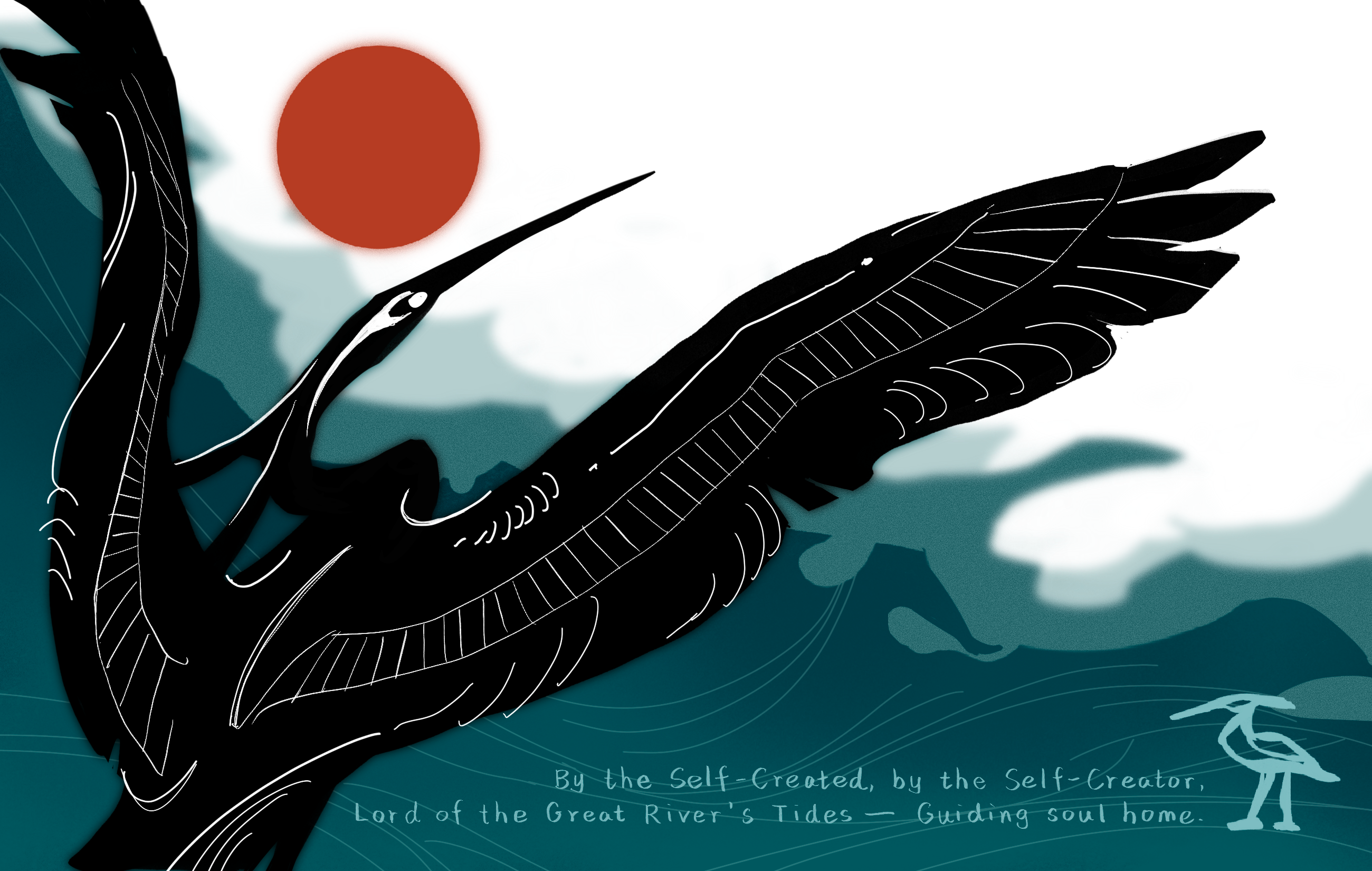
Photography
Bleeding Lens
Credits
With thanks to everyone who submitted.