
Events
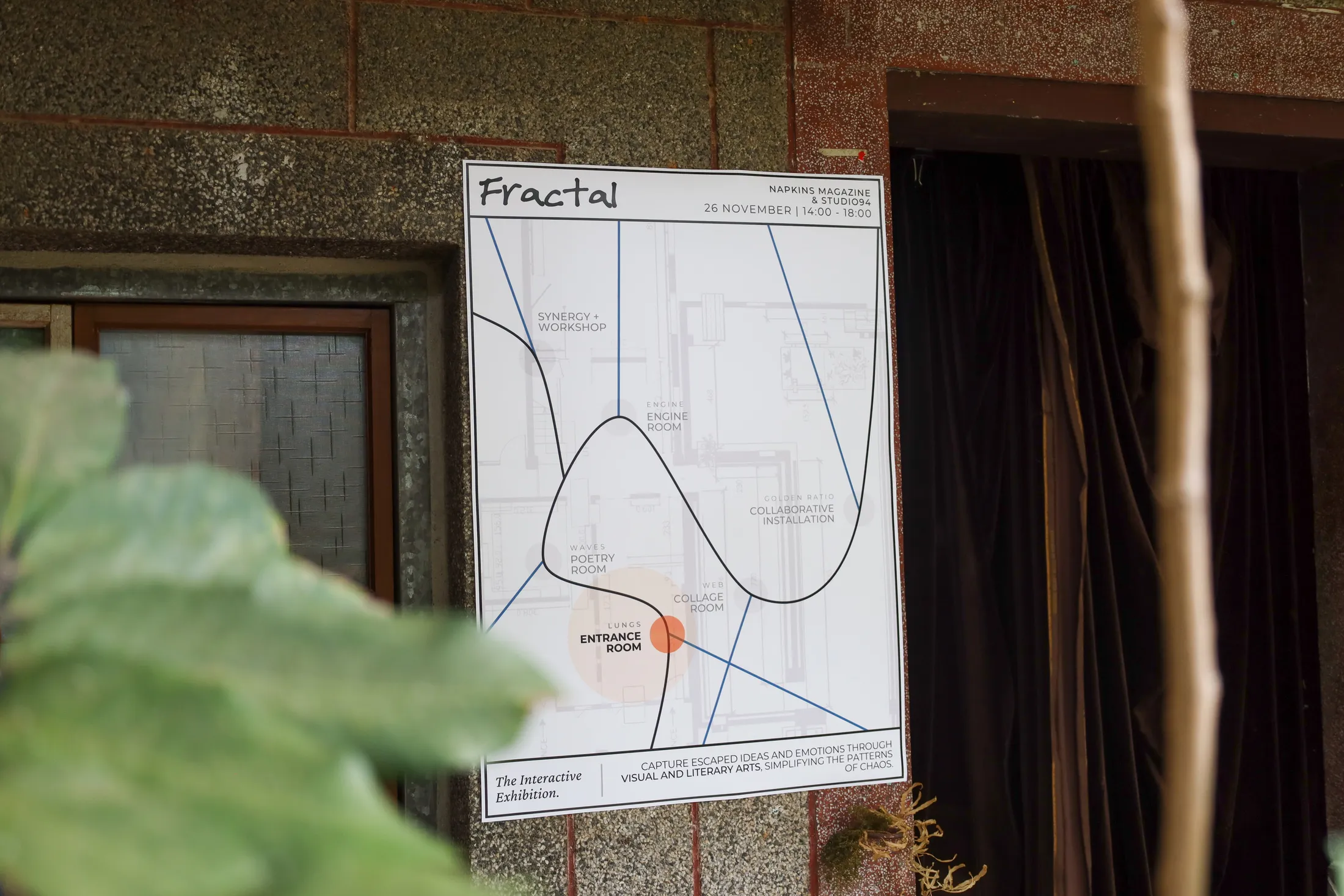
Fractal
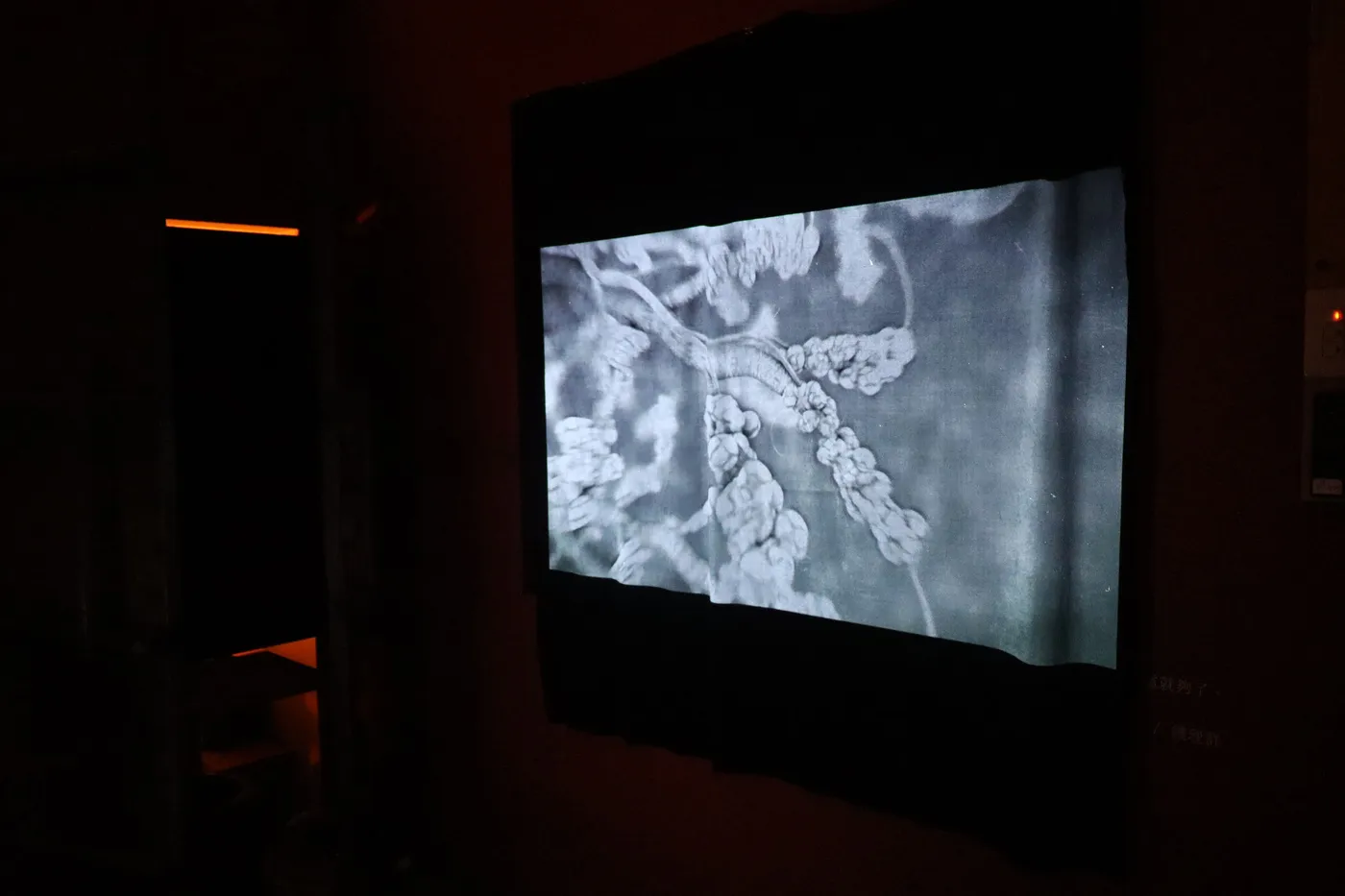
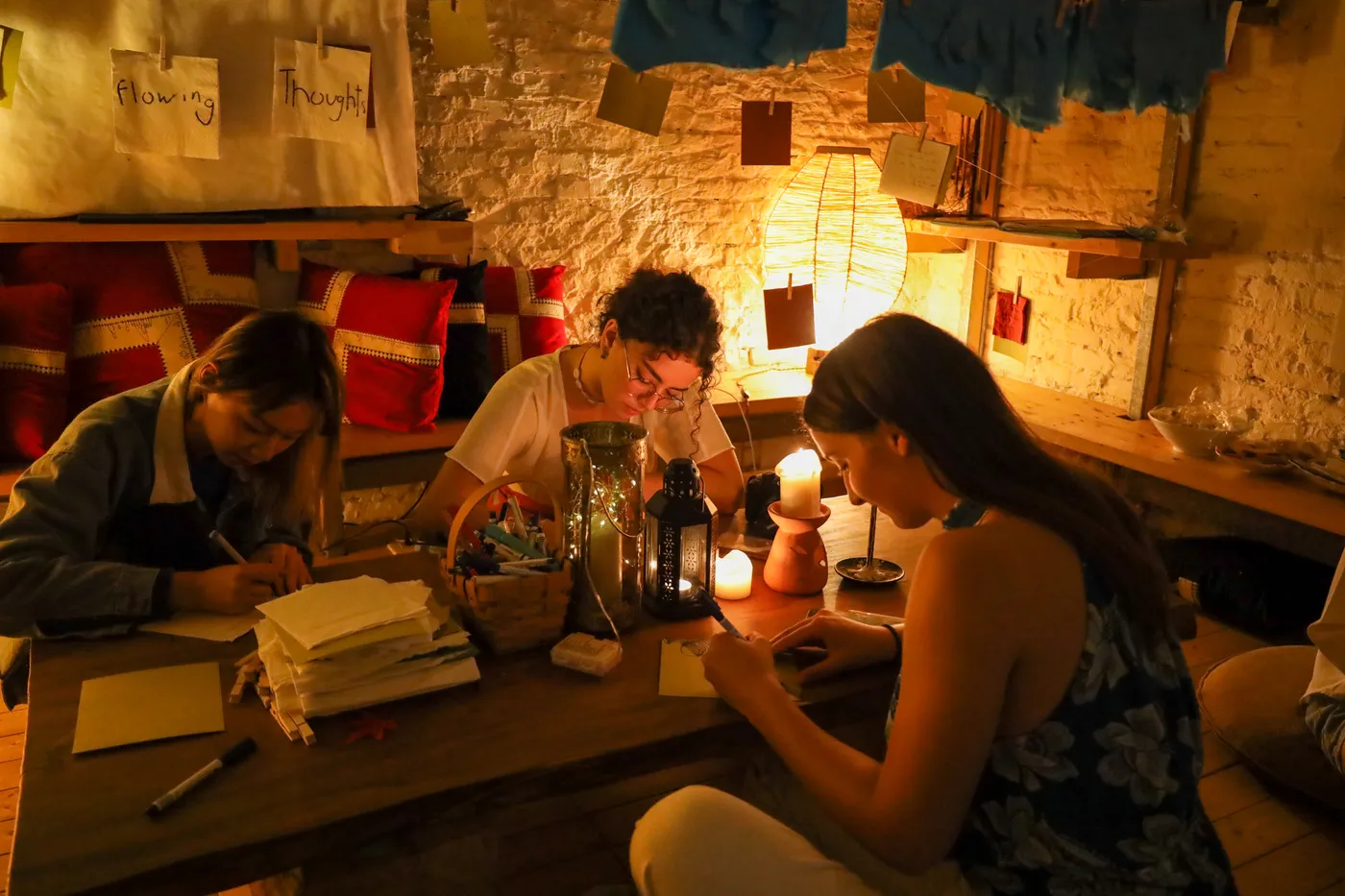
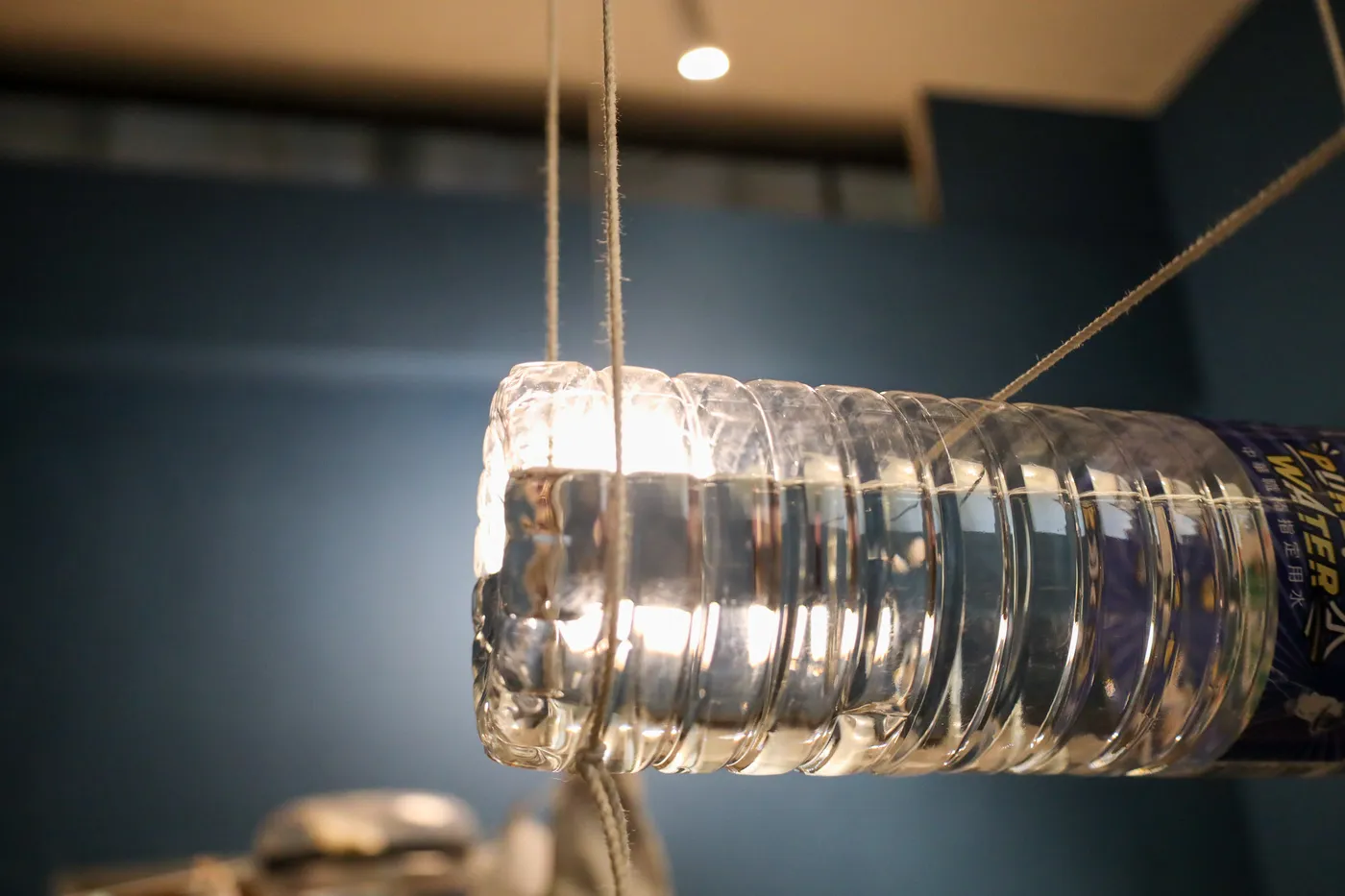
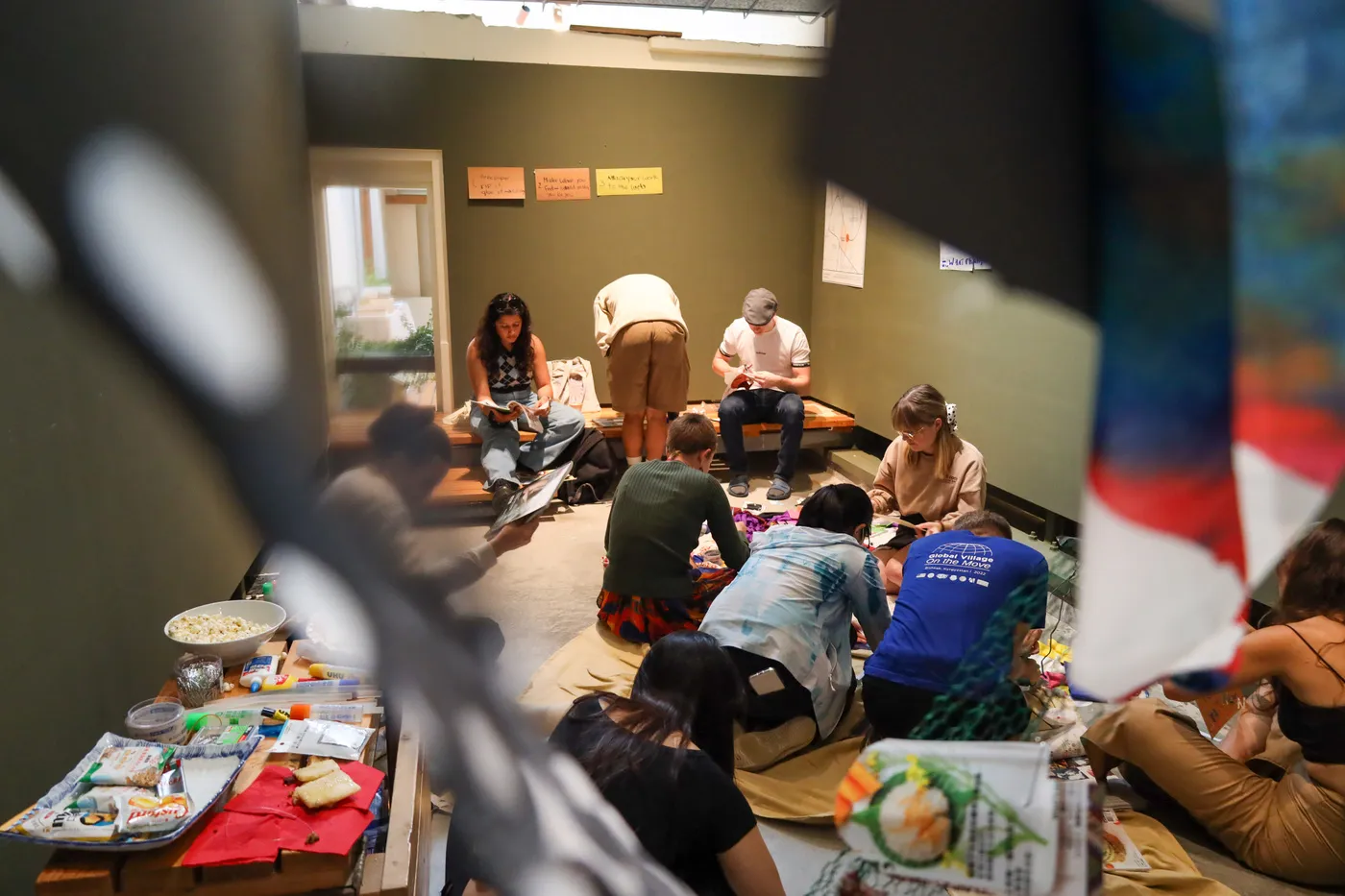
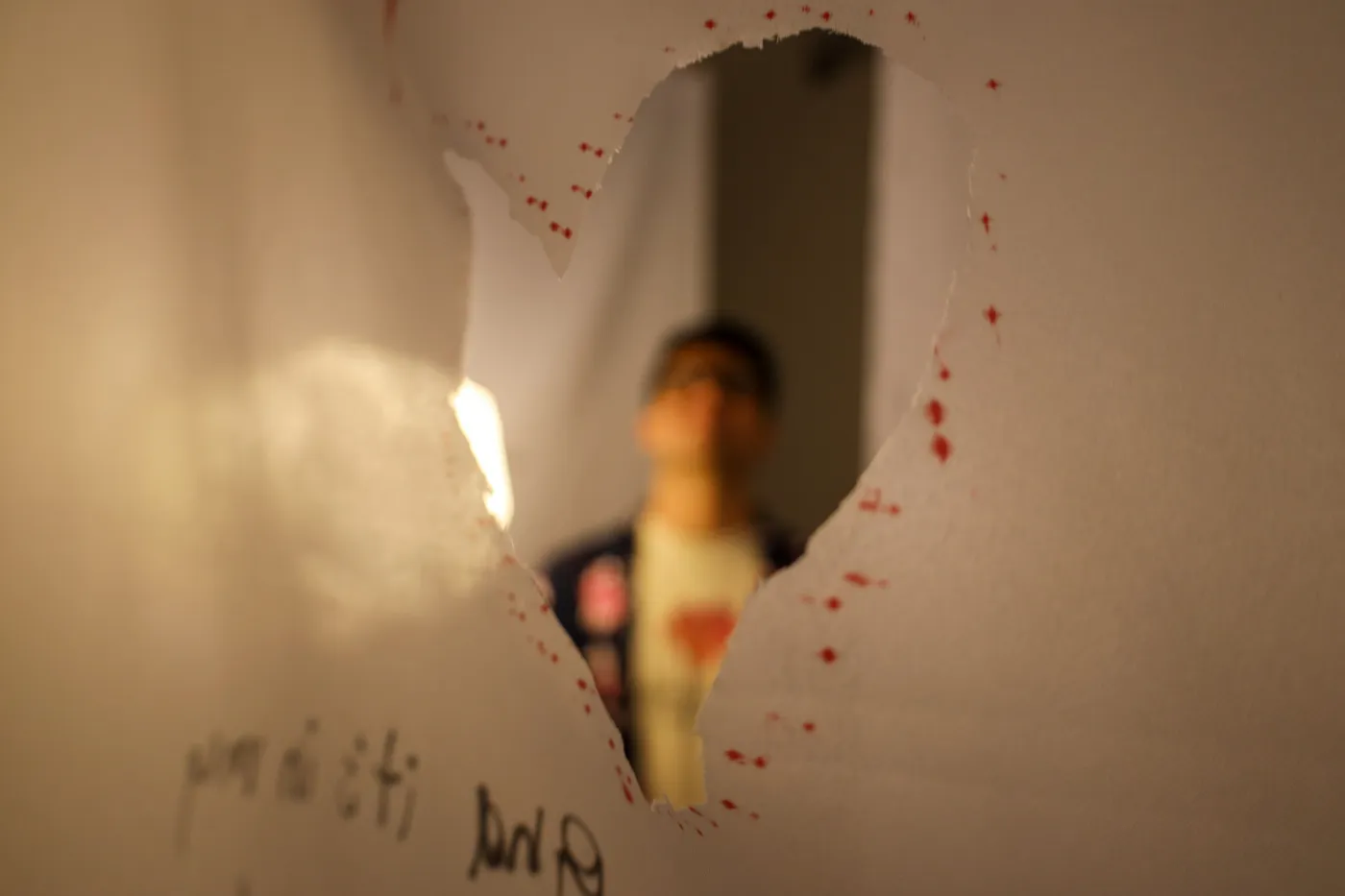
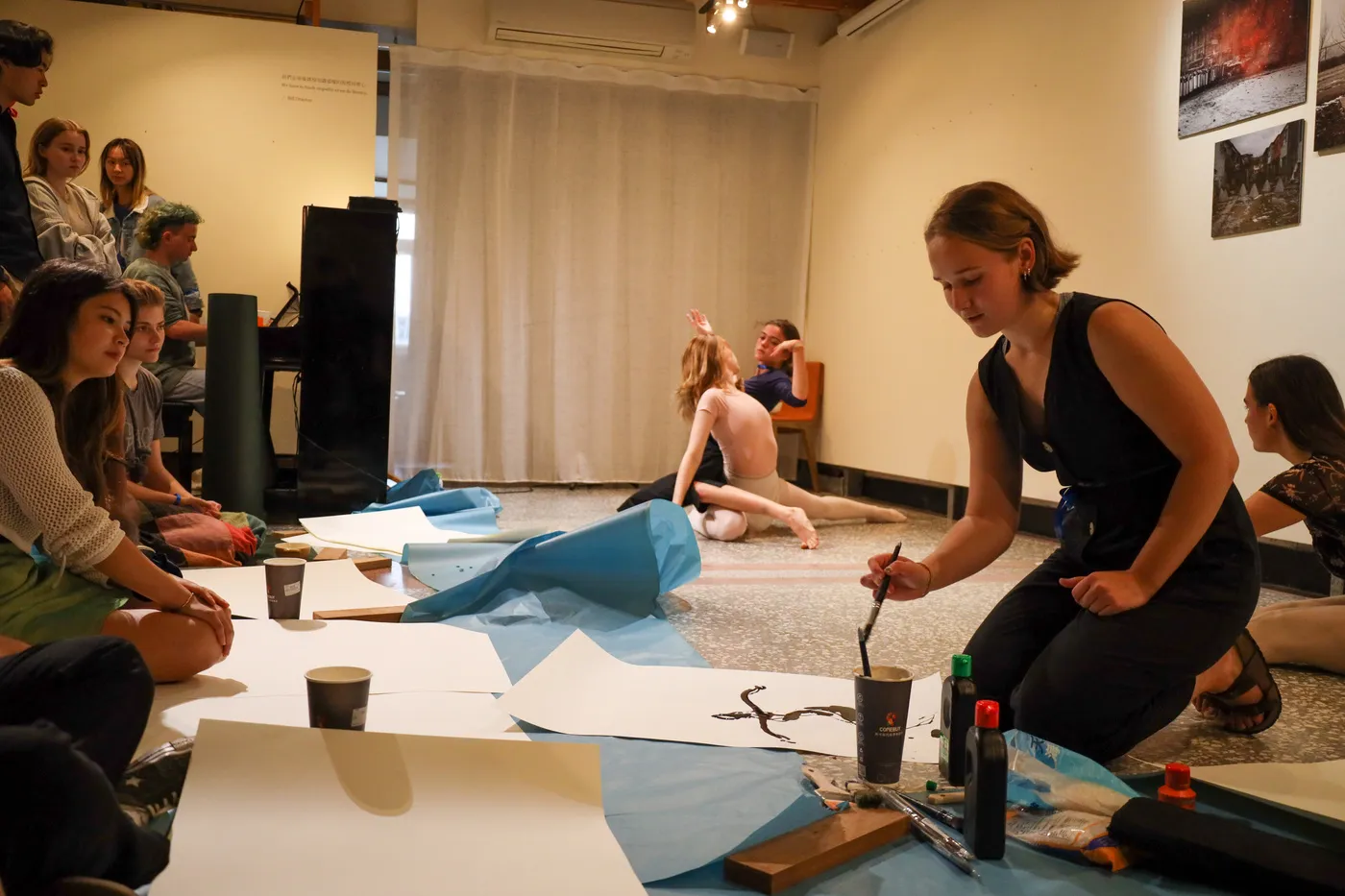
Welcome to Fractal, Napkins’ inaugural interactive exhibition.
Interactive Art Exhibition
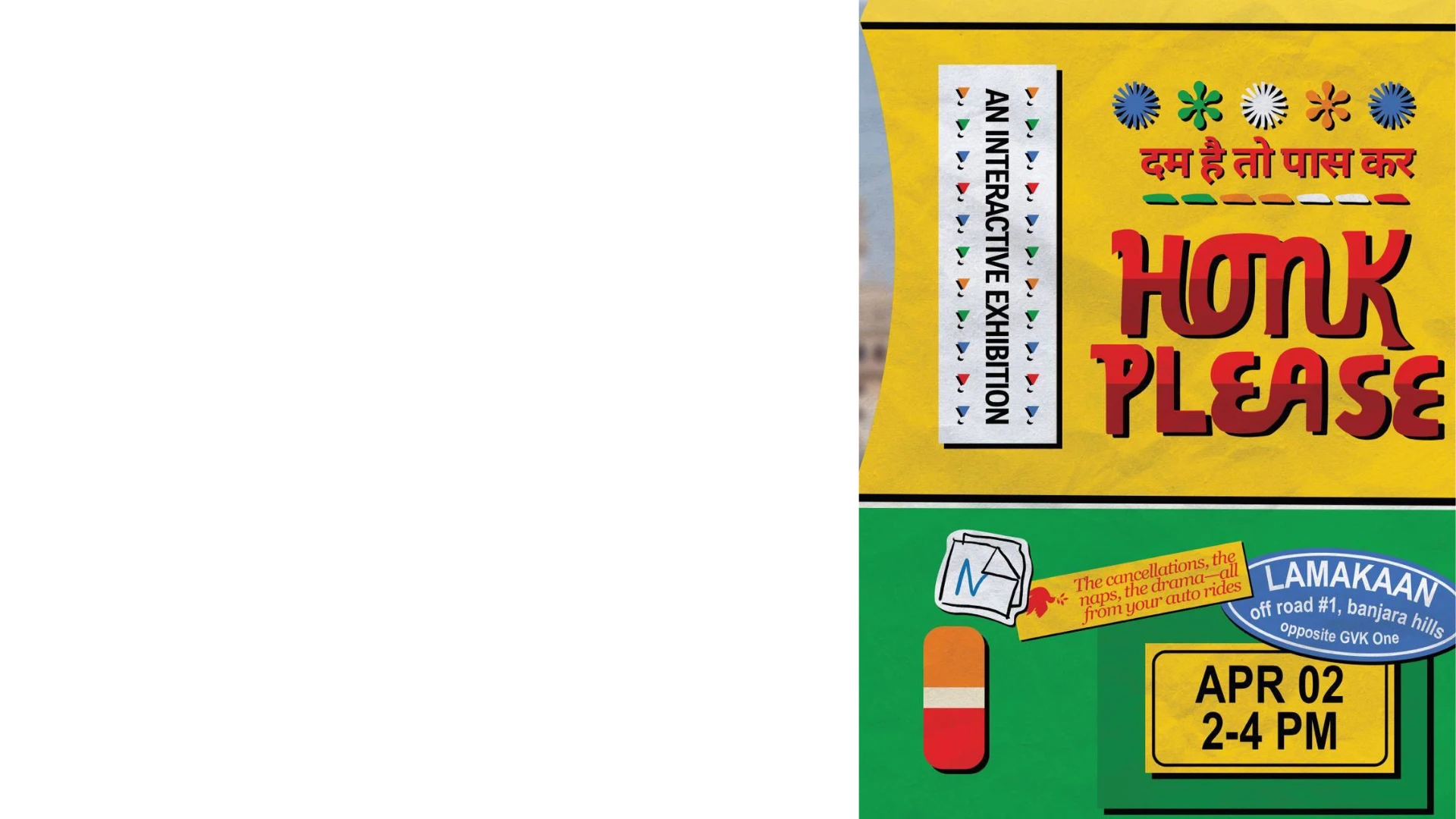
Honk, Please!
Welcome to Honk, Please!
The first time we rode an auto, we gripped the handle. We held on to our friends. The thrill of the drives mixed with the fear for our lives. But the fear soon turned as visceral as a passing breeze. Distances in the city narrowed on the map with a moving green and yellow square. Distances between us closed with a ride. We move in the city. We move with autos.
Honk, Please! Remind me of how I first felt. How I still feel.
Honk, Please! is Napkins’ second interactive art exhibition where visitors are still the creators and curators. Napkins is an art and literary organization at Minerva University—a traveling university. Artists, writers, poets, students, working adults, retirees—whether making something creative is a first or part of your everyday routine—come together in this space. At Honk, Please!, visitors will experience different creative spaces centered around the theme of autorickshaws. All spaces involve participants creating something, anything—with words or pictures, verbal or non-verbal. Every creation will be curated into final installations whose forms will only be determined as the creation occurs.
Floor Plan
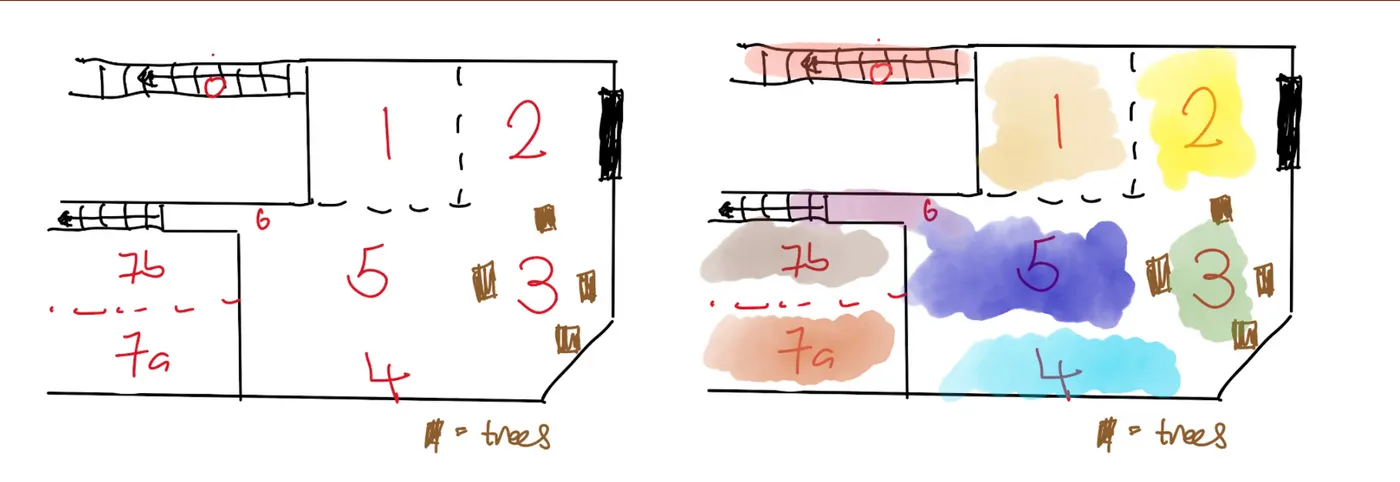
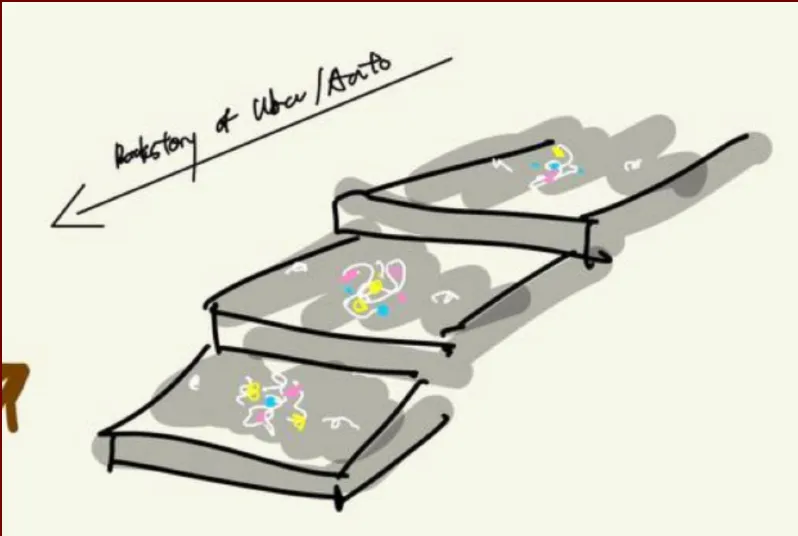
0 Starting: Intro
Design: A long piece of drawing/artwork drawn on the stairs leading down to the exhibition space.
Materials: Chalks; colorful ones.
Designer: Dariia Panasenko
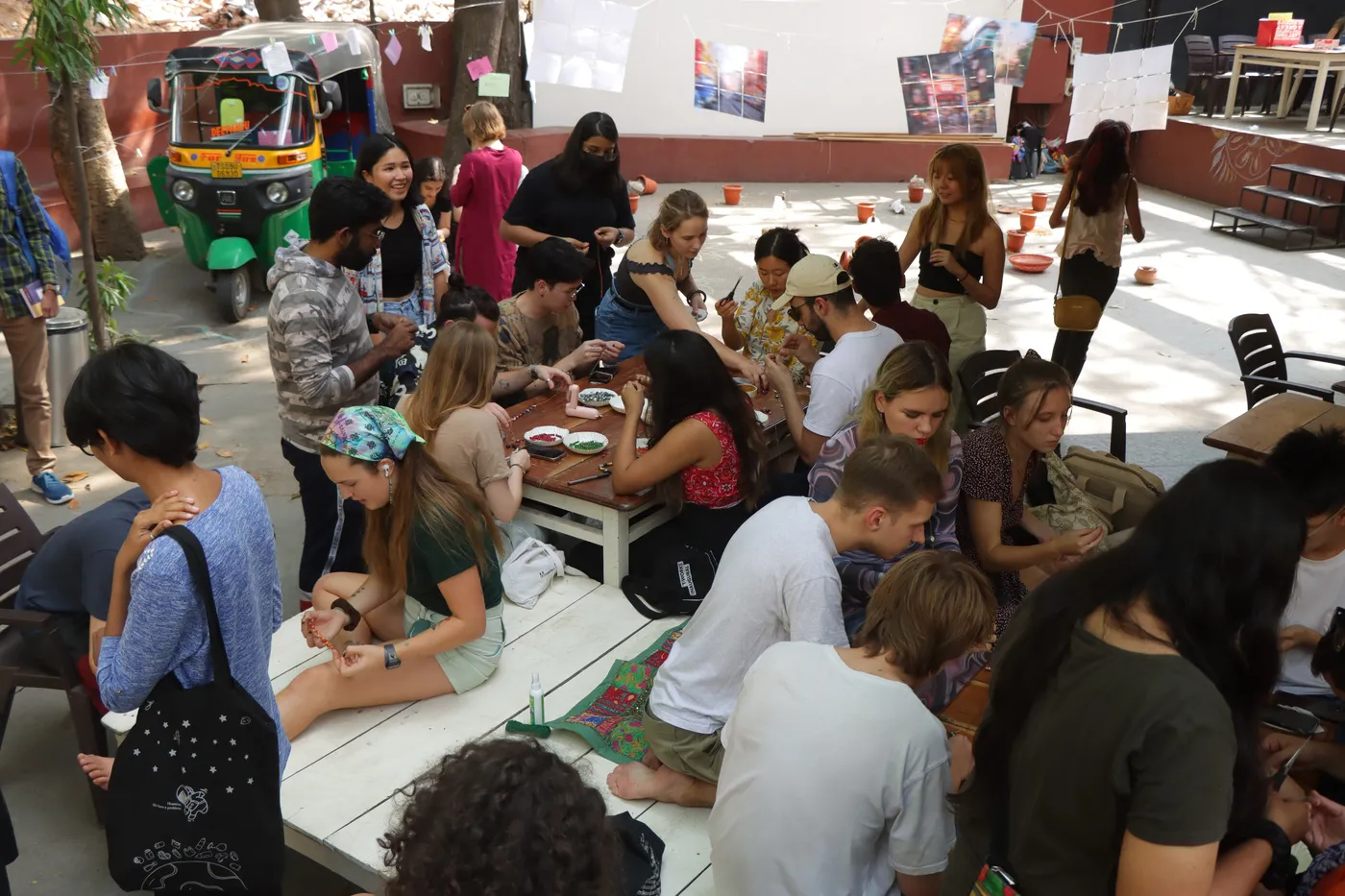
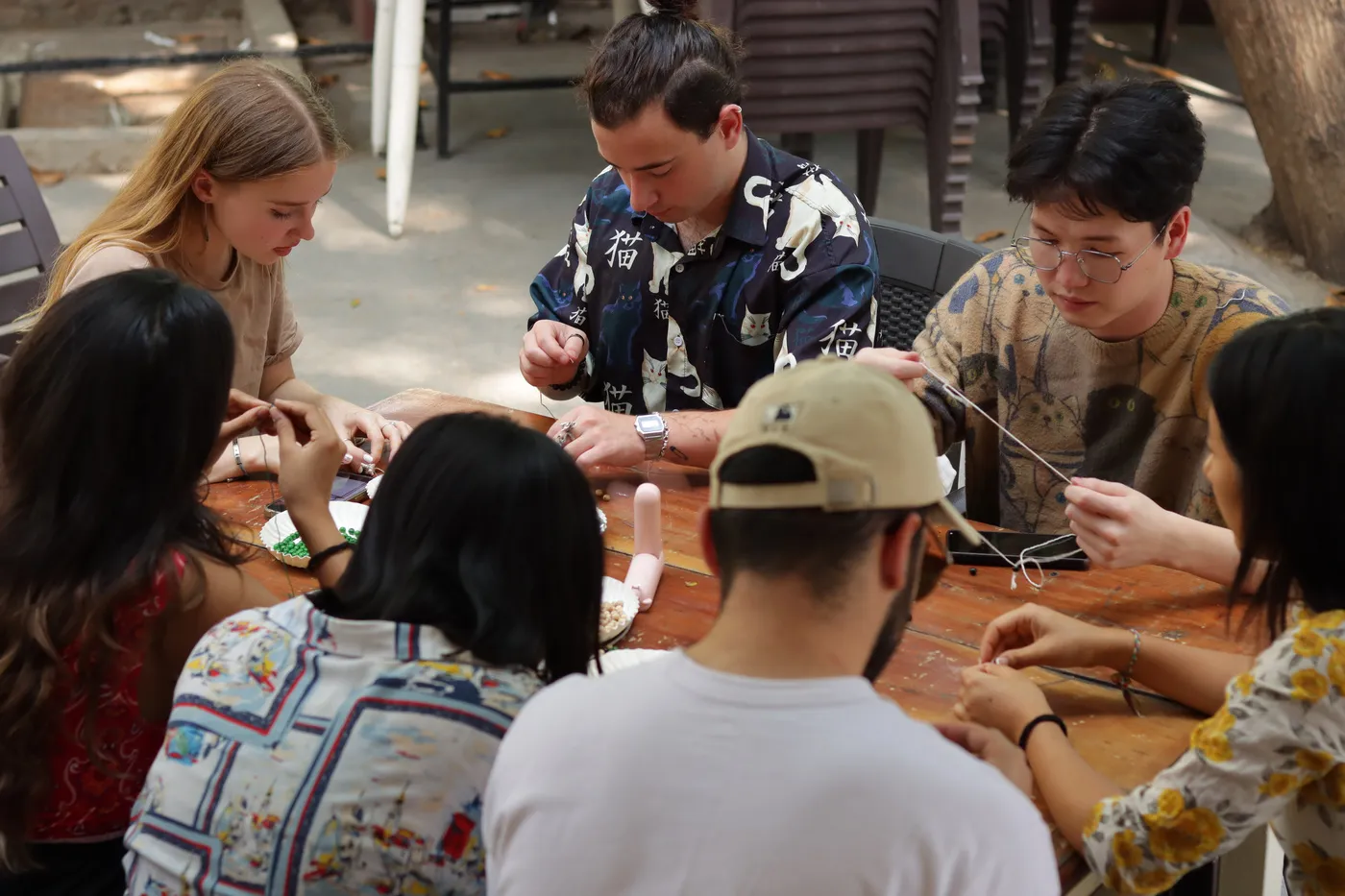
1 & 2 At Home with Friendship Bracelet
This place focuses on elements of “home” & idleness as one waits for the ride. Participants make friendship bracelets while waiting to get into the auto. They need to have 4 numbers on the friendship bracelets, to resemble an Uber/Ola pin. Before they enter the auto, they will show the “driver” (aka someone that checks the PIN) their friendship bracelets, to simulate the auto experience.
Design: - Cafe/Bar-like area (e.g., Terrasen + At Home Serviced Apartment + Shilparamam)
- Tapestry on low tables that serve as seating areas.
Materials: Tapestries, color beads, string, scissors
Designer: Zhi Zhi Chia, Htet Yuya, Jan Johannsmann
3 Auto Rides
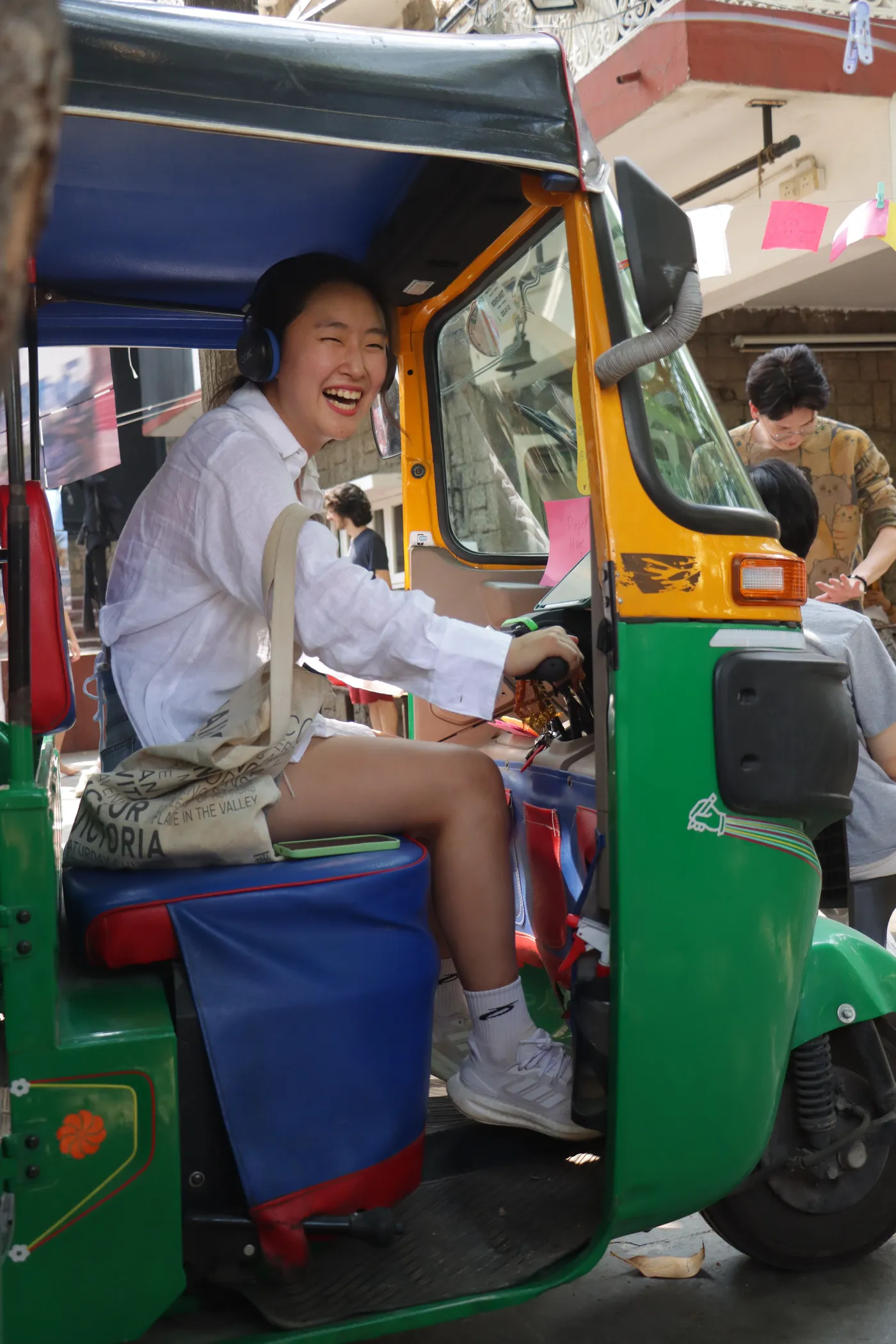
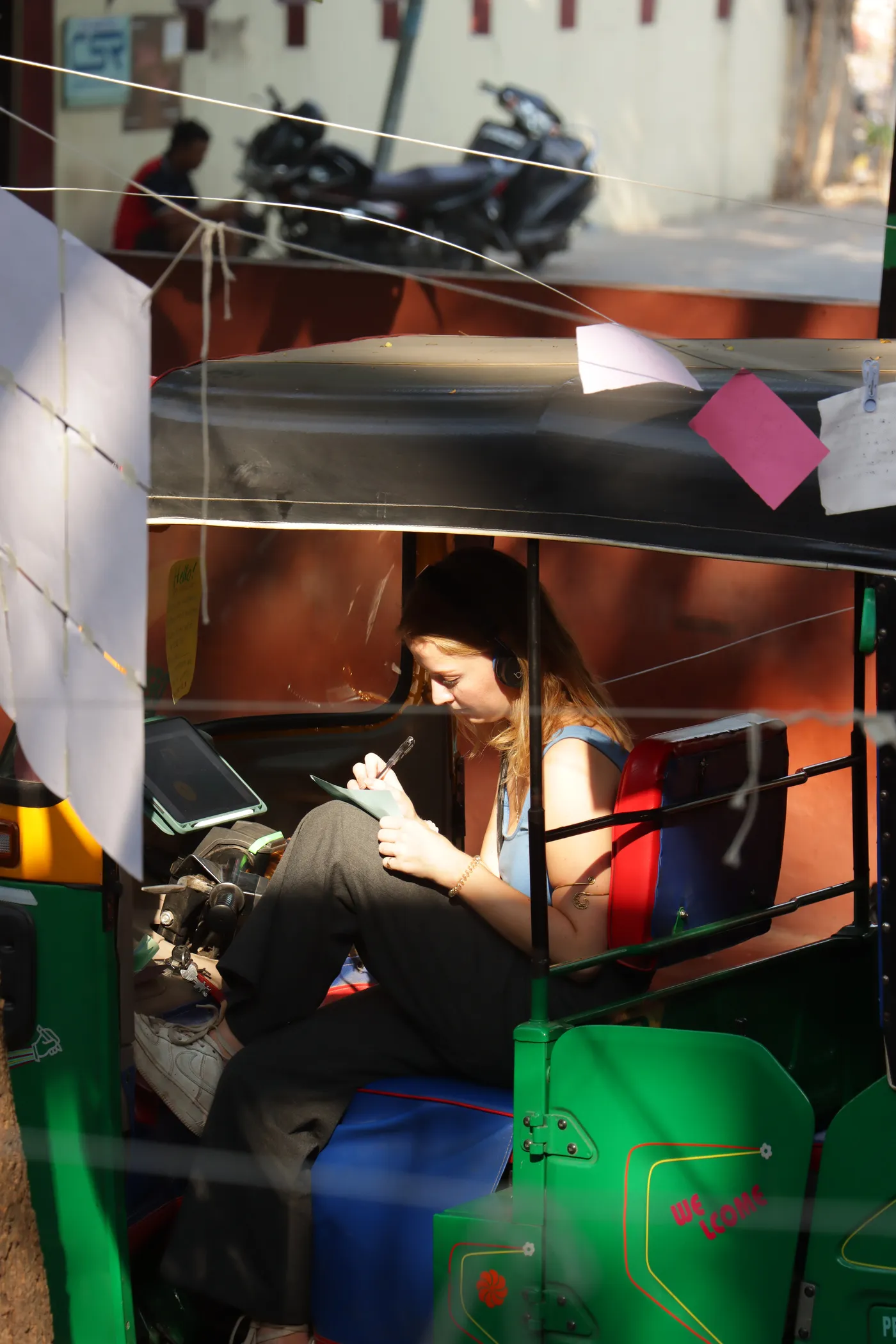
Participants enter the auto and put on earphones (like what auto drivers do!). They will listen to a random clip of messages. All these clips add up to a coherent story (narrated by Yuya), but they are not played in a linear order. After participants listen to one clip, they will write/draw/create their interpretation and attach them to the wire surrounding the autos. The final product will show how different interpretations can form a grander image.
The wire structure surrounding the auto is to form an enclosure that signals the visitors getting into a different world. It’s also a structure for the visitors to hang their creations on.
Design: Auto with metal wire hung on the tree trunks next to the auto.
Materials: Auto, iPads, earphones, audio clips, string, clips
Designer: Htet Yuya, Cassandra Marguerit Cruz, Zhi Zhi Chia
4 & 5 Zoned Out Ride
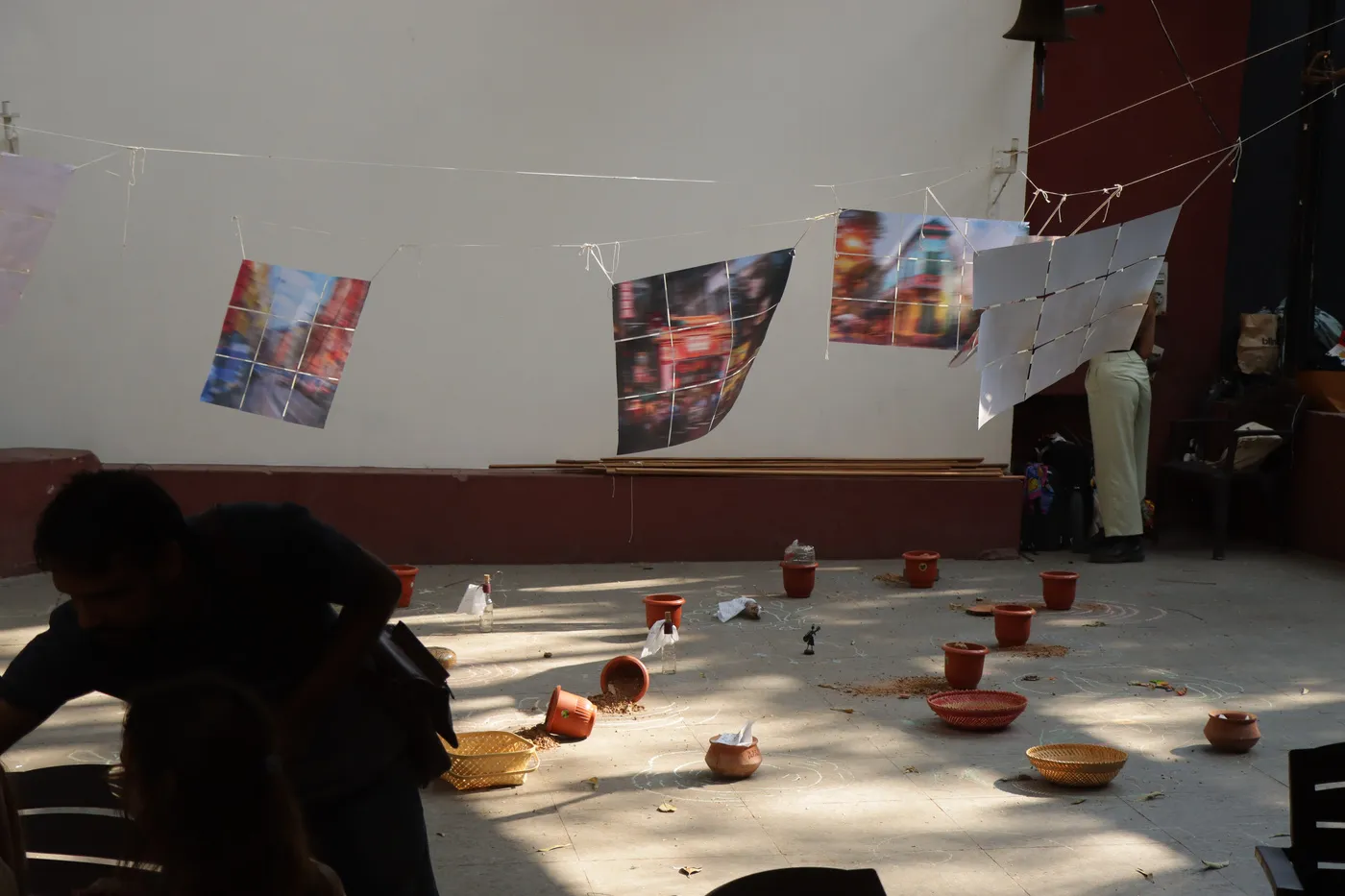
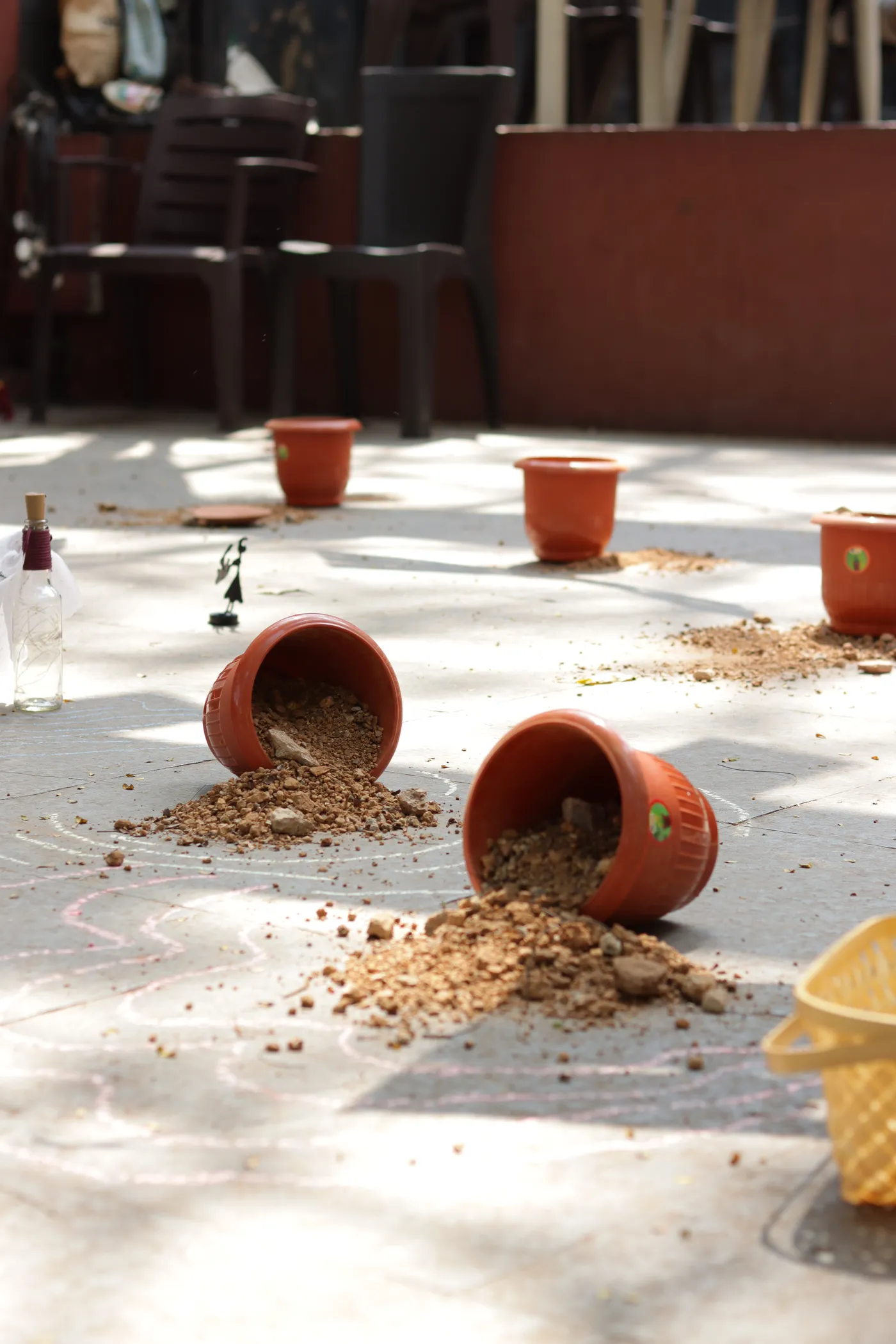
Auto rides can be very sensorily overwhelming and one can space out. This featured printed posters from different rotation cities for Minerva, but in MSCHF blur style. Having blurred posters from different cities also point to the idea that the roads in India aren’t that different from our homes. When the visitors stepped out of the auto, they will immediately be met with the panels and posters. On the floor, we will have different trinkets and ornaments collected in the city.
Design: Blurred posters of landmarks from the 7 rotation cities for Minerva University, arranged arbitrarily in the empty space, almost maze-like.
Materials: Posters, pots, sticks, ornament, small statues, chalks.
Designer: Dariia Panasenko, Zhi Zhi Chia, Sun Kim
7a Destination: Origami Letters
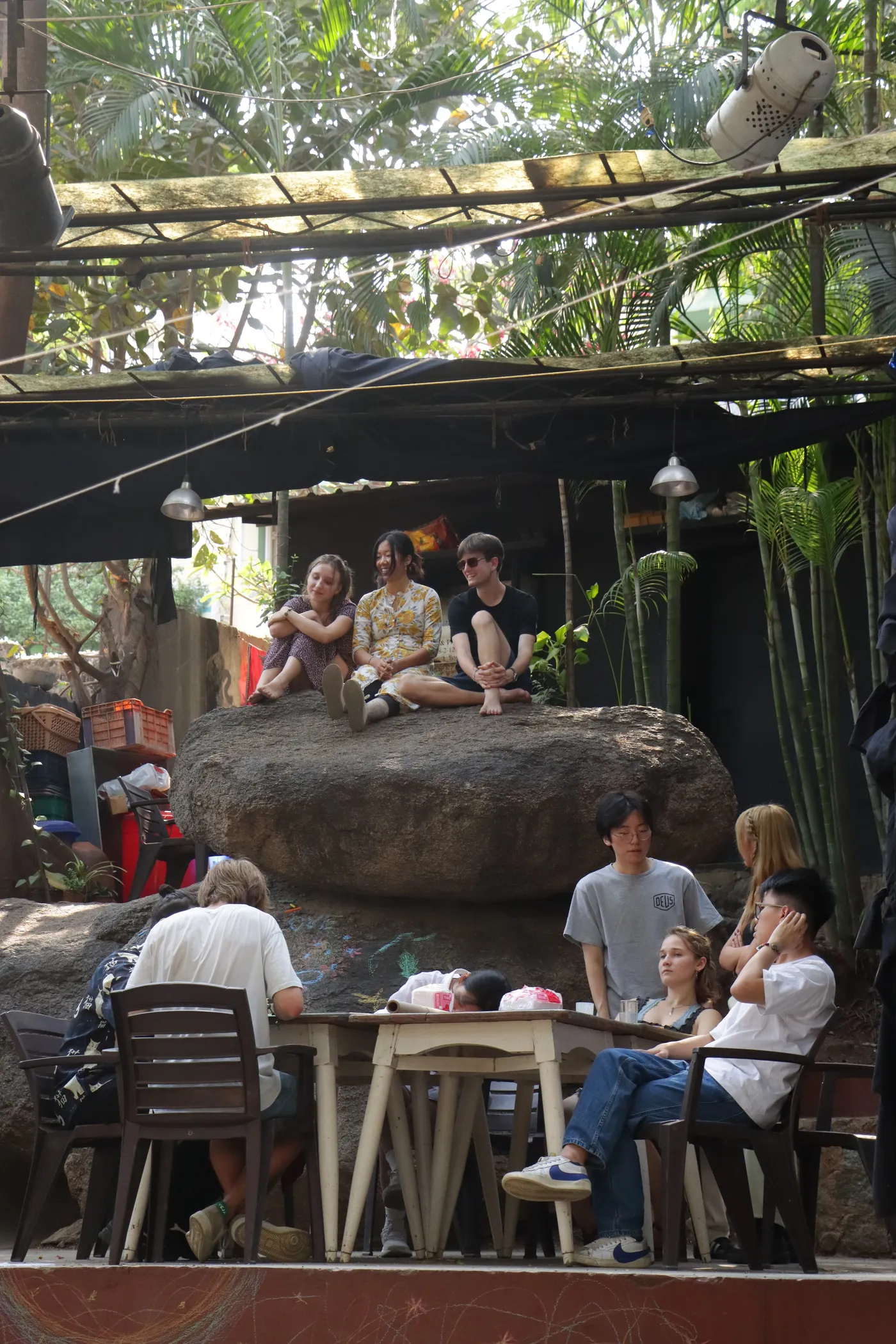
This area is meant to be low energy and reflective. Situated at an elevated area with an overall view of the exhibition, visitors had access to letters, crayons, pens, and color pencils to write letters, either to no one or to someone who the Exhibition Team would deliver to post-exhibition.
Design: Tables with chairs.
Materials: Papers (colors, white, napkins/recycled materials), scissors, marker, pen, color pencils, art supplies, box (to collect letters)
Designer: The whole team
7b Destination: General writing/drawing/creating area
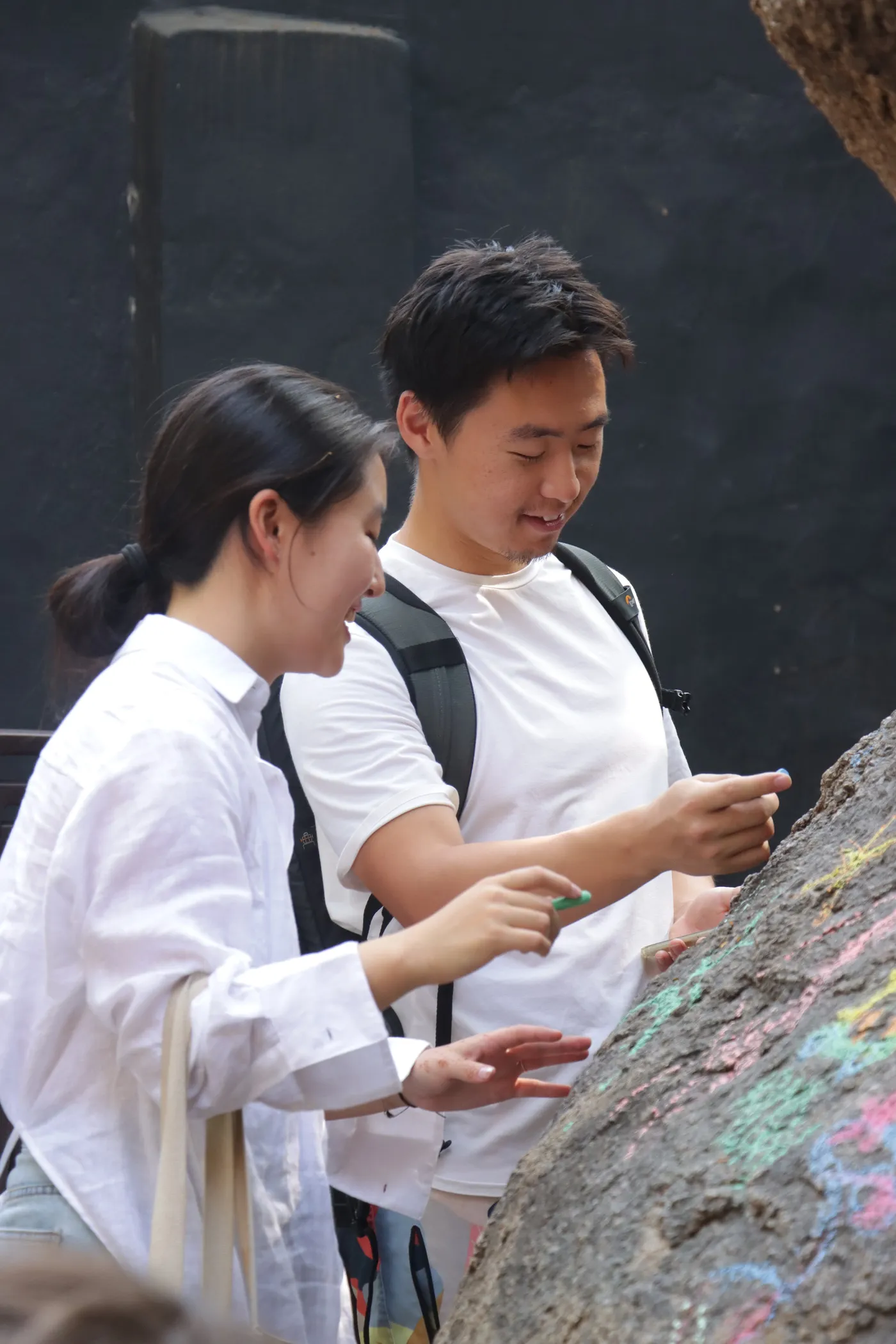
This area is meant to be low energy and reflective. Visitors can sit here and create whatever they want, inspired by everything they observe. From this area, they get a top-down view of the whole exhibition, which is the perfect place to consolidate their thoughts.
Design: Tables with chairs.
Materials: Napkins, markers, pen, color pencil, art supplies
Designer: The whole team
Interactive Exhibition & Workshops
Borde_
Welcome to Borde_
Borde_ is Napkins’ third interactive arts exhibition. Borde in Spanish means “edge.” It is lines that decide an in and an out. Lines that determine where your comfort ends and begins. Borde is also a feeling. Feeling on “edge”. How do you define your borde? What are your boundaries? What puts you on edge? Borde__ is a deconstruction of the boundaries in our lives, from labels to personal space. What separates and connects us?
Walk through the Exhibition
Credits
Special thanks to
Interactive Exhibition & Workshops
Chimera: What Stories Does Your Body Tell?
Welcome to Chimera
In Greek mythology, the Chimera is a fire-breathing creature that is composed of different beings. Its hybrid form symbolizes the blending of disparate elements, evoking the complexity of postcolonial identities. Postcolonial theorist Homi K. Bhabha argues that identity formation occurs not through simple binaries—colonizer/colonized, East/West—but within a dynamic “third space.” This space of in-betweenness is where cultures intersect, negotiate, and create new meanings. The process of negotiation is full of contradictions many of us experience phenomenologically, from the perspective of our bodies and lived experiences.
Identity is not just an intellectual construct; it is embodied and lived. It manifests in moments of connection, like finding belonging in shared cultural practices, and moments of dissonance, such as confronting language, behaviors, or perceptions that challenge our sense of self. These feelings, whether joy, discomfort, pride, or alienation, remind us that identity is fluid, shaped by memory, history, and our present realities. It reveals itself in the spaces we inhabit and the ways we navigate an ever-shifting world.
In Berlin, many of us embody the Chimera. We carry elements that affirm our identity while grappling with others that disrupt it. Yet, these tensions do not fracture us. Instead, they coexist, creating a multifaceted wholeness. Our contradictions are not irreconcilable—they are the essence of our identity.
Chimera invites you to explore your own hybrid identity and consider how you contribute to Berlin’s ever-shifting mosaic. Through interactive art and reflection, discover how we, as individuals and a city, are transformed by our contradictions and connections. Welcome to Chimera—a space to embrace the beauty and questions of being in-between.
In conversation with DIASPORA BIRDS
DIASPORA BIRDS is a photography series by renowned Chinese photographer Luo Yang. Currently exhibiting at Migrant Bird Space, DIASPORA BIRDS explores the Asian diaspora experience in Europe. Featuring individuals from China, Vietnam, Indonesia, the Philippines, Cambodia, and other nations, the series includes first and second-generation immigrants, LGBT individuals, orphans adopted into Europe, political refugees, and recent students who have chosen to stay. Luo Yang’s work not only documents the external lives of these individuals, but also delves into their internal spiritual journey. Through her lens, Luo Yang aims to capture the emotional complexities and resilient spirits of those navigating life in a foreign land, inviting viewers to connect with their unique experiences at the intersection of cultures.
written by Zhi Zhi Chia
Audio Guide
Who is Chimera? Why are we here? Listen to the audio guide.
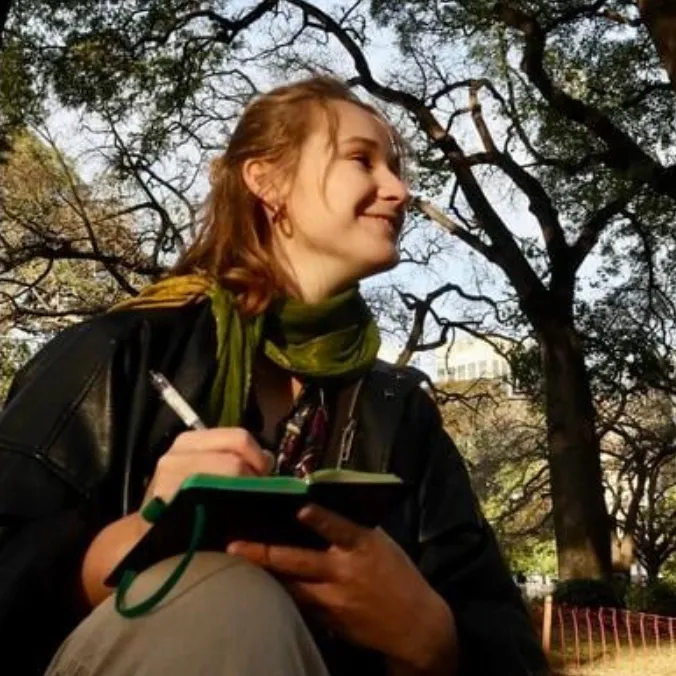
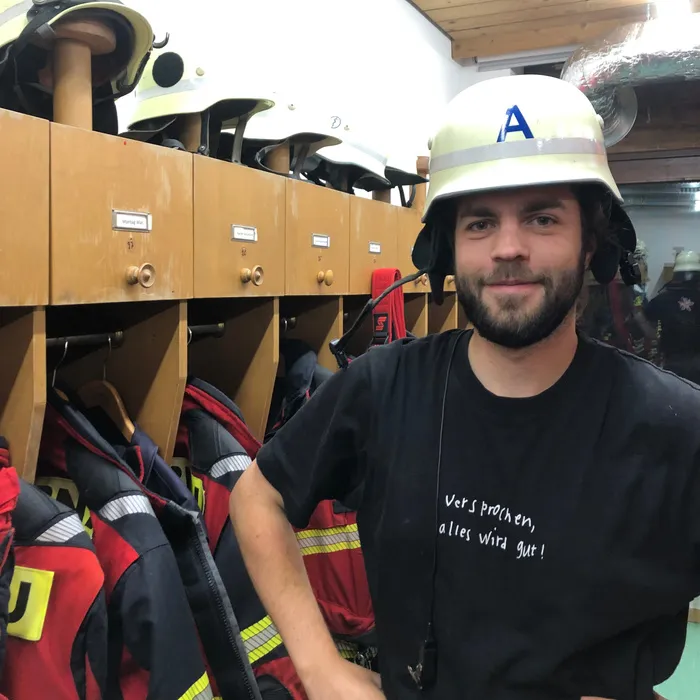
Meet the Team
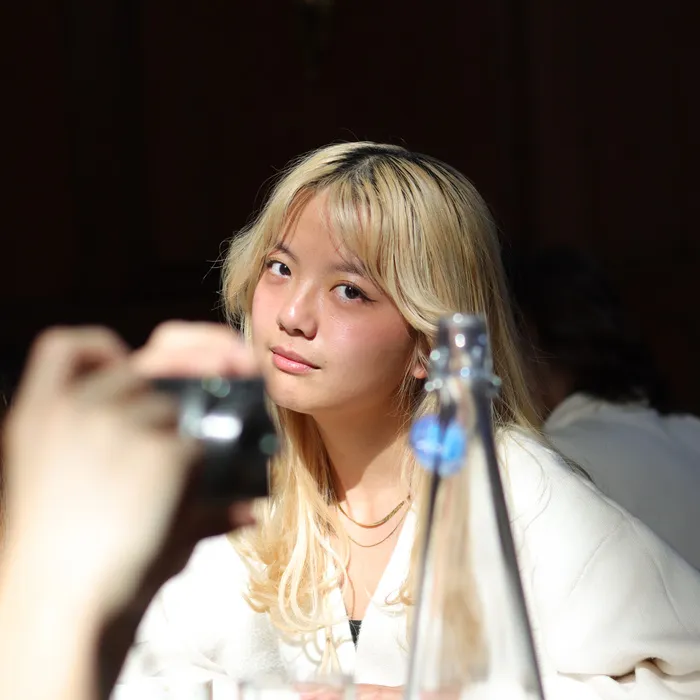
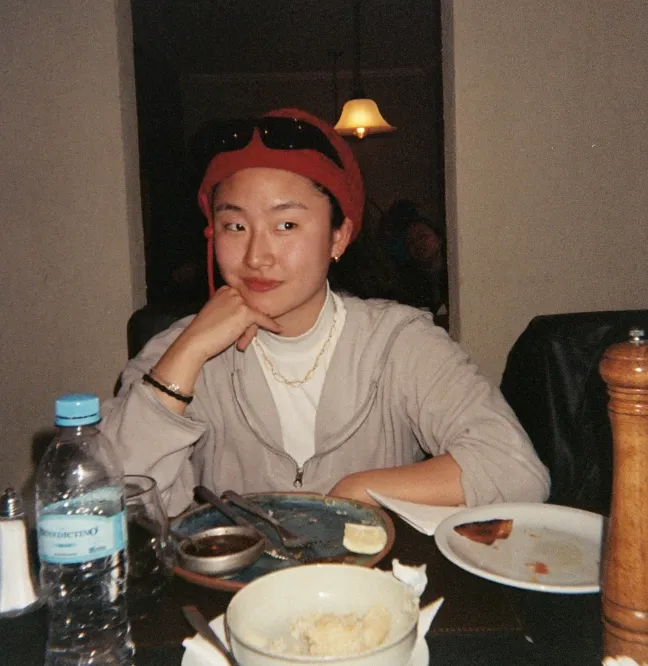
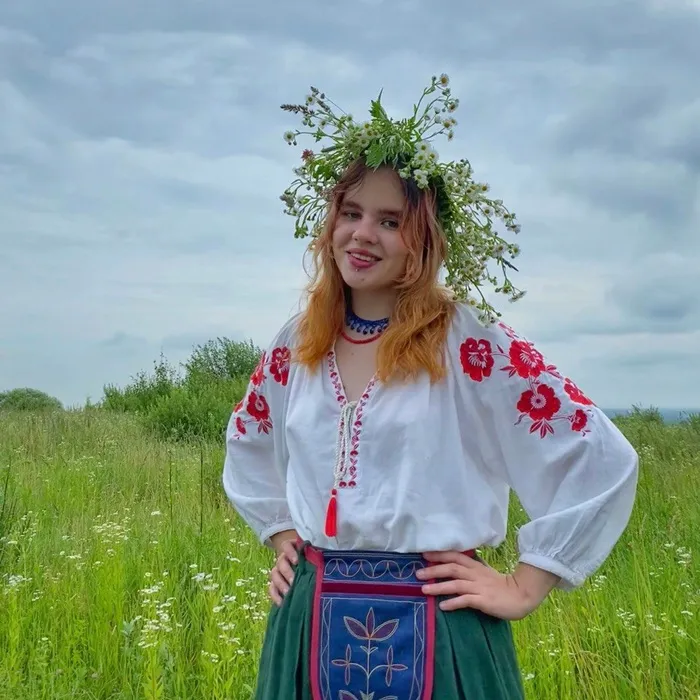
We are a group of friends from Malaysia, Ukraine, Germany, and Korea, who first met as students traveling and learning together across seven cities worldwide. Our shared experiences of navigating unfamiliar places, cultures, and ideas sparked conversations about identity, belonging, and transformation—questions that continue to inspire us today.
Though our paths began in different parts of the world, we quickly found common ground in our curiosity for exploring the in-between spaces of life: where cultures meet, where identities shift, and where contradictions create something new. In Berlin, a city that thrives on its multiplicity, we find a space that mirrors our collective ethos.
Through Chimera, we invite you into our shared exploration of what it means to belong, to challenge dissonance, and to embrace contradiction.
Special thanks to
Migrant Bird Space
Migrant Bird Space is a Berlin- & Beijing-based art foundation and gallery, providing a showcase for artists as well as art-agency services in China and Europe. Working out of the gallery space at Koppenplatz in the heart of Berlin, the foundation offers a professional platform for cross-cultural communication between China and Europe with a focus on contemporary Chinese art.
Promoting both established and emerging artists, Migrant Birds provides gallery spaces for exhibitions in Berlin, Beijing, and Shanghai, an artist-in-residence program, regular talks and lectures, as well as support in liaising with museums, universities, private institutions and more.
Illustration by Dariia PanasenkoWeb Design & Curation by Zhi Zhi Chia